

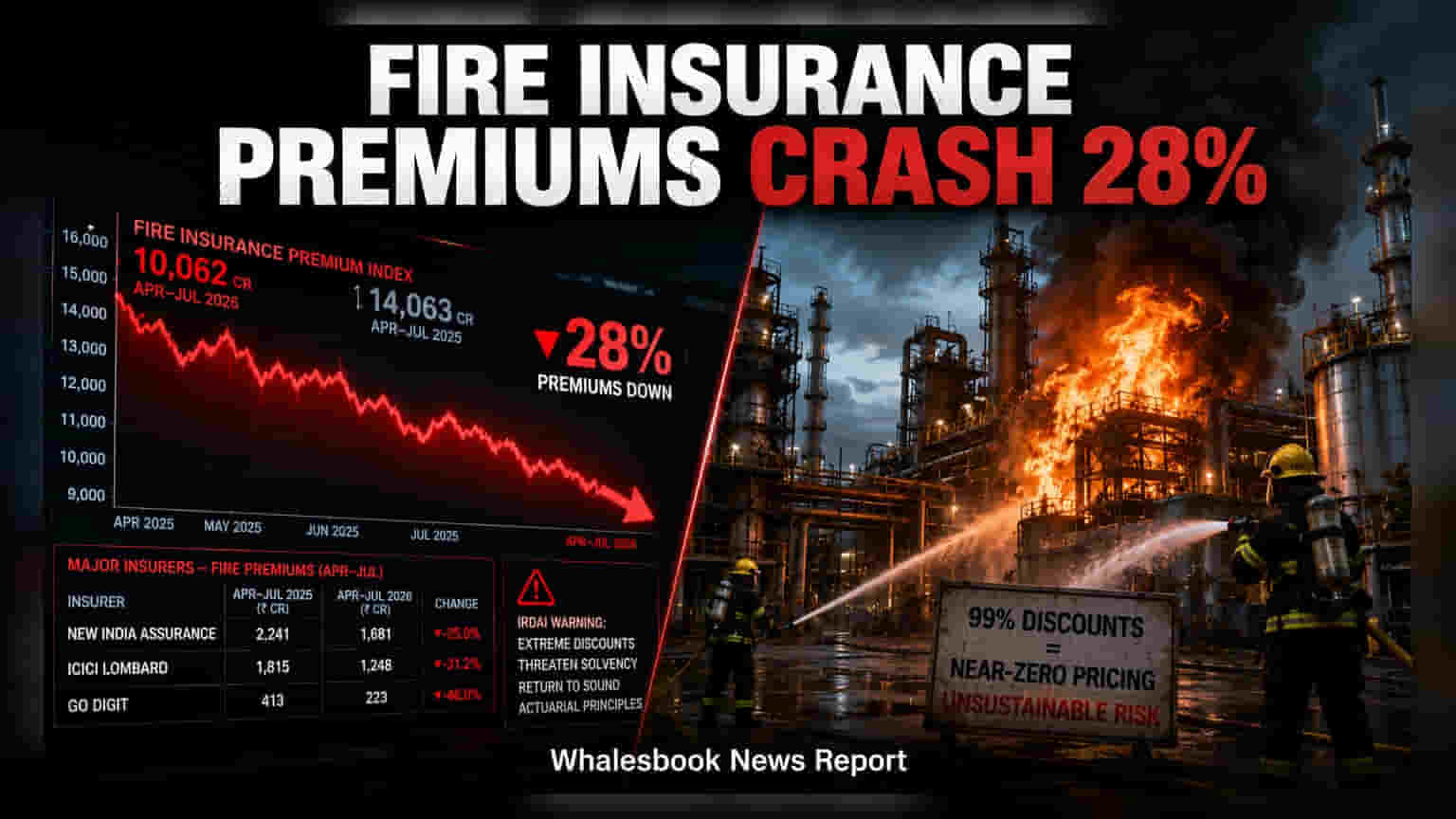
India's fire insurance sector saw premiums fall 28% to ₹10,062 crore between April and July 2026 as intense price competition led to deep discounting on industrial policies. With some discounts reaching 99%, the Insurance Regulatory and Development Authority of India has warned that such practices threaten the sector's financial stability. The regulator has now demanded that insurers return to sound pricing to ensure they can cover high-severity claims.
The Indian fire insurance industry is witnessing a sharp contraction in revenue as aggressive price wars disrupt standard underwriting practices. Official data indicates that premiums collected by insurers fell by 28% to ₹10,062 crore during the April–July 2026 period, a significant decrease from the ₹14,063 crore recorded in the same four months last year. This downturn is largely attributed to an intense race for market share, where insurance companies have been offering steep discounts on large corporate and industrial fire insurance accounts.
The impact of this trend is visible across major players in the sector. New India Assurance, for instance, reported its fire insurance premiums declining to ₹1,681 crore from ₹2,241 crore the previous year. Similarly, ICICI Lombard saw its portfolio in this segment drop to ₹1,248 crore from ₹1,815 crore, while Go Digit’s fire insurance collections fell to ₹223 crore from ₹413 crore during the same period. These declines highlight how the focus on capturing corporate mandates has led to a widespread reduction in premium income.
In response to these developments, the Insurance Regulatory and Development Authority of India has raised serious concerns regarding the long-term solvency of the sector. The regulator observed instances where discounts on industrial fire policies reached as high as 99%, essentially pricing these risks at near-zero value. Because industrial fire insurance is classified as a low-frequency but high-severity risk—meaning that while claims are infrequent, they can be massive if they occur—the regulator has warned that such thin premiums may leave companies unable to settle claims in the event of a major disaster.
Following these observations, the regulator has directed insurers to move away from aggressive, unsustainable discounting and return to sound actuarial principles, which require pricing to be based on the actual statistical risk of a loss. For investors and stakeholders, the primary concern now lies in whether these companies can balance competitive pressures with the need to maintain underwriting discipline. The key monitorable for the coming quarters will be how these firms adjust their pricing strategies and whether the regulatory intervention effectively curbs the discounting trend, potentially stabilizing the underwriting margins of these general insurance companies.