

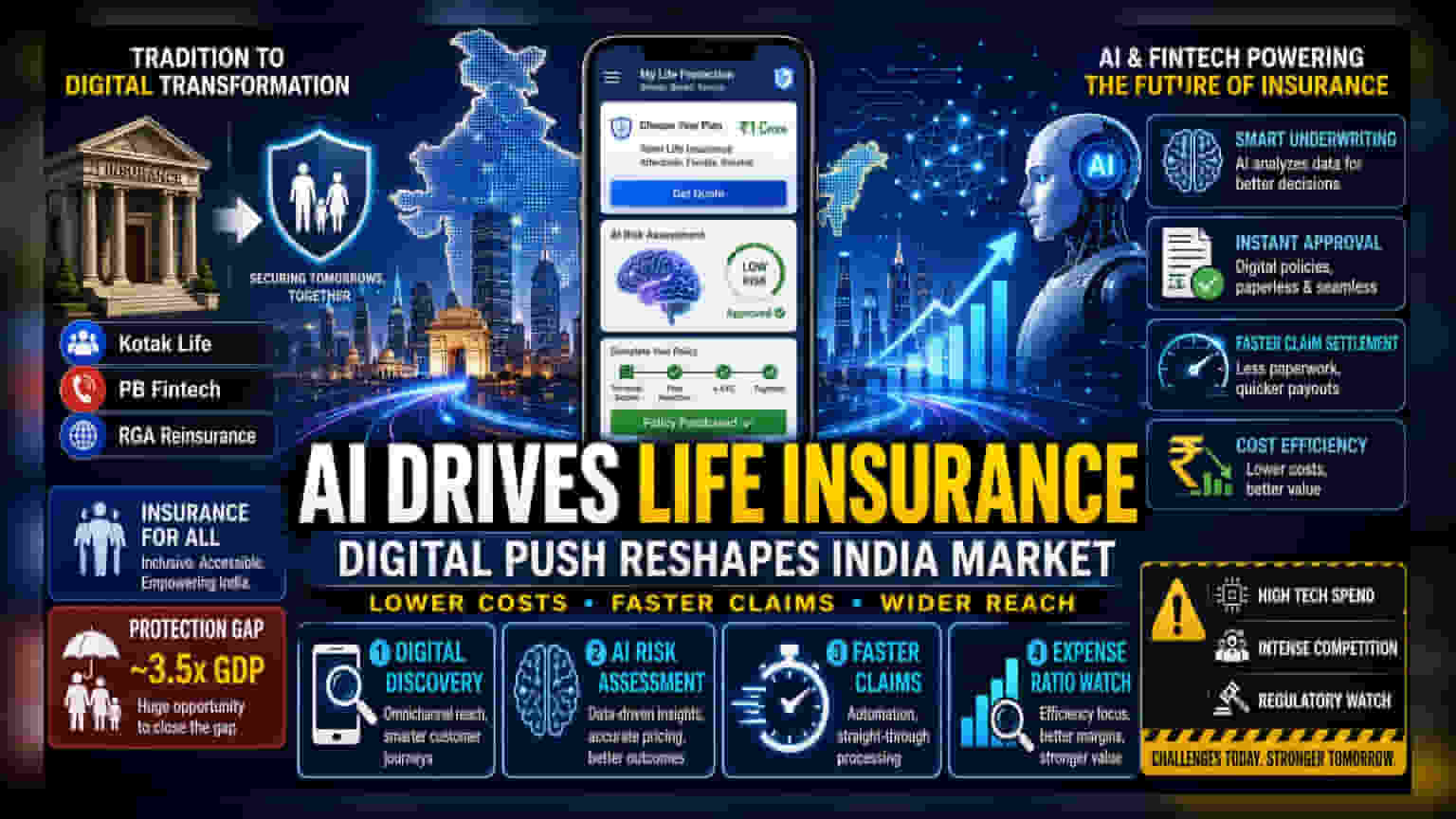
Industry leaders from PB Fintech and Kotak Life are leveraging AI to reduce costs and expand insurance reach across India. For investors, this digital push highlights a strategic focus on lowering customer acquisition costs and tapping into underserved markets. The move aligns with the regulator's long-term goal of closing the nation's protection gap.
What Happened
Leaders from the life insurance and fintech sectors recently gathered to discuss the role of technology and Artificial Intelligence (AI) in transforming the Indian insurance market. The discussion, "Insuring Lives, Securing India," featured representatives from Kotak Life Insurance, PB Fintech (the parent company of PolicyBazaar), and RGA Reinsurance. The central theme was how digital platforms and AI are changing how life insurance is discovered, bought, and managed, with the ultimate goal of improving financial inclusion and expanding the sector's reach.
Why The Digital Push Matters For Investors
For investors, this shift is not just about technology; it is about efficiency. Traditionally, the insurance business in India has relied on high-cost physical distribution networks. By shifting toward digital platforms and AI-driven processes, companies aim to lower the cost of finding and onboarding new customers.
Lower customer acquisition costs can lead to better profit margins over time. Additionally, AI helps in more accurate risk assessment and faster claim settlements, which are critical for building long-term customer trust and brand loyalty. Investors often track these efficiencies through metrics like the 'expense ratio,' which measures how much it costs a company to manage its operations and acquire customers relative to the premiums it collects.
The Platform vs. Insurer Dynamic
It is important to understand the different roles companies play in this digital evolution. PB Fintech, as a digital aggregator, benefits from the shift because its platform is designed to make insurance comparison easy and accessible, directly feeding leads to insurers. On the other hand, traditional insurers like Kotak Life are integrating these digital tools to reach customers directly and through banking partners. Both business models are now heavily dependent on tech to compete for market share in both urban and semi-urban areas.
Regulatory Context And The Protection Gap
The industry is also under pressure to address India's wide 'protection gap'—the difference between the insurance coverage people need and what they actually have. The regulator, IRDAI, has been actively promoting the 'Insurance for All' initiative. This push creates a growth mandate for the sector, but it also means that companies must balance aggressive growth targets with compliance and product suitability.
Risks And Challenges
While technology offers a pathway to growth, it brings risks. High spending on technology and digital marketing can pressure cash flows in the short term. Additionally, the digital insurance space is becoming crowded, leading to intense competition that can drive up marketing costs. Regulatory changes regarding commissions and product structure also remain a factor that can impact the profitability of insurance products.
What Investors Should Track Next
Investors may monitor a few key areas to see if this digital transition is translating into better business performance:
- Market Penetration: Is the industry successfully reaching new customers in smaller towns?
- Digital Adoption Rates: Are more policies being bought and serviced digitally compared to traditional channels?
- Expense Ratios: Are companies successfully lowering their operational costs as they scale?
- Regulatory Updates: Any new guidelines from the IRDAI regarding product pricing or distribution fees.