

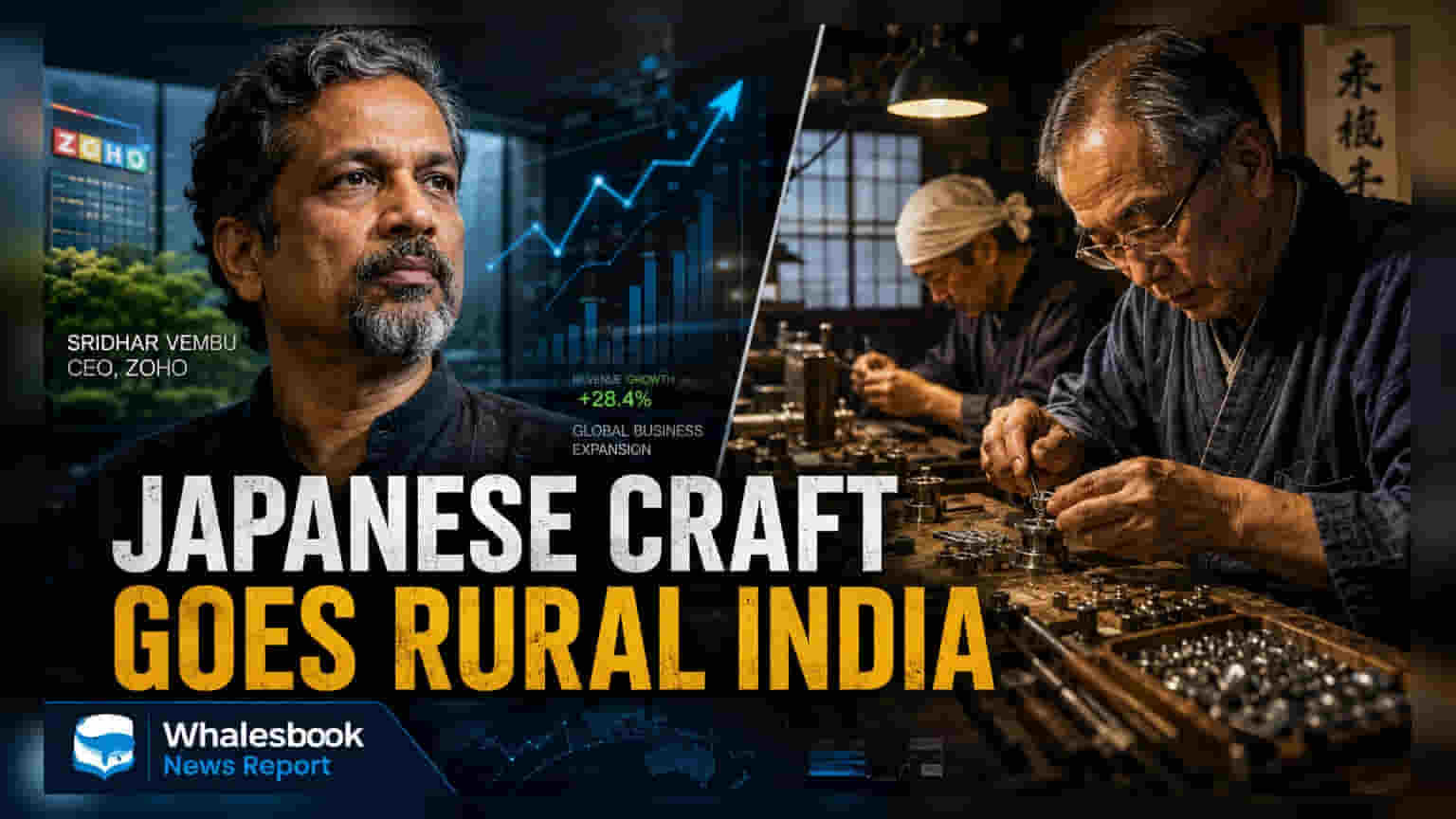
Zoho CEO Sridhar Vembu is visiting Japan to partner with local manufacturers and bring 'Takumi' precision craftsmanship techniques to rural India. This strategic move aims to expand Zoho’s rural development model beyond software services into specialized manufacturing. The initiative focuses on bridging the gap between traditional Indian skills and modern Japanese production expertise to create new manufacturing capabilities in small towns.
What Happened
Zoho co-founder and CEO Sridhar Vembu is set to travel to Japan to establish business partnerships with small and mid-sized enterprises. The objective is to learn from and integrate Japanese manufacturing methods—specifically the concept of 'Takumi'—into rural India. Takumi refers to a level of craftsmanship and precision in manufacturing that is highly valued in Japanese industry. Vembu aims to adapt these specialized techniques to revive and upgrade traditional Indian craftsmanship, fitting these new processes into the rural office hubs that Zoho has established across the country.
The Shift Toward Precision Manufacturing
For years, Zoho has been recognized for its software-as-a-service (SaaS) business model and its unique approach to 'rural-first' development. By setting up offices in smaller towns like Tenkasi in Tamil Nadu, the company has focused on training local talent to work in global tech services. This new Japan-focused initiative signals a potential shift in strategy. Rather than limiting the rural model to software coding and support, Zoho appears interested in integrating hardware-focused manufacturing and precision craftsmanship. This could help diversify the economic activity in these rural hubs, moving away from pure digital services toward creating high-quality physical products.
Why This Matters for the Tech Sector
This move by Zoho is noteworthy for the broader Indian technology and manufacturing sector. Many Indian IT companies focus on service-based revenue, which is often centralized in major metropolitan areas. Zoho’s commitment to decentralization and now, industrial precision, challenges the standard model of IT growth. If successful, it could demonstrate how to build high-value manufacturing capabilities in rural areas by adopting global 'best practices' rather than just relying on local, low-cost labor. It highlights a long-term vision where rural India competes not just on cost, but on quality and specialized skill.
Challenges in Scaling Hardware and Craft
Transitioning from a scalable software product to precision manufacturing involves different types of risks. Software can be replicated and distributed instantly, whereas manufacturing requires physical infrastructure, complex supply chains, and consistent quality control. For Zoho, the challenge will be whether the 'Takumi' precision can be successfully taught and maintained at scale in a rural Indian setting. Additionally, integrating these new manufacturing lines into an organization that is historically structured for software development will require significant operational focus and training investments.
What Investors and Observers Can Track
Since Zoho is a private, bootstrapped company, it does not provide quarterly financial reports for public investors. However, observers can monitor the progress of these Japan-India partnerships through company announcements and updates on their rural expansion projects. Key monitorables include whether the company establishes new dedicated manufacturing facilities, the type of products they aim to produce using these 'Takumi' methods, and whether they can successfully hire and train local artisans to meet international precision standards. The ability of the company to bridge the gap between digital services and physical manufacturing will be the primary measure of this strategy's long-term success.