 Whalesbook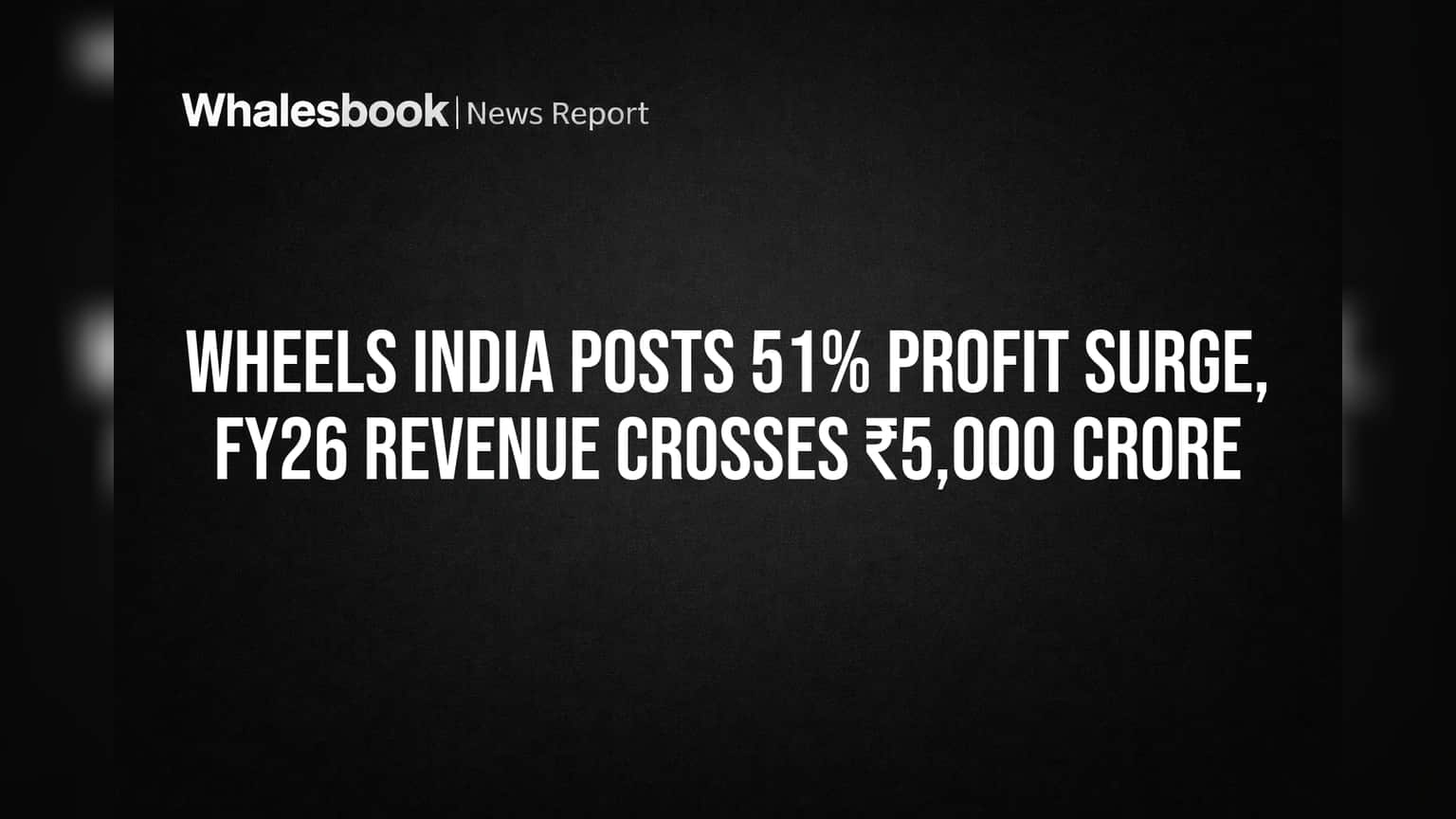


The Seamless Link
The robust financial performance demonstrated by Wheels India Ltd. for the fourth quarter and full fiscal year 2026, characterized by record sales and profit expansion, sets a positive stage. However, the forward-looking narrative is increasingly dominated by emerging economic challenges, primarily inflationary pressures and supply chain volatility, which are poised to influence the company’s growth trajectory in the upcoming fiscal year.
The Smart Investor Analysis
The Core Catalyst
Wheels India Ltd. concluded fiscal year 2026 with robust financial outcomes, fueled by strong domestic automotive demand and growth in exports. In the fourth quarter ending March 31, 2026, consolidated net profit escalated by 51% year-over-year to ₹58 crore, accompanied by a 22% increase in revenues to ₹1,564 crore. For the full fiscal year, consolidated net profit saw a 41% rise to ₹158 crore, while revenues surpassed the ₹5,000 crore mark, reaching ₹5,465 crore, up 15% from the prior year. These results led the Board to recommend a total dividend payout of ₹14.44 per share. The company's current market valuation, with an estimated Price-to-Earnings (P/E) ratio around 22 times and a market capitalization approximating ₹2,800 crore, reflects investor anticipation of continued performance, with the stock recently trading near ₹680 per share.
The Analytical Deep Dive
Chairman and Managing Director Srivats Ram attributed the strong Q4 performance to "GST 2.0 reforms" bolstering domestic demand in car, truck, and tractor segments, alongside a notable contribution from the air suspension division and export demand for earthmover wheels. Despite export growth of 20% in Q4, which was managed effectively despite trade tensions, the company is now facing inflationary headwinds. Mr. Ram pointed to the emergence of increased commodity and fuel prices in March, partially influenced by geopolitical events such as the "West Asia crisis," which has begun to affect the availability of raw materials like aluminum. This inflation is expected to moderate demand growth in FY27. To sustain its growth and operational capacity, Wheels India is planning a substantial capital expenditure of approximately ₹280 crore for the current fiscal year. The company anticipates further export improvements in the coming year, with FY28 projected to be stronger as new contracts with global clients are finalized. Sector peers like Jamna Auto Industries, also a significant auto component supplier, are navigating similar inflationary pressures, though their P/E ratios, around 20x, suggest comparable market valuations within the sector.
The Forensic Bear Case
While the headline figures point to success, a closer examination reveals potential vulnerabilities. The burgeoning inflationary environment, which began in March, poses a significant risk to operating margins, especially if the company cannot fully pass on increased costs to original equipment manufacturers (OEMs). The supply chain disruptions, stemming from geopolitical instability and commodity shortages, could also impact production schedules and input costs, a challenge faced by many in the Indian auto component sector. Compared to some competitors, Wheels India’s P/E ratio around 22x indicates it is not excessively valued, but its operational leverage means margin compression could have a pronounced effect. Historical stock reactions to past earnings reports with cautionary forward guidance suggest that the market may react negatively if the company struggles to mitigate these cost pressures or if demand falters more than anticipated in FY27. Srivats Ram, with a tenure marked by growth, has a generally positive track record, but no significant historical controversies or major regulatory issues involving the company have been publicly highlighted that would immediately flag a "management check" concern, though vigilance on execution during this challenging period is warranted.
The Future Outlook
Wheels India is cautiously optimistic, acknowledging the prevailing uncertainties. Management expects exports to improve throughout the current fiscal year, with a more pronounced uplift anticipated in FY28 driven by newly secured contracts. The company believes it can maintain growth and profitability through these uncertain times, supported by its strategic capex plans. However, the extent to which inflationary headwinds are absorbed or passed on will be a critical determinant of its financial performance in FY27.