

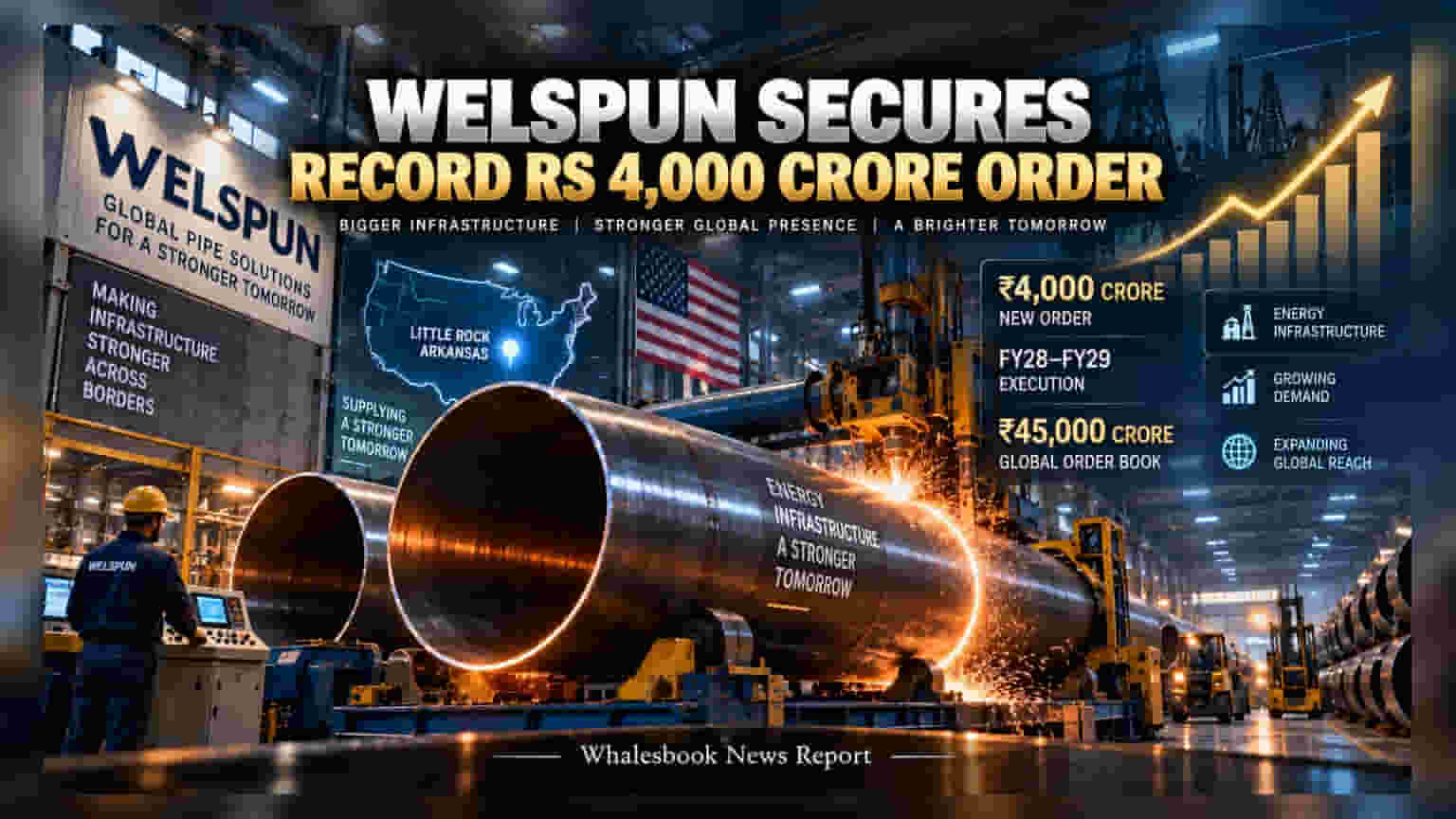
Welspun Corp's US subsidiary, Welspun Tubular LLC, has secured a Rs 4,000 crore contract for the supply of HFIW pipes. The project, set for delivery in fiscal years 2028 and 2029, brings the company's global order book to Rs 45,000 crore. Investors should consider the impact of long-term execution and global energy demand on future profitability.
Welspun Corp’s US subsidiary, Welspun Tubular LLC, has secured a supply contract valued at Rs 4,000 crore. This project involves the manufacture of High-Frequency Induction Welded (HFIW) pipes at the company’s facility in Little Rock, Arkansas. As a key part of the company's international operations, the Little Rock site has been a central point for the firm’s strategy to expand its presence in the American energy infrastructure market.
The contract is scheduled to be executed over fiscal years 2028 and 2029. This long-term timeline provides revenue visibility, which is important for a business involved in the capital-intensive pipe manufacturing sector. With the addition of this project, the company’s total global order book has reached Rs 45,000 crore.
For investors, the primary takeaway is the continued demand for energy transport infrastructure in the United States. Pipe manufacturers often benefit from major spending on oil and gas pipelines. However, this business model carries specific operational and financial risks that require attention.
Managing Long-Term Execution Risks
While a large order book supports future revenue, executing projects over a multi-year period like fiscal years 2028 and 2029 introduces challenges. Commodity price volatility is a significant factor for pipe manufacturers, as the cost of steel represents a substantial portion of total expenses. If raw material prices increase sharply during the execution window, profit margins could come under pressure unless the company has strong price-adjustment mechanisms within its contracts.
Furthermore, operating a manufacturing facility in the United States exposes the company to regulatory and trade policy variables. Changes in US import policies or energy regulations could impact future business viability. Investors may want to monitor the utilization of the Arkansas plant, as consistent output is necessary to maintain efficient operations and protect profit margins.
The company’s heavy dependency on the energy sector also means its growth is tied to global energy investment. If energy companies reduce their capital spending on new pipeline infrastructure due to lower energy prices or regulatory shifts, it could affect the pipeline for new orders. The key monitorable for investors in upcoming quarters will be the company’s ability to execute this large order while navigating cost inflation and changes in global energy sector demand.