 Whalesbook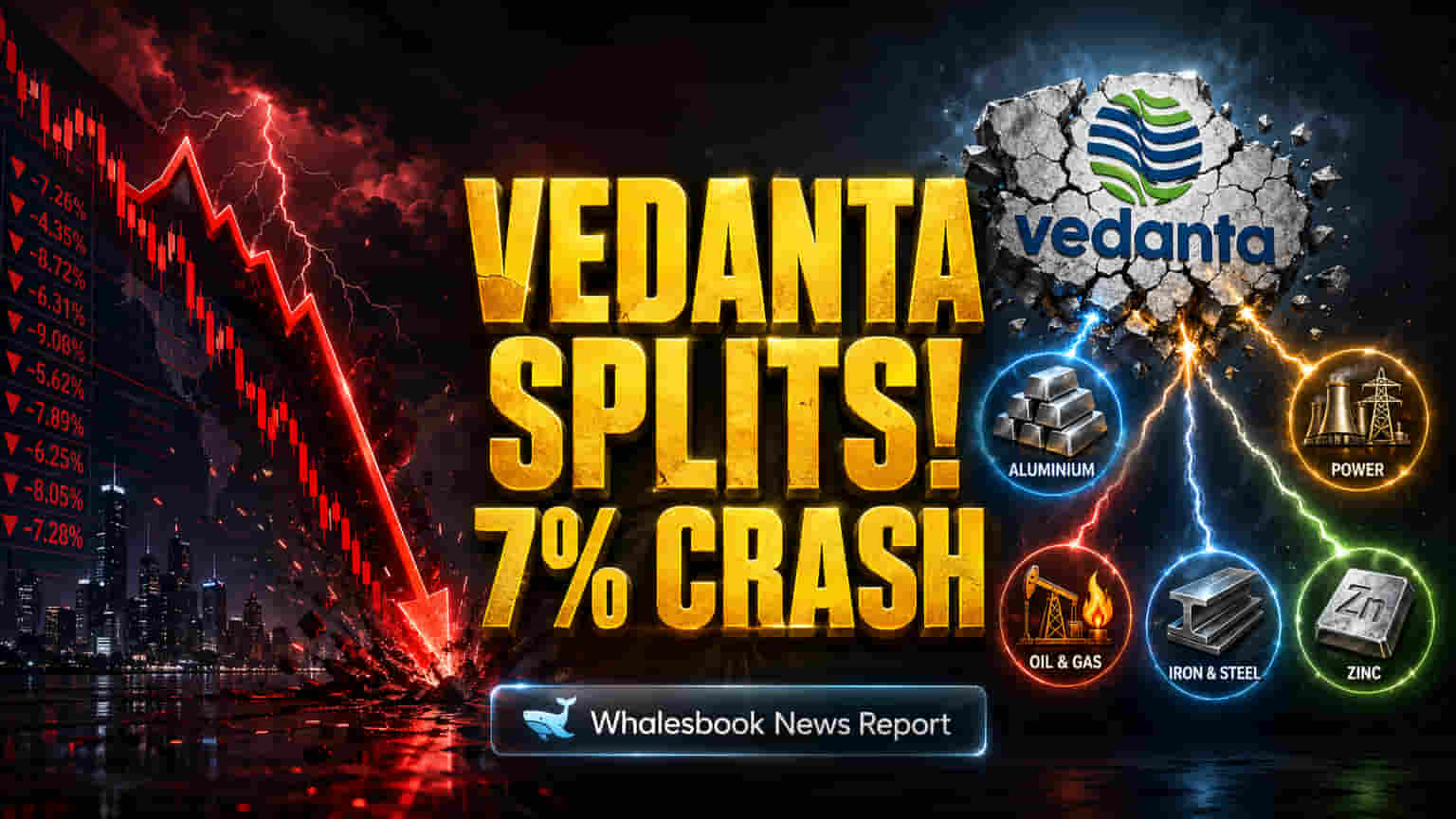


Market Reacts to Demerger with Price Drop
Vedanta's stock fell on April 30, 2026, the day it began trading ex-demerger. The decline suggests a gap between how analysts see the company's value and the market's immediate reaction. This period is key to understanding how investors will price the separate business units and the main Vedanta company.
The company's shares fell about 3.5% from their opening price on April 30, 2026, reaching ₹271.50 after hitting an intraday high of ₹292. Over 30 million shares were traded on the NSE and BSE. This drop pushed the stock below ICICI Securities' forecast of ₹300-325 per share for the post-demerger period. Analysts had previously valued the remaining Vedanta entity, which includes major assets like Hindustan Zinc, at roughly ₹325 per share compared to the previous day's close of ₹773.60. The initial trading session showed a significant repricing.
Strong Q4 Results Bolstered by Commodity Prices
Despite the stock's volatility, Vedanta's financial results for the fourth quarter of fiscal year 2026 met expectations. Profit after tax surged 89% year-on-year to ₹9,352 crore. Revenue reached a record ₹51,524 crore, up 29% from the previous year. Earnings before interest, taxes, depreciation, and amortization (EBITDA) rose 59% year-on-year to ₹18,447 crore. Higher commodity prices fueled this strong performance. Aluminium prices increased 13% quarter-on-quarter to $3,198 per ton, and silver prices in the Zinc India segment rose 54% to about $84 per ounce. Analysts predict aluminium prices will stay strong at around $3,000 per ton in 2026 due to supply issues. Zinc prices are also expected to remain supported at about $2,950 per ton in 2026, despite anticipated price swings.
Demerger Creates Five New Entities
The demerger, effective April 30, 2026, divides Vedanta into five separate companies: Vedanta Aluminium, Vedanta Oil & Gas, Vedanta Power, Vedanta Iron & Steel, and the remaining Vedanta Ltd. This residual company will keep key operations such as Zinc India (Hindustan Zinc), Zinc International, and Copper. The goal of this restructuring is to simplify the company's setup, create distinct value, and draw targeted investments, enabling each business to follow its own growth path. Shareholders will get one share in each new entity for every Vedanta share they own. The new companies are expected to start trading by mid-June 2026. Hindustan Zinc, a major contributor to the residual entity's value, has a market capitalization of about ₹2.59 lakh crore and a P/E ratio between 18.7 and 20.5 over the last twelve months.
Debt Load and Execution Risks Remain Concerns
Although Q4 results were strong and analysts are optimistic about commodity prices, Vedanta's financial structure carries risks. The company has significant debt, with a debt-to-equity ratio as high as 1.9 to 2.39x recently. While cash flow from operations can cover interest payments, this high debt limits financial flexibility and creates refinancing challenges, especially during commodity price swings. Separating and listing five distinct entities also adds complexity. Investors will watch how each new company handles its capital, operations, and debt. Motilal Oswal, for instance, keeps a 'Neutral' rating, seeing a sum-of-the-parts valuation of ₹800 per share but modest potential upside due to market conditions or execution risks.
Positive Outlook Tempered by Execution
Analysts generally hold a positive to neutral view. The consensus rating for Vedanta is 'Strong Buy' with an average 12-month price target of ₹859.77, suggesting over 11% potential upside. However, Motilal Oswal maintains a 'Neutral' rating and ₹800 target, noting Q4 results met expectations and deleveraging is on track. The upcoming listing of the demerged entities by mid-June 2026 will be crucial for establishing clearer valuations for each segment. While strong aluminium and zinc prices, along with operational gains, offer support, managing the company's substantial debt and ensuring a smooth demerger execution are vital for future returns.