 Whalesbook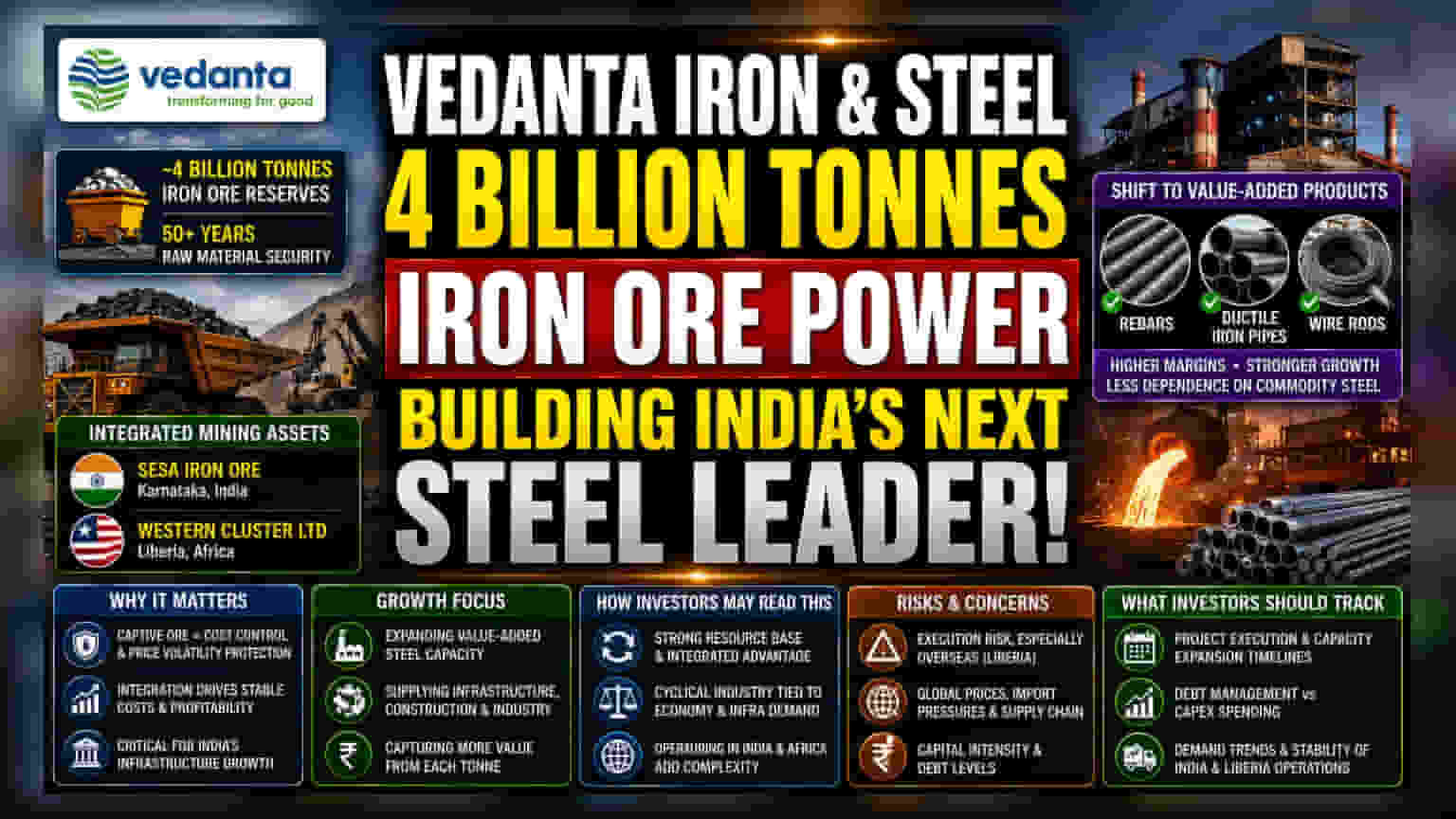


Recently listed Vedanta Iron and Steel Ltd is aiming to leverage its 4 billion tonnes of iron ore reserves to expand into value-added products. While the company focuses on long-term raw material security, investors should consider risks related to commodity price volatility, project execution in overseas markets like Liberia, and the cyclical nature of the steel industry.
What Happened
Vedanta Iron and Steel Ltd (VISL), which recently debuted on the stock exchanges as a demerged entity, has announced its strategy to become a significant integrated steel producer. The company’s growth plan centers on its substantial iron ore reserves, estimated at approximately 4 billion tonnes. Management, led by CEO Pankaj Kumar Sharma, aims to use these resources to secure raw materials for over 50 years. The company is now focusing on increasing its production of value-added steel products, such as ductile iron pipes, wire rods, and rebars, to move beyond basic steel manufacturing.
The Strategy Behind The Reserves
For a steel company, owning iron ore mines is a major business advantage. It provides a level of cost control that competitors without captive mines often lack. By securing raw materials through assets like Sesa Iron Ore in India and mining operations in Liberia via Western Cluster Ltd, the company aims to insulate itself from the volatility of raw material prices. This integration is designed to stabilize production costs, which is a key factor in maintaining profitability during periods when global steel prices fluctuate.
Why The Shift To Value-Added Products Matters
VISL’s move to expand into products like rebars and ductile iron pipes is a strategic effort to improve profit margins. Commodity steel, such as basic hot-rolled coils, often faces intense pricing pressure based on global market trends. By moving toward higher-value products that are used in specific infrastructure and construction projects, the company aims to reduce its reliance on basic commodity sales. Investors generally look for this shift as a sign that a company is trying to capture more value from its steel output, rather than just selling raw or semi-finished steel.
How Investors May Read This
While the company has a strong resource base, the steel sector is highly cyclical. This means that demand and profitability are closely tied to the health of the broader economy, particularly infrastructure and construction spending. Investors often assess such integrated players by how well they can manage their capital spending, especially when expanding production capacity. Because the company operates in both India and Africa, managing logistics and infrastructure projects across different countries adds a layer of complexity compared to peers that focus only on the domestic market.
Risks And Concerns
Steel manufacturing is capital-intensive and subject to various risks. One significant area is execution risk, especially concerning the company's international operations in Liberia. Developing infrastructure and mining operations in foreign jurisdictions can involve delays, cost increases, and regulatory challenges that might differ from domestic norms. Additionally, the steel sector is currently sensitive to global supply chain trends and potential import pressures, which can impact pricing. If raw material costs were to deviate or if demand growth does not meet expectations, the company’s ability to maintain its profit margins could be tested. Investors also monitor debt levels in demerged entities, as large expansion projects often require significant funding.
What Investors Should Track
Moving forward, the key monitorables include the company’s project execution timelines, specifically for its value-added production facilities. Investors will likely watch for updates on how the company manages its debt in relation to its capital spending plans. Additionally, tracking the demand trends in the domestic infrastructure sector and the stability of its overseas operations in Liberia will be important. Quarterly commentary on how the company is balancing its mining output with its steelmaking requirements will also provide clarity on the effectiveness of its integrated business model.