 Whalesbook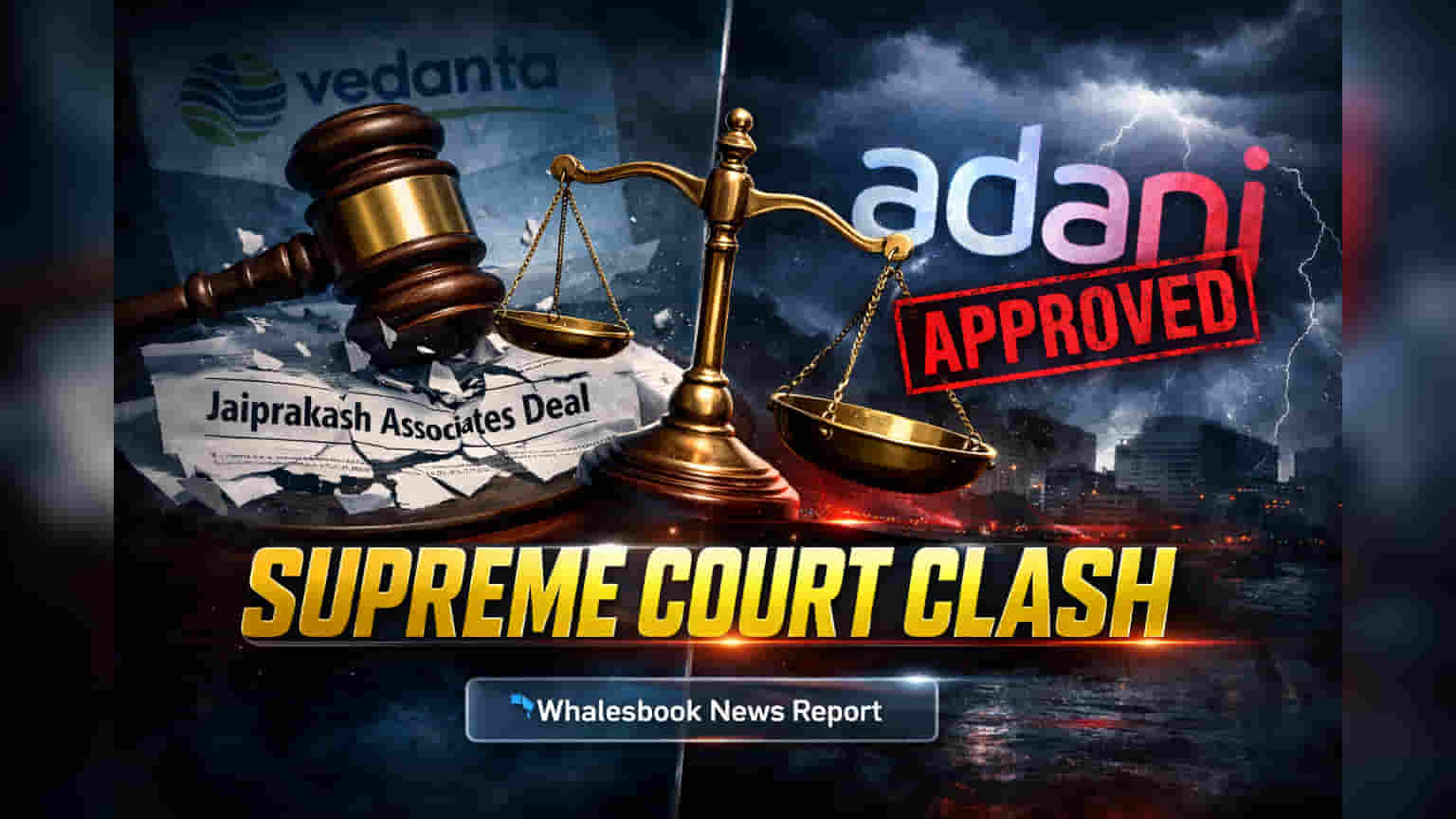


Supreme Court Hearing Tests Insolvency Rules
The Supreme Court's upcoming hearing on Vedanta Ltd.'s challenge to Adani Group's acquisition of Jaiprakash Associates Ltd. (JAL) is more than a corporate dispute; it's a key moment for India's insolvency framework. Vedanta contends that the approval of Adani's resolution plan by JAL's Committee of Creditors (CoC), and clearances from the National Company Law Tribunal (NCLT) and National Company Law Appellate Tribunal (NCLAT), ignored a superior bid and lacked transparency. Vedanta's core argument is that its Net Present Value (NPV) offer was higher, and the process was 'unfair, opaque, and inequitable'.
Bids Compared: Value vs. Speed
Vedanta's bids for JAL, a company with over ₹57,000 crore in debt, have drawn significant attention. Vedanta claims its offer, valued at about ₹12,505.85 crore (NPV) or up to ₹17,000 crore total, was superior. However, the CoC chose Adani Enterprises' bid of roughly ₹14,535 crore. The CoC's reasoning focused on Adani's higher upfront cash payment and a much shorter repayment timeline (two years) versus Vedanta's five-year payout. This focus on quick cash and speed over the highest NPV became a key part of Vedanta's appeal, questioning the CoC's 'commercial wisdom' and the IBC's goal of maximizing value. After the NCLT approved Adani's plan on March 17, 2026, and the NCLAT refused an interim stay on March 24, 2026, Vedanta filed its petition with the Supreme Court on March 25, 2026.
Adani's Expansion Meets Vedanta's Pursuit
The JAL acquisition fits Adani Group's aggressive strategy of acquiring distressed assets through the Insolvency and Bankruptcy Code (IBC). This deal gives Adani immediate access to prime real estate in the National Capital Region, cement plants, and power assets, to add to its diverse businesses. Vedanta's pursuit of JAL shows its continued interest in distressed assets, focused on maximizing financial value in its bids. Analysts note Vedanta's stock looks technically favorable against Adani Enterprises, which holds a 100% buy rating and is seen as 'Modestly Undervalued' by GuruFocus, while Vedanta is rated 'Significantly Overvalued'.
Process Concerns and Shareholder Value
Vedanta's claims of an 'unfair, opaque, and inequitable' process raise broader concerns about the transparency and integrity of IBC resolutions, issues the Supreme Court itself has noted. IBC rules now require CoC decisions to be officially recorded with reasons for selecting applicants, aiming for more transparency. However, long resolution timelines—averaging 764 days as of December 2025—and a large case backlog at the NCLT can lead to substantial value erosion. For JAL, the approved plan will delist shares with zero consideration for existing shareholders, wiping out ₹404 crore of investor wealth and highlighting the risks for shareholders in complex insolvency cases. Vedanta contends the CoC's decision moves away from the IBC's main goal of value maximization. Moreover, JAL's substantial debt of over ₹57,000 crore means even secured creditors are not fully repaid, with recoveries estimated below 3% of total claims.
Impact on Future Insolvency Cases
The Supreme Court's ruling will be closely watched for its implications beyond this specific transaction, affecting future distressed asset acquisitions. It could set a precedent on how NPV is weighed against upfront payments, the transparency needed for CoC decisions, and the balance between speed and value under the IBC. With both Adani and Vedanta possessing substantial market capitalizations—Adani Enterprises (about ₹2.37 trillion) and Vedanta (₹2.69 trillion)—their strategies and how they navigate regulatory issues significantly shape India's corporate landscape. The case will shape how large companies use India's insolvency system, affecting investor confidence and future distress resolutions.