

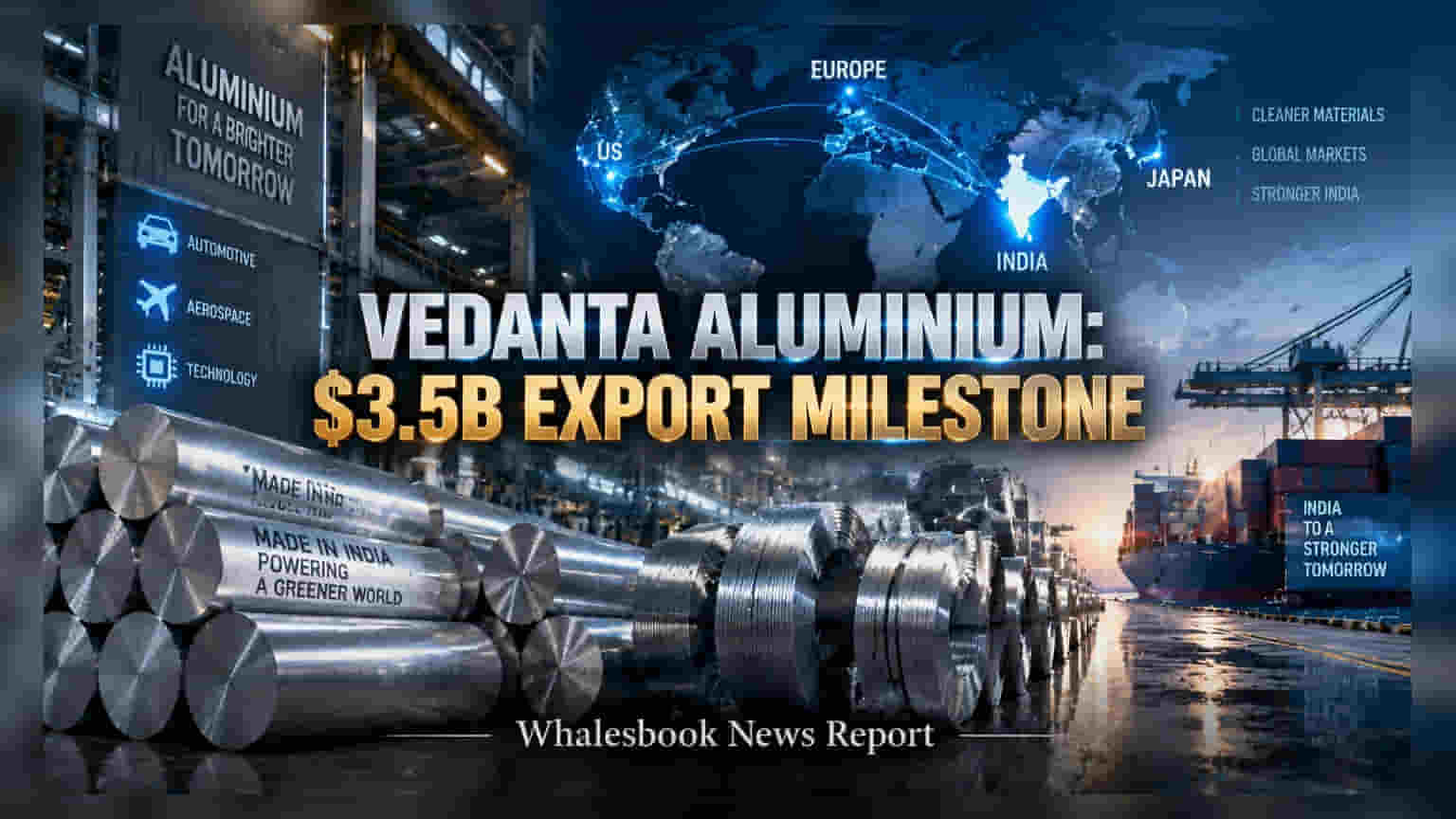
Vedanta Aluminium achieved $3.5 billion in export revenue during FY26, securing its position as India’s second-largest exporter from Special Economic Zones. The firm now accounts for 6% of total SEZ-based exports, with a focus on high-value international markets like automotive and aerospace. Investors are tracking how this export performance and shift toward premium products impacts the overall profitability of parent company Vedanta Ltd.
Vedanta Aluminium has reported $3.5 billion in export revenue for the 2025-26 fiscal year, establishing itself as the second-largest exporter from India’s Special Economic Zones. Data from the Export Promotion Council for EOUs and SEZs indicates the company now contributes 6% of India's total exports from these zones. This performance highlights the operational scale of its flagship manufacturing facility in Jharsuguda, Odisha, and its ability to meet the strict quality standards required by global buyers.
The company has expanded its reach to over 60 countries, with a primary focus on automotive, aerospace, and technology markets in the United States, Japan, and Europe. By shifting its portfolio toward higher-value products—such as its low-carbon ‘Restora’ line, wire rods, and foundry alloys—the company is moving to diversify its revenue beyond basic metal production. These materials are increasingly being integrated into infrastructure for electric vehicles, data centers, and artificial intelligence hardware.
For investors, this export growth is a component of a larger strategy by the parent company, Vedanta Ltd, to optimize its product mix and improve operational performance. However, there are factors that influence the sustainability of these results. Profit margins in the aluminium industry are highly sensitive to global commodity prices, which are determined by the London Metal Exchange. Furthermore, the company faces ongoing pressure from fluctuating energy costs and the logistical complexities involved in international trade.
The parent entity, Vedanta Ltd, is also a focal point for shareholders due to its corporate debt profile. While strong export volumes contribute to cash generation, the group's overall financial health remains an area that investors monitor closely. The company also operates in a competitive landscape, with domestic peers like Hindalco Industries maintaining significant global production and export capabilities. Future updates on how these export volumes translate into consistent profit margins, and whether the company can defend its market share in premium technology segments, will be important for investors to track.