

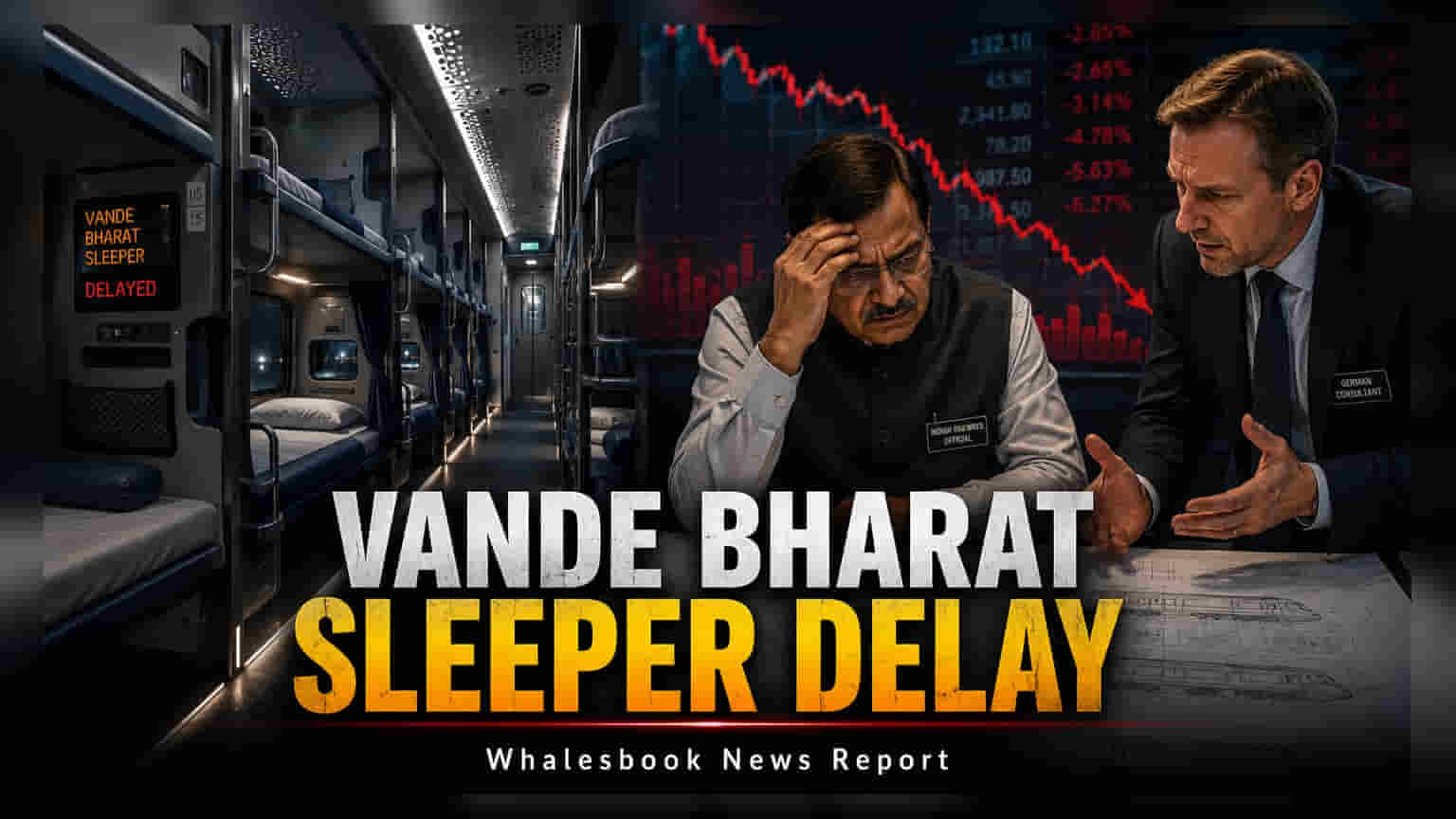
The rollout of 120 Vande Bharat sleeper trains is delayed by over two years due to pending design approvals. The delay impacts major contractors like Titagarh Rail Solutions and BHEL, prompting Indian Railways to explore in-house manufacturing to speed up production.
The ambitious rollout of 120 Vande Bharat sleeper trains has faced a significant setback, with the expected prototype delivery pushed to late 2026. This delay of more than two years stems from challenges in obtaining final design approvals, which have been held up by the lack of necessary documentation from a German consultant working with the project developers.
Impact on Contractors and Manufacturing
The project, which was initially awarded in 2023, involves several key industrial players. A consortium consisting of Titagarh Rail Solutions Ltd and Bharat Heavy Electricals Ltd (BHEL) secured a contract for 80 of these units. Because the production timeline is strictly tied to the finalization of standardized designs, these companies have been unable to proceed with mass manufacturing as originally planned. In an attempt to reduce reliance on external design processes and avoid further setbacks, Indian Railways is now evaluating the use of its own internal manufacturing facilities to accelerate the development of the next-generation sleeper coaches.
Project Execution and Coordination Challenges
Kinet Railway Solutions, the Indo-Russian joint venture tasked with the project, maintains that the design integration is being managed internally and that work is progressing. However, the company has not addressed the specific documentation hurdles involving their consultant that have led to the current timeline extension. The project relies on a complex supply chain involving over 100 different vendors responsible for various engineering and mechanical components. Any disruption in design approval affects this entire chain, potentially increasing the cost of raw materials or labor if the timeline continues to drift.
Investor Monitorables
For investors monitoring companies like Titagarh Rail Solutions and BHEL, the primary concern is the execution risk associated with these large-scale government contracts. Delays can lead to higher capital spending without corresponding revenue realization, potentially impacting profit margins. Moving forward, the key updates to track will be the official receipt of design approvals, the actual date the prototype is unveiled, and any shifts in the contract terms between Indian Railways and the private manufacturing consortiums. Whether Indian Railways chooses to shift more production to its own units or succeeds in getting the private consortiums back on track will define the revenue impact for these companies in the coming quarters.