

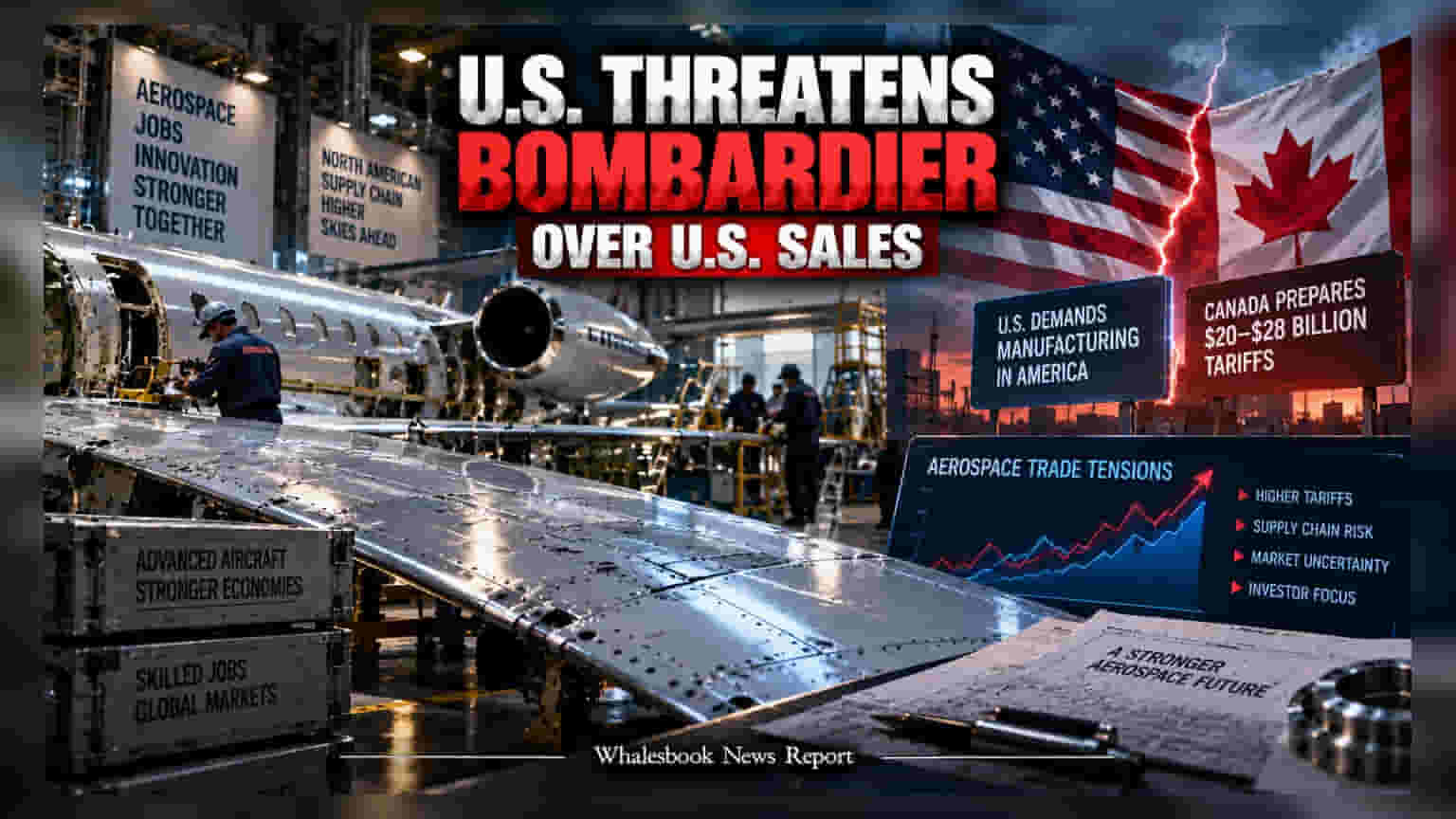
President Donald Trump has warned that Bombardier could face a ban on aircraft sales in the U.S. unless the company shifts production to American soil. With the U.S. accounting for over half of its revenue, this development introduces significant uncertainty for the aerospace manufacturer. Investors are now watching for potential trade retaliation from Canada and the impact on the firm’s $21.8 billion order backlog.
On September 7, 2026, U.S. President Donald Trump issued a stern warning to Canadian aerospace firm Bombardier, threatening to block the sale of its aircraft in the United States unless the company moves its manufacturing operations onto American soil. This ultimatum has introduced a new layer of uncertainty for the aerospace sector, which is deeply integrated across the North American border.
The President’s statement, posted on social media, focused on the company’s heavy reliance on the U.S. market. With more than 50% of Bombardier's revenue generated from American customers, any restriction on sales could have a material impact on the firm’s financial stability. The demand comes as Canada prepares to implement retaliatory tariffs on U.S. goods, potentially valued between $20 billion and $28 billion, starting September 8, 2026.
Financial Position and Order Book
Prior to this announcement, Bombardier had shown signs of operational improvement. As of June 30, 2026, the company reported a robust backlog of $21.8 billion, indicating strong demand for its aircraft. Furthermore, the company posted revenue of $2.15 billion for the second quarter of 2026. In August 2026, credit rating agency Moody’s upgraded the company’s corporate family rating to Ba2, citing improved profit margins, steady revenue growth, and effective debt reduction efforts. This strong financial foundation is now being tested by the potential for renewed geopolitical and trade-related friction.
Operational Risks and Supply Chain
Bombardier currently employs approximately 3,500 people in the United States across various service and production facilities. The North American aerospace supply chain is highly complex, with many parts and systems moving frequently across the border. A sudden move to shift all production would present significant execution risks, including the potential for delays in delivery and the need for massive capital investment. Analysts are also evaluating whether the U.S. executive branch has the legal authority to impose a blanket ban on products that have already received certification from the Federal Aviation Administration.
Investor Monitorables
The market impact of this development will largely depend on the official policy follow-through and the response from Canadian authorities. While the firm has not issued a formal response to the threat, the broader trade environment remains tense. Investors and analysts are monitoring two primary areas: the outcome of any potential trade negotiations that could avert further escalation, and whether the company's strong order backlog can be maintained if trade relations between the two nations continue to deteriorate. The upcoming days, specifically regarding the implementation of Canadian tariffs and any clarifying statements from the White House, will be key to understanding the medium-term impact on the company's business operations.