

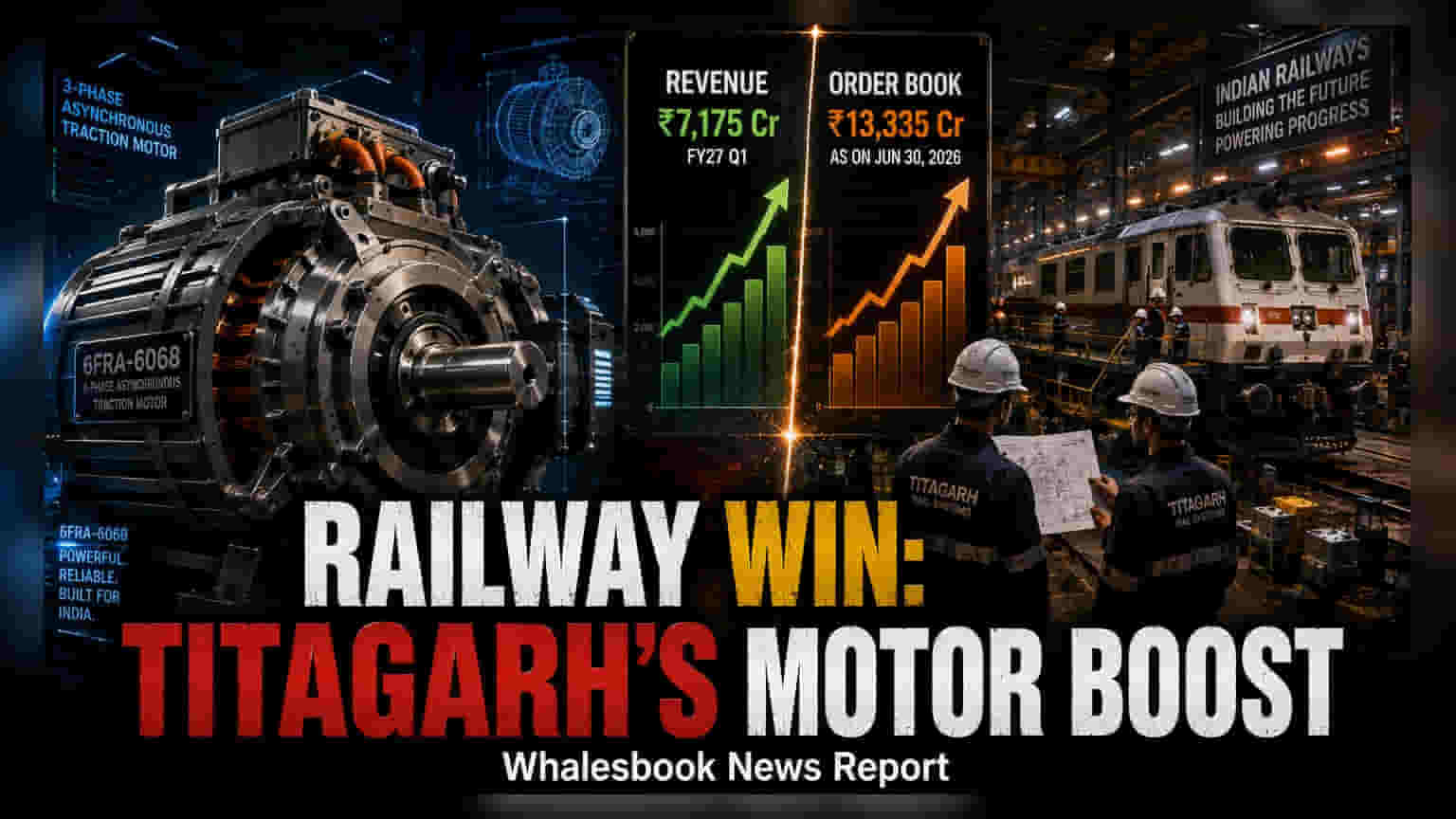
Titagarh Rail Systems has secured 'Approved Vendor' status from Indian Railways to manufacture 3-phase traction motors with a capacity of 1,200 units annually. This regulatory approval allows the company to bid for key locomotive propulsion contracts. The move supports the firm's strategic pivot toward its passenger rail business, which currently dominates its ₹13,335 crore order book.
Titagarh Rail Systems Ltd has been officially approved as a vendor by Indian Railways for the supply of 3-phase asynchronous traction motors, specifically the type 6FRA-6068. The approval, effective August 19, 2026, authorizes the company to manufacture up to 1,200 such motors per year. This development is a key step for the company as it looks to strengthen its role in the locomotive equipment and propulsion systems market.
Expanding Locomotive Capabilities
By securing this vendor status, Titagarh Rail Systems can now directly participate in future tenders for these critical components. Traction motors are vital for the operation of 3-phase locomotives, and being an approved supplier allows the company to move further into the specialized equipment segment. This is part of a broader business strategy to reduce reliance on legacy manufacturing and enter higher-value areas of the rail supply chain.
Strategic Shift to Passenger Rail
The company is currently shifting its business focus toward passenger rail systems, which now account for approximately 78% of its total standalone order book of ₹13,335 crore as of June 30, 2026. The company’s recent financial results reflect this trend, with a consolidated net profit of ₹52.58 crore reported for the June quarter of fiscal year 2027, a notable turnaround from the net loss of ₹23.10 crore recorded in the same quarter the previous year.
Operational Risks and Monitorables
While the approval provides new opportunities, investors should consider the operational risks involved. The company is actively scaling up new product lines, including propulsion systems and aluminum coaches, which brings risks related to technical execution and ramp-up time. Furthermore, the financial benefit from this new vendor status is directly linked to the company's ability to win future tenders and the specific terms set by Indian Railways. As with many businesses serving the government sector, revenue growth remains heavily dependent on railway spending, policy shifts, and the timing of tender cycles. Investors may also monitor how this new product mix influences profit margins, as entering new manufacturing segments can sometimes cause initial margin volatility.