

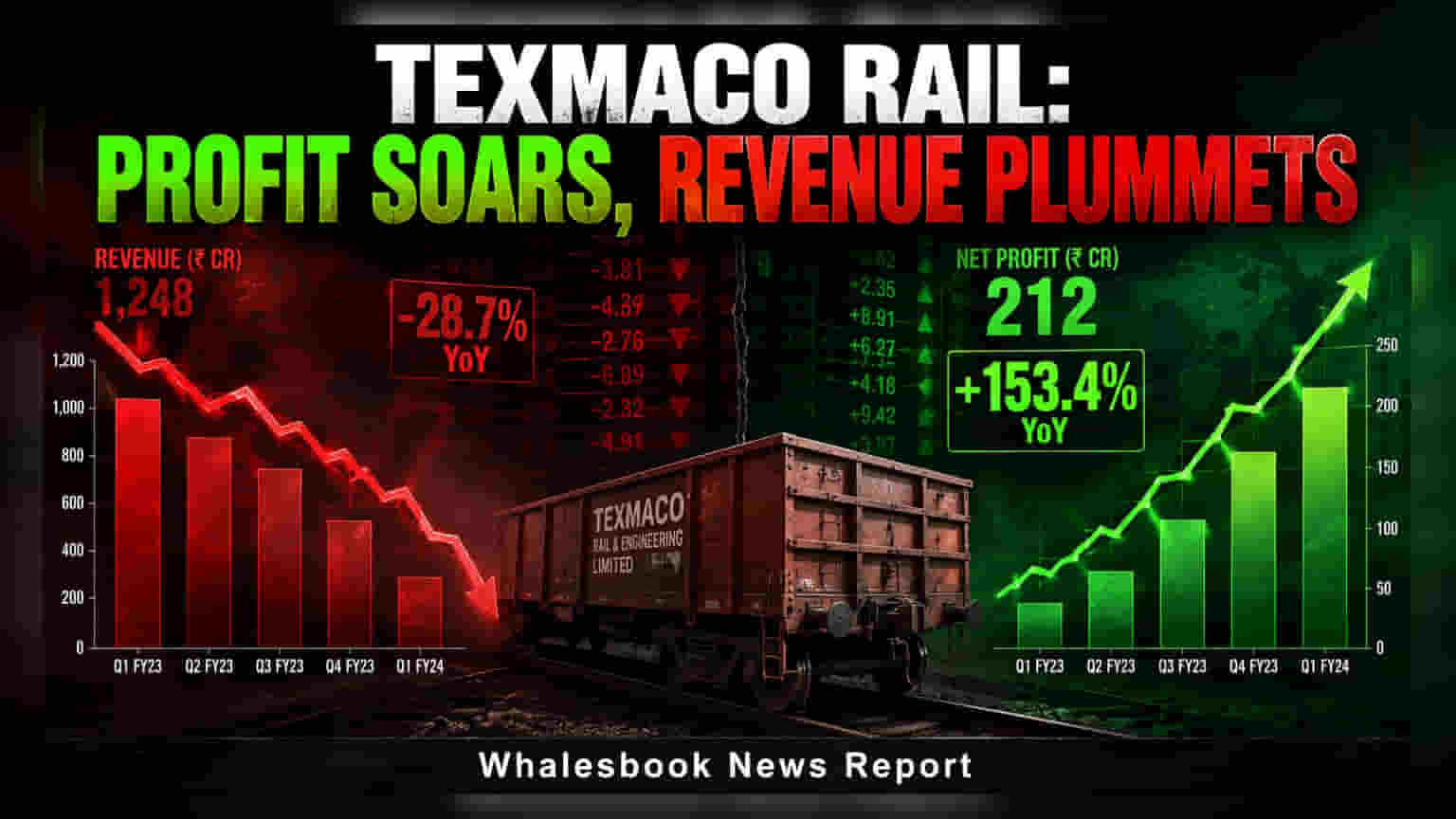
Texmaco Rail and Engineering reported a 66.8% jump in net profit to ₹50 crore for the June quarter, despite a 16.9% drop in revenue to ₹757 crore. Investors will likely track whether the company's recent order wins can offset the current slowdown in sales and falling operating margins.
Texmaco Rail and Engineering reported a mixed financial performance for the first quarter ending June 30, 2026. While the company achieved a significant year-on-year increase in net profit, which climbed to ₹50 crore from ₹30 crore in the same period last year, its top-line growth faced pressure. Total revenue for the quarter fell by 16.9% to ₹757 crore compared to ₹911 crore in the previous year.
The decline in revenue also affected the company's core operating profitability. The Earnings Before Interest, Taxes, Depreciation, and Amortization, or EBITDA, dropped by 19.6% to ₹57 crore. Despite this decline in absolute terms, the EBITDA margin held steady at 8%, showing that the company maintained its relative profitability level on the sales it did manage to generate. Investors often look at these margins to understand how effectively a company manages its day-to-day costs, such as raw materials and labor, regardless of fluctuations in total sales.
Order Book and Business Outlook
These financial results arrive as the company attempts to build momentum through new contracts. In July 2026, Texmaco Rail announced it had received new business totaling approximately ₹71.46 crore. This includes a ₹70.72 crore order from the Central Warehousing Corporation and a ₹0.74 crore contract from South Western Railway. These orders are specifically for the manufacture and supply of BLSS rakes and Brake Vans.
The challenge for the company moving forward will be to convert these and other existing orders into faster revenue growth. When revenue drops while order intake continues, it often points to delays in the execution phase, where the company may be waiting on project clearances, supply of raw materials, or specific delivery schedules set by the railways and other clients.
For investors, the key monitorable remains the speed at which the company can execute its current order book and whether it can improve its revenue run rate in the upcoming quarters. Management commentary regarding project timelines and the impact of raw material price trends on future margins will be important factors to watch. As the company operates in the heavy engineering and rail infrastructure sector, its performance is also tied to government infrastructure spending cycles and the timely release of tenders by public sector units.