

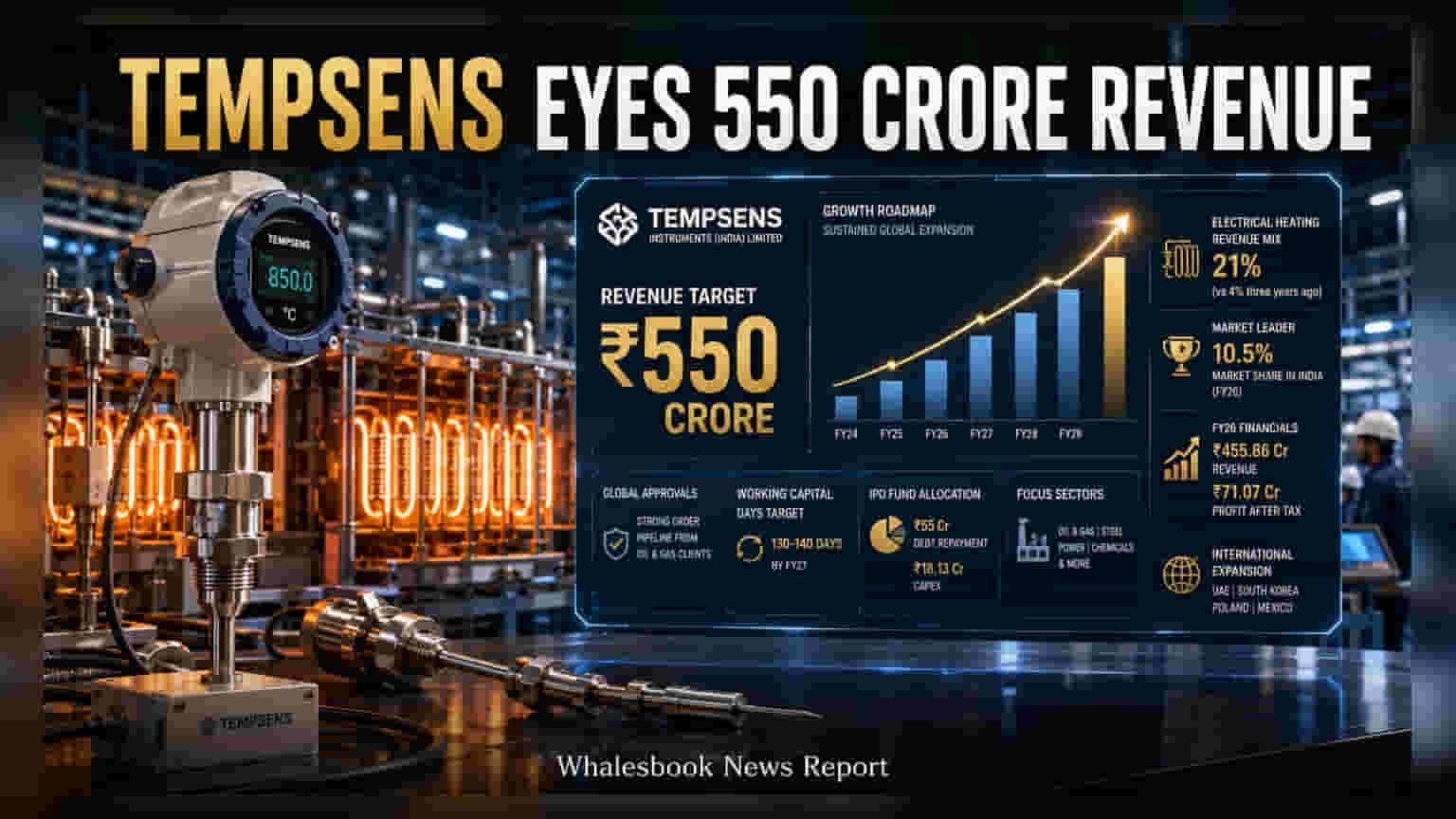
Tempsens Instruments made a strong stock market debut on Friday, listing at ₹634 against its issue price of ₹300. Following a successful ₹650 crore IPO, the company is aiming for ₹550 crore in annual revenue, driven by international expansion and a strategic shift toward electrical heating systems.
Tempsens Instruments (India) Limited had a strong market entry on Friday, August 28, 2026. The stock listed at ₹634 on the NSE and BSE, delivering a 111% return for investors over its IPO price of ₹300. Following the completion of its ₹650 crore initial public offering, the company is now turning its attention to achieving an annual revenue goal of ₹550 crore.
To reach this revenue milestone, the management is relying on international expansion and a change in its product mix. Managing Director Vinay Rathi highlighted a strategic pivot toward electrical heating systems. This segment, which once contributed only 4% to the company's revenue three years ago, now accounts for 21%. The company believes this shift, combined with new approvals from global oil and gas clients, will drive future performance. The company is currently the largest manufacturer of contact and non-contact temperature sensors in India by revenue, holding approximately 10.5% of the market share as of FY26.
International Growth Strategy
The company is scaling its operations in the UAE, South Korea, Poland, and Mexico. These units, which were previously in a development or "seeding" phase, are now expected to become significant contributors to the company's top line over the next three to five years. The UAE operations, in particular, reportedly tripled their revenue contribution recently, providing a blueprint for the newer international units to follow.
Financials and Operational Realities
In FY26, the company recorded a revenue of ₹455.86 crore and a profit after tax of ₹71.07 crore. As the firm expands, investors are keeping a close watch on working capital cycles. Management noted that recent acquisitions led to an increase in working capital days, but they expect these levels to normalize between 130 and 140 days by the end of the current financial year. The company also plans to use ₹55 crore from the IPO proceeds for debt repayment and ₹18.13 crore for capital spending.
Risks and Market Context
It is important to note that the company’s business is linked to capital expenditure cycles in the oil and gas, steel, and power sectors. Because these industries often rely on large, project-based orders, earnings can sometimes fluctuate based on the timing of these projects. Additionally, integrating international subsidiaries and managing potential currency risks remain ongoing tasks for the management team as they pursue global growth. Investors will likely monitor how effectively the company manages these working capital needs and whether it can maintain its 25% profit margin target while executing its international expansion strategy.