 Whalesbook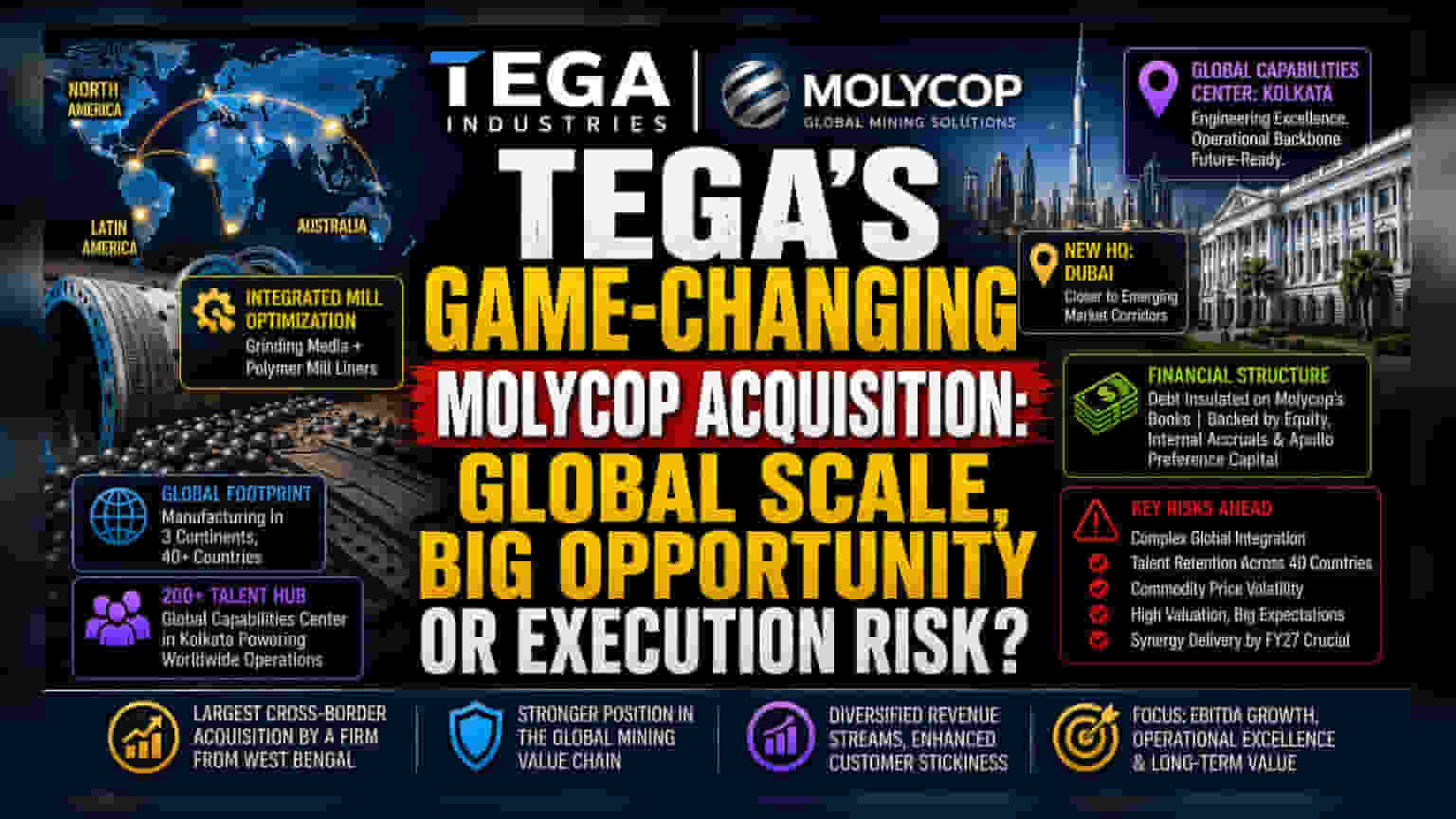


Scaling the Global Mining Value Chain
The conclusion of the Molycop acquisition marks a definitive shift for Tega Industries, transitioning the entity from a specialized consumable manufacturer to a comprehensive mining technology and services provider. By securing an 84.2% controlling interest in the Omaha-headquartered company, Tega gains immediate access to a massive global footprint, including manufacturing facilities across North America, Latin America, and Australia. This strategic consolidation allows the firm to offer integrated "mill optimization" solutions—a bundled package of grinding media and polymer mill liners—that directly addresses the mining industry's growing preference for fewer, highly reliable suppliers.
The Operational Integration Shift
Moving beyond simple asset ownership, the integration strategy involves a significant logistical pivot. Molycop’s corporate headquarters will transition from Omaha to Dubai, reflecting a move to centralize international management closer to key emerging market mining corridors. Simultaneously, Tega is anchoring its support structure in India by establishing a global capabilities center in Kolkata. This center, initially slated to house 200 staff, is intended to serve as the backbone for Molycop’s worldwide operations, signaling a long-term commitment to leveraging India’s engineering and operational talent pool to manage its newly expanded global logistics and supply chain network.
Financial Architecture and Risk Insulation
To protect its domestic balance sheet from the volatility often inherent in large-scale leveraged buyouts, the company implemented a structure that keeps the majority of acquisition-related debt on Molycop’s books. The financing, involving equity, internal accruals, and preference capital from Apollo Funds, was designed to avoid direct recourse to Tega Industries. Despite this, the sheer scale of the deal—which represents one of the largest cross-border acquisitions by a firm from West Bengal—imposes a rigorous burden on management to maintain EBITDA margins amidst rising global commodity price fluctuations and the ongoing need for continuous capital expenditure in the mining sector.
The Forensic Bear Case
While the market has reacted to the completion of the deal, structural risks remain embedded in the integration process. The success of this acquisition hinges on achieving time-bound synergy targets, with analysts noting that acquiring a larger, geographically dispersed entity requires flawless execution to avoid operational friction. Management faces the classic challenge of retaining specialized talent across 40 countries while simultaneously optimizing Molycop’s manufacturing network. Furthermore, the company’s current valuation—trading at a high P/E ratio relative to traditional industrial peers—suggests that significant future growth is already priced into the stock. Investors should monitor whether the anticipated EBITDA improvements materialize by FY27, as any delay in realizing operational efficiencies or a downturn in commodity-driven demand could put pressure on the firm’s ability to deleverage its consolidated balance sheet.