 Whalesbook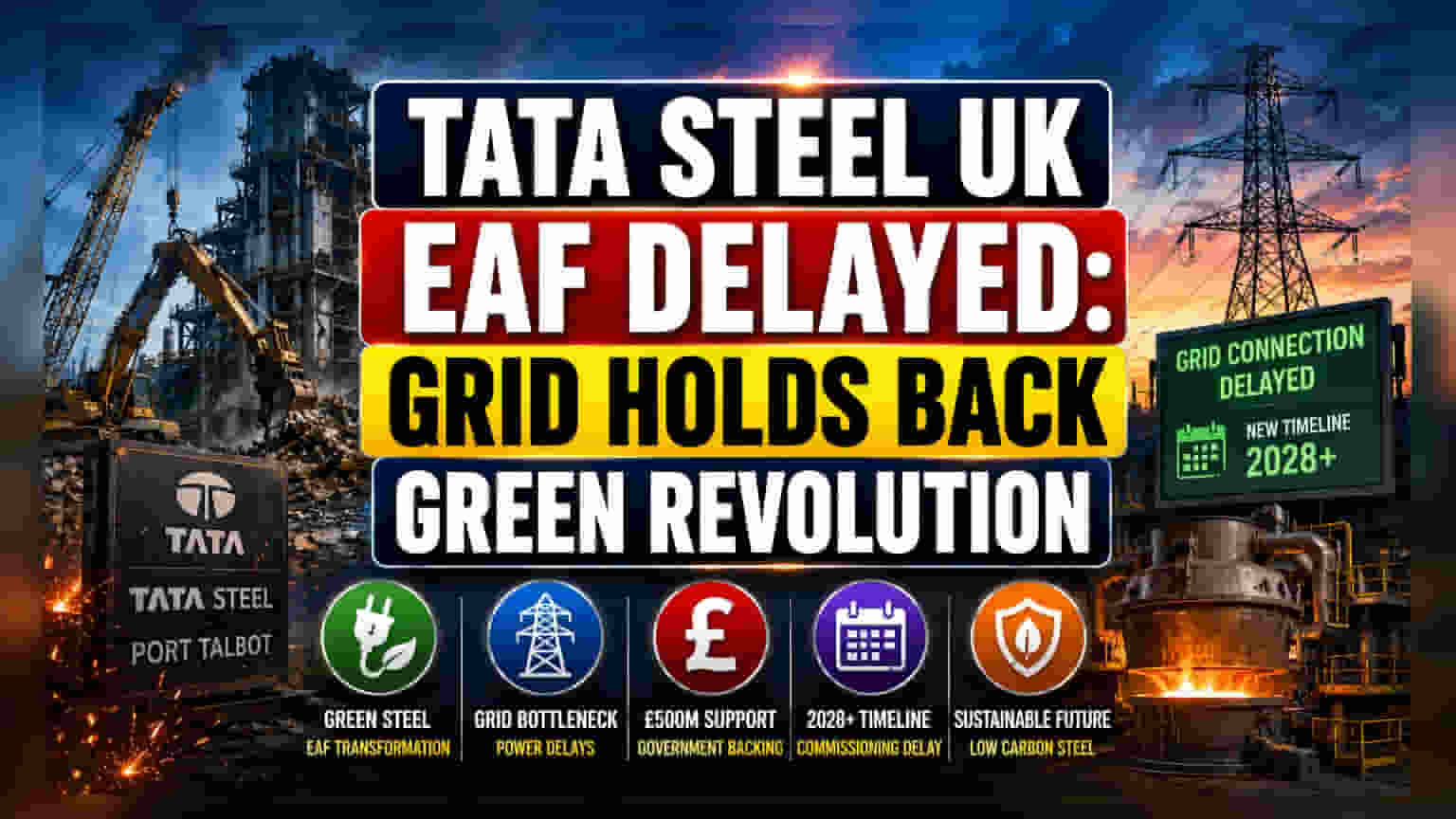


The Infrastructure Bottleneck
The pivot toward electric arc furnace (EAF) technology represents a structural necessity for Tata Steel’s UK operations, yet the transition is currently hostage to external utility constraints. While the company has successfully cleared site demolition and pushed forward with equipment fabrication, the logistical complexity of high-voltage power delivery has emerged as a significant operational hurdle. National Grid’s notification regarding delays in the necessary electrical infrastructure forces a shift in the commissioning timeline, potentially pushing the operational start well into 2028. This dependency on third-party grid expansion underscores a recurring risk for heavy industrial decarbonization projects: the disparity between corporate investment cycles and the pace of public utility infrastructure upgrades.
Competitive and Market Context
Comparing this scenario to broader industry trends, steel producers globally are struggling to balance aging infrastructure with aggressive environmental mandates. Unlike competitors utilizing domestic, localized renewable power grids or those operating in regions with more robust industrial power incentives, the Port Talbot site remains tethered to a national network currently under intense pressure to meet widespread electrification demands. Market analysts suggest that while the 500 million pounds in government backing provides a necessary financial floor, it does not mitigate the temporal risk associated with energy availability. Investors are increasingly focused on the sensitivity of the internal rate of return on such massive capital expenditures, where any delay in the switch from carbon-intensive blast furnaces to EAF technology directly impacts the company’s ability to avoid escalating carbon taxes and sustain long-term margin targets.
The Forensic Bear Case
The recent fire incident at the Port Talbot facility on June 3 adds a layer of operational volatility that sits uneasily alongside the existing project delays. For stakeholders, the coincidence of a fire and a grid-access bottleneck raises questions regarding site-wide management efficiency and the stability of the transition phase. Furthermore, Tata Steel faces the classic industrial challenge of maintaining legacy production levels while simultaneously constructing and integrating new, untested systems. If grid delays continue to compound, the risk of cost overruns increases, potentially forcing the company to weigh the burden of further capital injection against the operational viability of the plant. There is also the historical scrutiny regarding Tata Steel's UK footprint, where past debates over profitability and the necessity of subsidies have left management with little margin for error in executing this flagship green initiative.
Forward Guidance and Strategic Implications
Looking ahead, the focus shifts to whether negotiations with the Electricity System Operator can compress the timeline or if the six to eight-month delay represents a minimum threshold. Market attention remains fixed on whether Tata Steel can sustain its current output levels to fund these requirements without further leveraging the balance sheet. Until the electrical connection milestones are explicitly secured, the timeline for reaching full capacity at the new EAF remains speculative, forcing analysts to adjust their expectations regarding the realization of projected emission reductions and operational cost savings.