 Whalesbook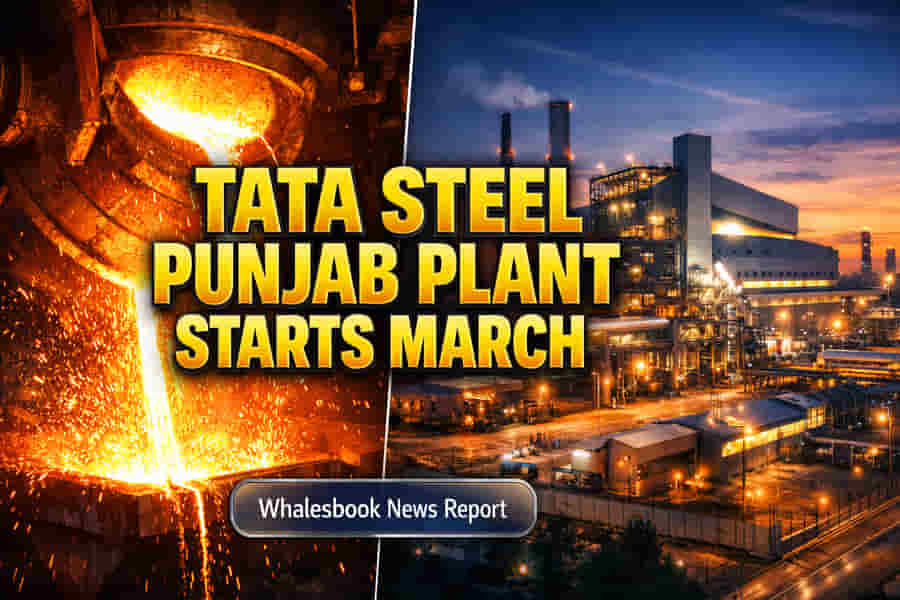
### The EAF Catalyst
Tata Steel is set to commence operations at its new 0.75 million tonnes per annum (MTPA) Electric Arc Furnace (EAF)-based steelmaking facility in Ludhiana, Punjab, from March. This plant, situated near HiTech Valley, includes a rebar mill and represents a substantial ₹3,200 crore investment, an increase from the initial ₹2,600 crore. The project is poised to create approximately 2,500 employment opportunities, injecting significant economic stimulus into the region. A core feature of this plant is its commitment to sustainable production, utilizing 100% steel scrap as raw material and employing EAF technology, which is recognized for its substantially lower carbon emissions compared to traditional Blast Furnace-Basic Oxygen Furnace (BF-BOF) methods. This facility marks Tata Steel's largest investment in Punjab and is positioned as its second-largest manufacturing unit in India, trailing only Jamshedpur [cite: NEWS1]. The Punjab government has assured full support for its smooth operation and future expansion.
### Strategic Expansion and Competitive Positioning
This Ludhiana plant is a piece of Tata Steel's ambitious broader expansion strategy. The company plans to significantly increase its domestic steelmaking capacity by nearly 50%, aiming to reach 37 MTPA by FY32, involving substantial capital expenditure estimated between ₹70,000–₹1,00,000 crore. Recent stock performance reflects investor confidence, with shares trading near a 52-week high and demonstrating positive technical momentum above key moving averages. Analysts maintain a generally positive view, with a consensus rating of 'Buy' or 'Outperform' and average price targets hovering around ₹210-₹230. Tata Steel's P/E ratio stands at approximately 26.30, placing it favorably against peers like JSW Steel, which has a higher P/E ratio of around 36.37-52.25, and Steel Authority of India (SAIL) with a P/E around 23.53-32.79. Tata Steel's market capitalization of roughly ₹2.6 lakh crore is also considerably larger than SAIL's approximately ₹65,000 crore, though comparable to JSW Steel's over ₹3 lakh crore. This expansion signals Tata Steel's intent to solidify its market leadership in a sector projected to grow around 8% in FY2026.
### The Structural Weakness
Despite the expansionary drive and positive analyst sentiment, the Indian steel sector, including Tata Steel, faces significant headwinds. A major concern is the ongoing antitrust investigation by the Competition Commission of India (CCI), which has found Tata Steel, JSW Steel, SAIL, and 25 other firms guilty of colluding on steel prices between 2015 and 2023. Key executives, including Tata Steel's CEO T.V. Narendran and JSW's MD Sajjan Jindal, have been implicated, exposing the companies to potential multi-billion dollar fines. While Tata Steel denies collusion, attributing price fluctuations to global market dynamics and input costs, the regulatory cloud presents a substantial risk. Furthermore, the steel market is characterized by price volatility, with recent prices at five-year lows and flat to declining operating margins projected for FY2026. The industry's substantial planned capacity expansion of 80-85 million tons by FY2031 could exacerbate oversupply issues if demand falters. The reliance on EAF technology, while environmentally beneficial, also means that emissions intensity is tied to the carbon intensity of the electricity grid used.
### Future Outlook
Industry outlooks suggest continued demand growth for steel in India, driven by infrastructure and construction sectors, projected at approximately 8% for FY2026. However, the interplay of robust domestic expansion plans, import pressures, and global price trends creates a complex operating environment. Brokerage firms largely maintain a positive stance on Tata Steel, anticipating that its strategic capacity additions and value-added product focus will support long-term earnings, even if near-term profitability is affected by soft steel prices. The company's commitment to sustainability through EAF technology positions it favorably in the evolving green steel landscape, but execution of its ambitious expansion plans amidst market uncertainties and regulatory challenges will be critical for sustained value creation.