

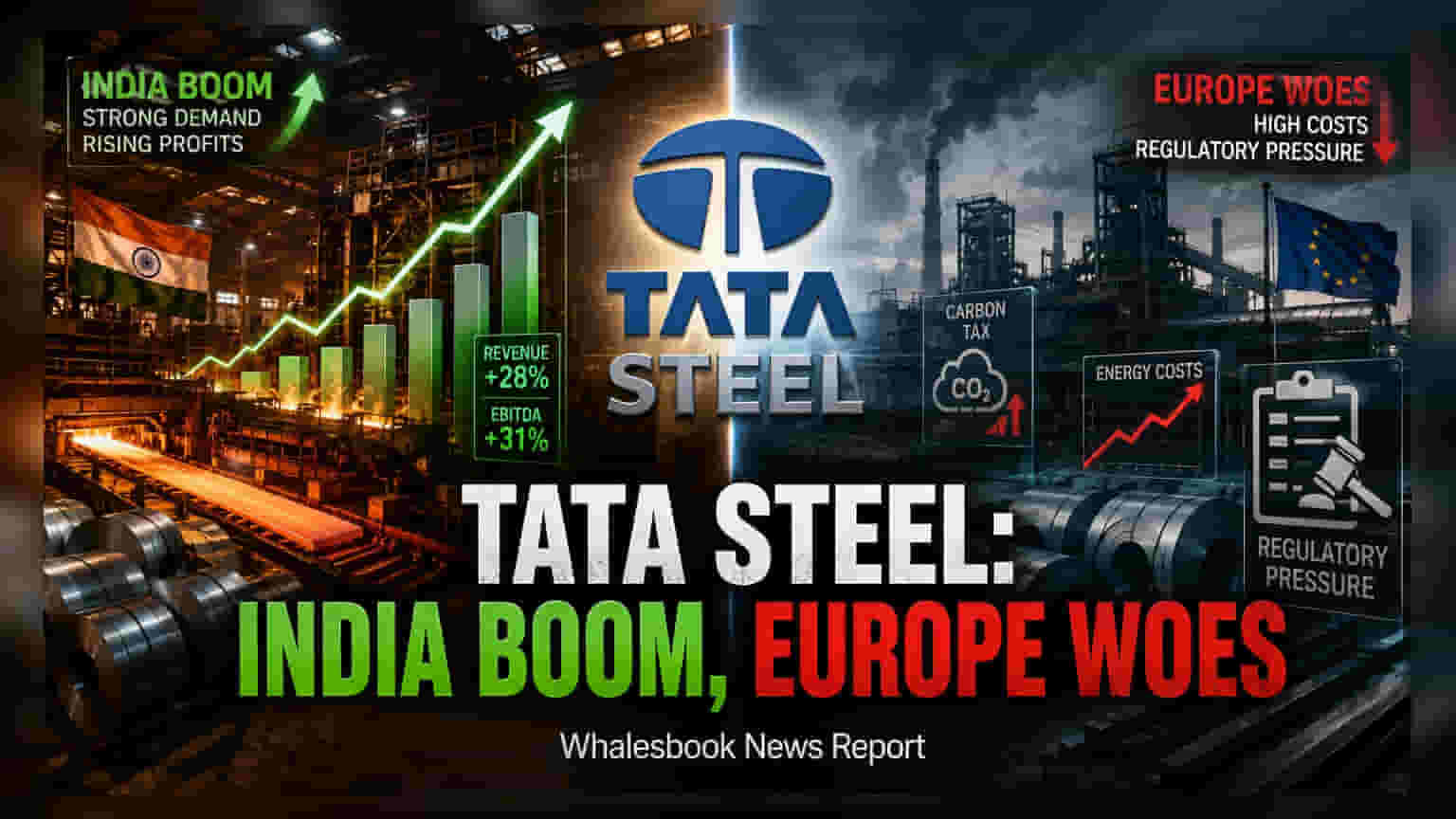
Tata Steel has secured board approval for a ₹33,873-crore expansion project at Neelachal Ispat Nigam Limited (NINL) to increase domestic capacity. While the company posted an 18.8% profit increase, it faces rising logistical costs and ongoing regulatory scrutiny regarding environmental compliance at its Dutch facilities.
Tata Steel has announced a significant capital expansion plan, with the board approving an investment of ₹33,873 crore for Neelachal Ispat Nigam Limited (NINL). This project is part of a larger, long-term strategy to grow the company's total production capacity to 40 million tonnes. The first phase of the NINL expansion is expected to add 4.8 million tonnes of steel-making capacity and will take approximately four years to complete.
The announcement comes as the company manages a complex global environment. In its latest financial performance, Tata Steel reported an 18.8% rise in profit. However, management noted that ongoing geopolitical tensions, particularly in West Asia, resulted in approximately ₹1,200 crore of additional costs related to shipping, energy, and logistics during the quarter. To mitigate these expenses, the company has maintained a focus on cost-reduction programs, which helped support a 26% EBITDA margin for its domestic operations and a 15% consolidated margin.
Operational Challenges and Regulatory Scrutiny
While domestic growth remains a priority, the company's European operations face persistent difficulties. The Ijmuiden steel site in the Netherlands, which is already among the more efficient plants globally in terms of carbon emissions per tonne of steel, is facing regulatory requirements that sometimes exceed standard European Union norms. Furthermore, the future of a previously discussed €2 billion decarbonisation support package from the Dutch government is currently under review by the new administration, creating uncertainty regarding the timeline and funding for sustainable transition projects.
Market Outlook and Profitability
Looking toward the near future, Tata Steel expects some pressure on pricing, with internal guidance suggesting a potential decrease of ₹1,500 per tonne in steel prices. Additionally, the company anticipates an increase in imported coal costs by about ₹400 per tonne. Despite these pressures, the management expects that higher sales volumes and ongoing internal efficiency gains will help sustain profitability. Investors should monitor the execution progress of the NINL project, as large-scale capital spending often carries the risk of cost increases or construction delays. Future updates will likely center on the finalization of the Dutch decarbonisation support, the pace of capacity addition at Kalinganagar and NINL, and the company's ability to maintain margins amidst fluctuating global raw material costs.