

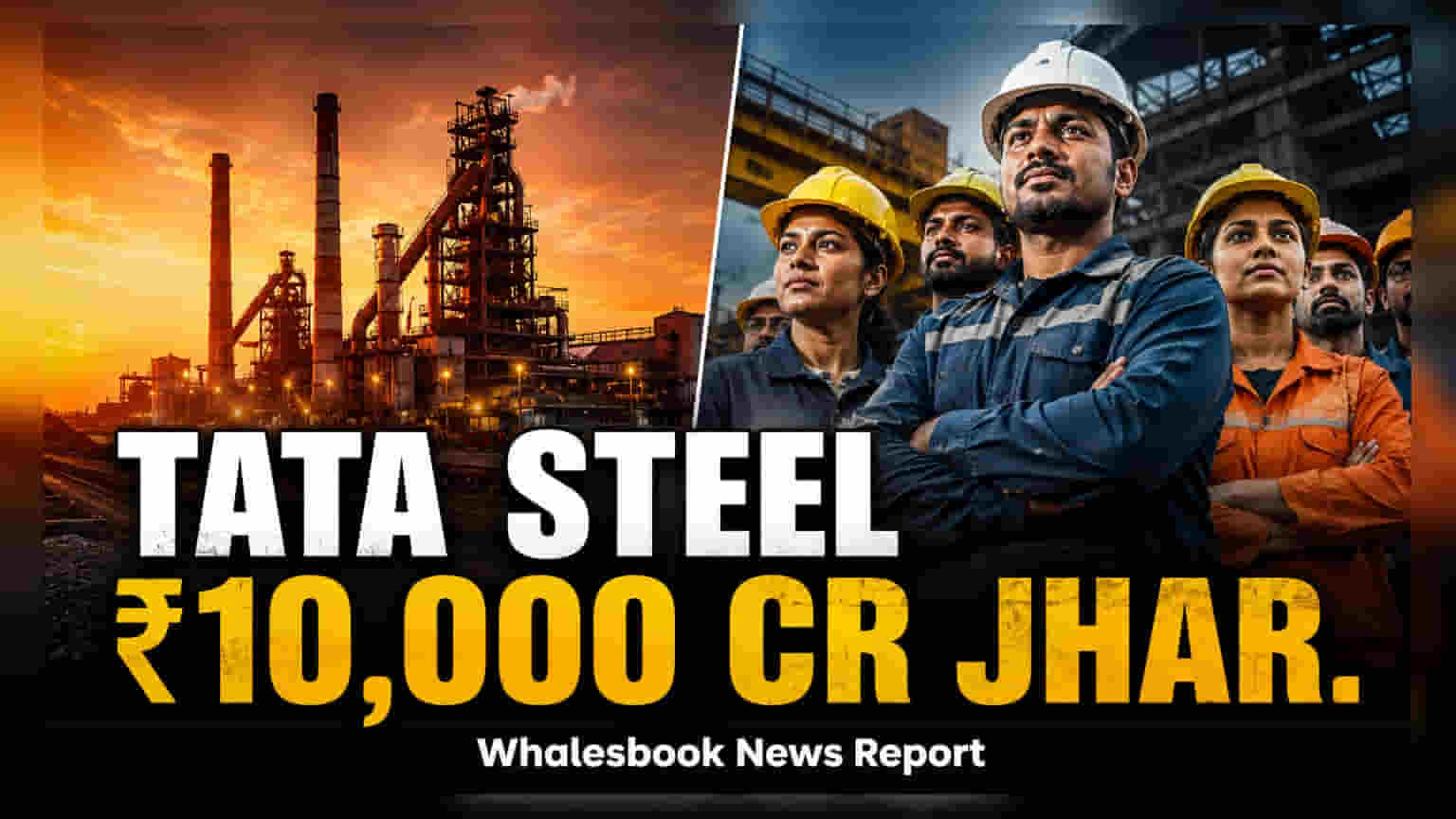
Tata Steel has announced a ₹10,000 crore investment to boost its Jharkhand steel production capacity by 2028. The move focuses on upgrading technology and expanding facilities to help reach a goal of 40 million tonnes per annum in India. Investors may monitor how this significant capital spending impacts the company's debt levels and future margins as it transitions to low-emission production methods.
Detailed Coverage
Tata Steel has announced a significant expansion plan for its operations in Jharkhand, with a commitment of ₹10,000 crore to be spent by 2028. This move is part of the company's long-term strategy to increase its Indian steelmaking capacity to 40 million tonnes per annum. Currently, the company operates at a consolidated capacity of approximately 36 million tonnes across India, the Netherlands, and Thailand.
Breakdown of Investment Projects
The announced investment covers several specific facility upgrades. A major portion, ₹7,000 crore, is dedicated to implementing advanced production technologies, including the HIsarna and Easy Melting processes. Additionally, the company has earmarked ₹2,600 crore for the expansion of its Tinplate Division and ₹1,500 crore for the development of a Combi mill. These projects are expected to support the company's broader growth goals and contribute to an estimated creation of 2,000 direct and indirect jobs.
Shift to Low-Emission Technology
A critical part of this investment is the adoption of HIsarna technology. This process is designed to produce iron directly, bypassing the need for traditional coke, sinter, or pellet plants. By reducing the reliance on these intermediate steps, the technology aims to lower raw material costs and provide more flexibility in the types of coking coal used. From an operational perspective, the company noted that this method can reduce carbon dioxide emissions by about 20% compared to conventional blast furnace operations.
Financial and Strategic Context
For investors, the key monitorable is the impact of this capital spending on the company's balance sheet. While the expansion aims to strengthen production efficiency and reduce import dependency for raw materials, large-scale projects require careful management of debt and cash flows. The company has historically been in a cycle of capacity building, and investors may track how these investments influence future return ratios. Additionally, the steel sector remains sensitive to global price fluctuations, raw material costs, and domestic demand cycles.
Looking ahead, the primary focus for stakeholders will be the project execution timeline and the company's ability to maintain stable profit margins while funding these developments. The company's progress in commissioning the new facilities and the realized efficiency gains from the HIsarna technology will be important indicators for long-term growth. Regular updates on the debt position and the status of these projects will provide clearer insights into the company's financial health as it works toward its 50-million-tonne long-term production target.