

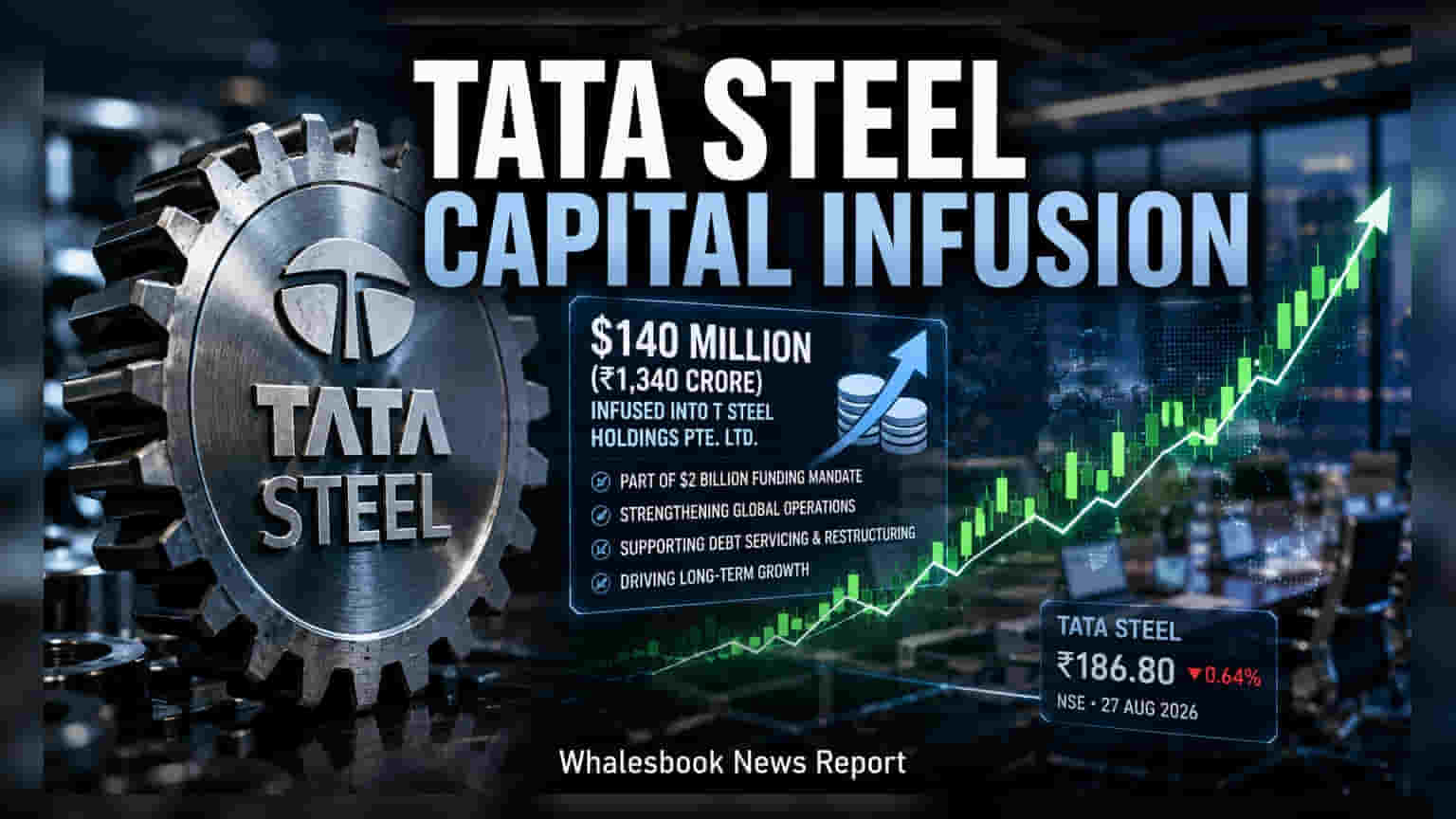
Tata Steel has transferred $140 million into its Singapore-based subsidiary, T Steel Holdings, as part of an ongoing $2 billion global funding plan. This capital injection is aimed at supporting the group's international operations and offshore financial structure. Investors are observing these fund deployments as the company works to manage debt and operational costs in its overseas units.
Tata Steel has infused $140 million, approximately ₹1,340 crore, into its wholly-owned Singaporean subsidiary, T Steel Holdings Pte. Ltd. (TSHP). This transaction, which involves subscribing to over 162 crore equity shares at a price of $0.0864 per share, is the latest step in a larger $2 billion funding mandate approved by the company's board in March 2026. The conversion rate for this filing was based on the Reserve Bank of India’s exchange rate of ₹95.7258 per dollar as of August 24, 2026.
Following the announcement of this capital injection, shares of Tata Steel saw a marginal decline of 0.64%, closing at ₹186.80 on the National Stock Exchange on August 27, 2026. This move is not an isolated event but part of a phased approach to manage the company's complex global corporate structure. T Steel Holdings serves as the primary investment vehicle for the group’s international operations, and this funding is well within the authorized total investment limit of $26.21 billion for the subsidiary.
The strategic intent behind such funding rounds is generally to support offshore debt servicing, corporate restructuring, and the operational needs of global assets. For shareholders, these transactions are important as they highlight the parent company’s continued commitment to its overseas businesses, which have historically faced diverse challenges. While the company has not provided a specific breakdown of how this exact $140 million will be deployed, it fits into the broader objective of streamlining international investments and maintaining financial flexibility.
Investors monitoring this development often consider the wider operational context of Tata Steel’s global footprint, particularly in Europe. The company’s international units have contended with significant pressure from volatile energy costs and the operational requirements of complying with environmental policies like the Carbon Border Adjustment Mechanism (CBAM). These factors, combined with the inherently cyclical nature of the global steel industry, mean that the profitability of these overseas operations remains a key area for shareholders.
Looking ahead, the primary monitorables for investors include the pace at which the remaining portion of the $2 billion funding mandate is utilized and the financial performance of the international subsidiaries. The company’s ability to manage its debt levels and protect profit margins amid fluctuating raw material prices—such as the cost of coking coal—will continue to influence the overall assessment of its capital allocation strategy.