 Whalesbook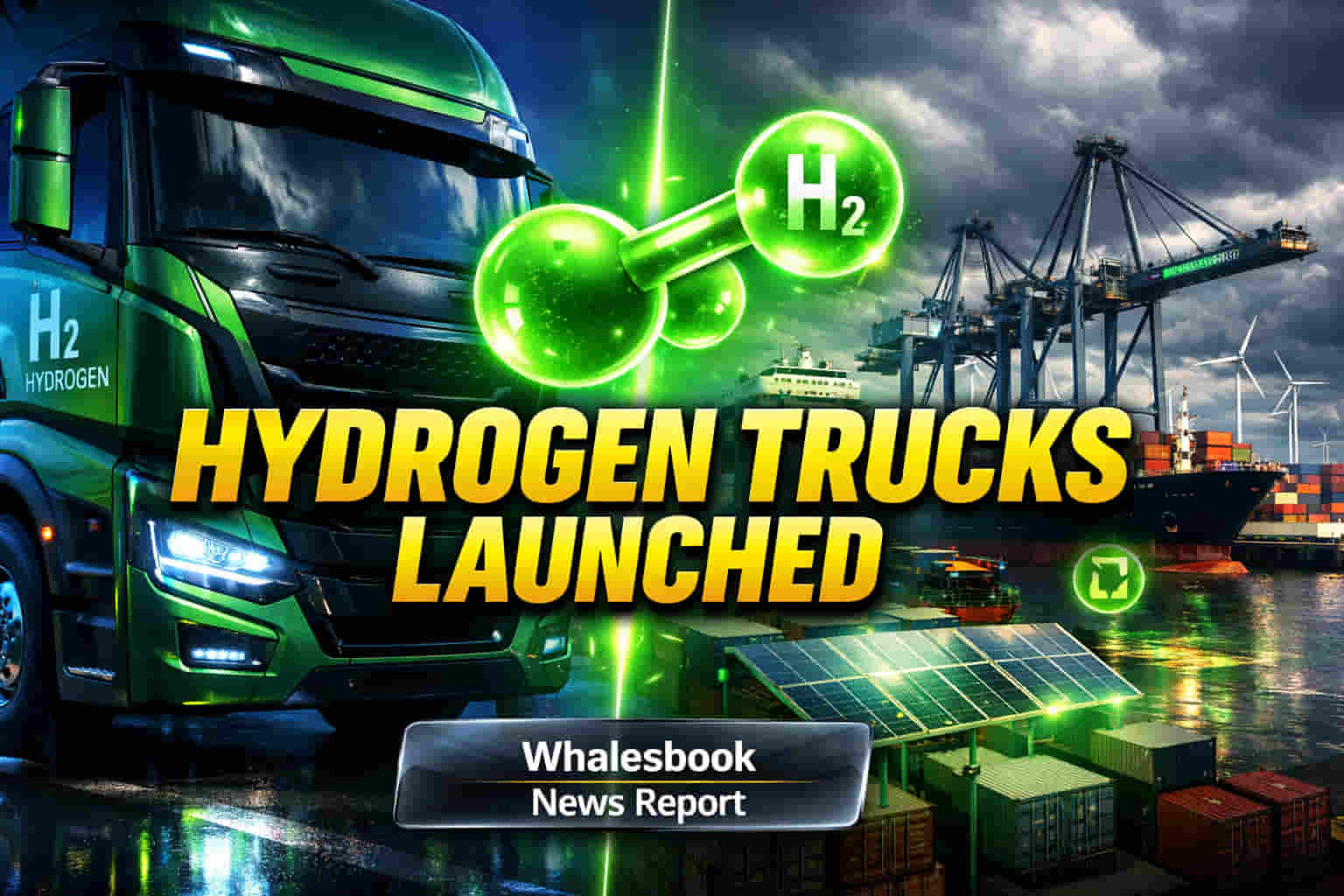


Tata Motors Drives Green Logistics with 40 Hydrogen Trucks at VOC Port
Tata Motors will deploy 40 green hydrogen-powered heavy-duty trucks at V.O. Chidambaranar Port Authority (VOCPA). VOCPA plans a 2 MW electrolyzer and refueling station.
Reader Takeaway: Green hydrogen adoption at ports advances; infrastructure scaling and TCO parity are key.
What just happened (today’s filing)
Tata Motors has signed a Memorandum of Understanding (MoU) with V.O. Chidambaranar Port Authority (VOCPA) for a groundbreaking initiative. This collaboration aims to deploy 40 green hydrogen-powered heavy-duty trucks within the port premises. The agreement marks a significant step towards decarbonising port operations.
VOCPA is set to facilitate this transition by establishing essential infrastructure. This includes a 2 MW electrolyzer plant for green hydrogen production and a dedicated hydrogen refueling station. The deployment of the trucks will be phased over the next two years.
Why this matters
This MoU positions Tata Motors as a frontrunner in adopting hydrogen technology for commercial logistics in India's port sector. It signals a growing trend towards sustainable logistics solutions and supports India's broader ambition to achieve net-zero emissions.
For VOCPA, this means greener port operations, reduced reliance on fossil fuels, and alignment with national climate goals. The successful implementation could pave the way for similar initiatives across other Indian ports.
The backstory (grounded)
Movingly, Tata Motors has been actively exploring hydrogen mobility solutions. The company showcased hydrogen fuel cell electric truck prototypes and has conducted trials for such vehicles, demonstrating its commitment. [cite:GROUNDED_1]
Further reinforcing its position, Tata Motors secured a tender for 15 hydrogen FCEV buses in Ladakh in 2025. [cite:GROUNDED_2] This initiative with VOCPA builds on their existing efforts to enhance their portfolio of alternative fuel vehicles for sustainable growth. VOCPA itself is committed to green port development, planning for renewable energy integration and hydrogen infrastructure. [cite:GROUNDED_3]
What changes now
- Tata Motors strengthens its leadership in sustainable commercial vehicle solutions.
- Port logistics operations at VOCPA will see a significant reduction in carbon emissions.
- The project serves as a real-world testbed for hydrogen truck viability in demanding port environments.
- The company enhances its reputation and experience in deploying advanced green fuel technologies.
- This could lead to future collaborations and broader adoption of hydrogen trucks in the logistics sector.
Risks to watch
Key challenges include the pace of infrastructure development at VOCPA, ensuring the total cost of ownership (TCO) for these trucks becomes competitive with conventional vehicles, and the consistent availability of green hydrogen.
Peer comparison
While Tata Motors partners with VOCPA for 40 hydrogen trucks, competitors like Ashok Leyland are also investing in alternative fuels. Ashok Leyland is developing hydrogen ICE truck concepts and exploring fuel cell technology for its commercial vehicle range, indicating a broader industry shift towards cleaner powertrains. [cite:GROUNDED_4]
Context metrics (time-bound)
- Tata Motors reported a consolidated profit after tax of ₹7,121 crore for Q3 FY25, compared to ₹2,960 crore in Q3 FY24. (Consolidated, Q3 FY25).
- The company's consolidated revenue from operations stood at ₹1,19,910 crore in Q3 FY25. (Consolidated, Q3 FY25).
What to track next
- Monitor the phased deployment progress of the 40 hydrogen trucks over the next two years.
- Track the development and operationalisation of the 2 MW electrolyzer and hydrogen refueling station by VOCPA.
- Assess the performance metrics and TCO of the hydrogen trucks in real-world port logistics operations.
- Watch for potential future agreements with other port authorities or large logistics companies.
- Observe any policy changes or government incentives supporting green hydrogen adoption in the transport sector.
- Evaluate competitor responses and their own advancements in hydrogen mobility.