 Whalesbook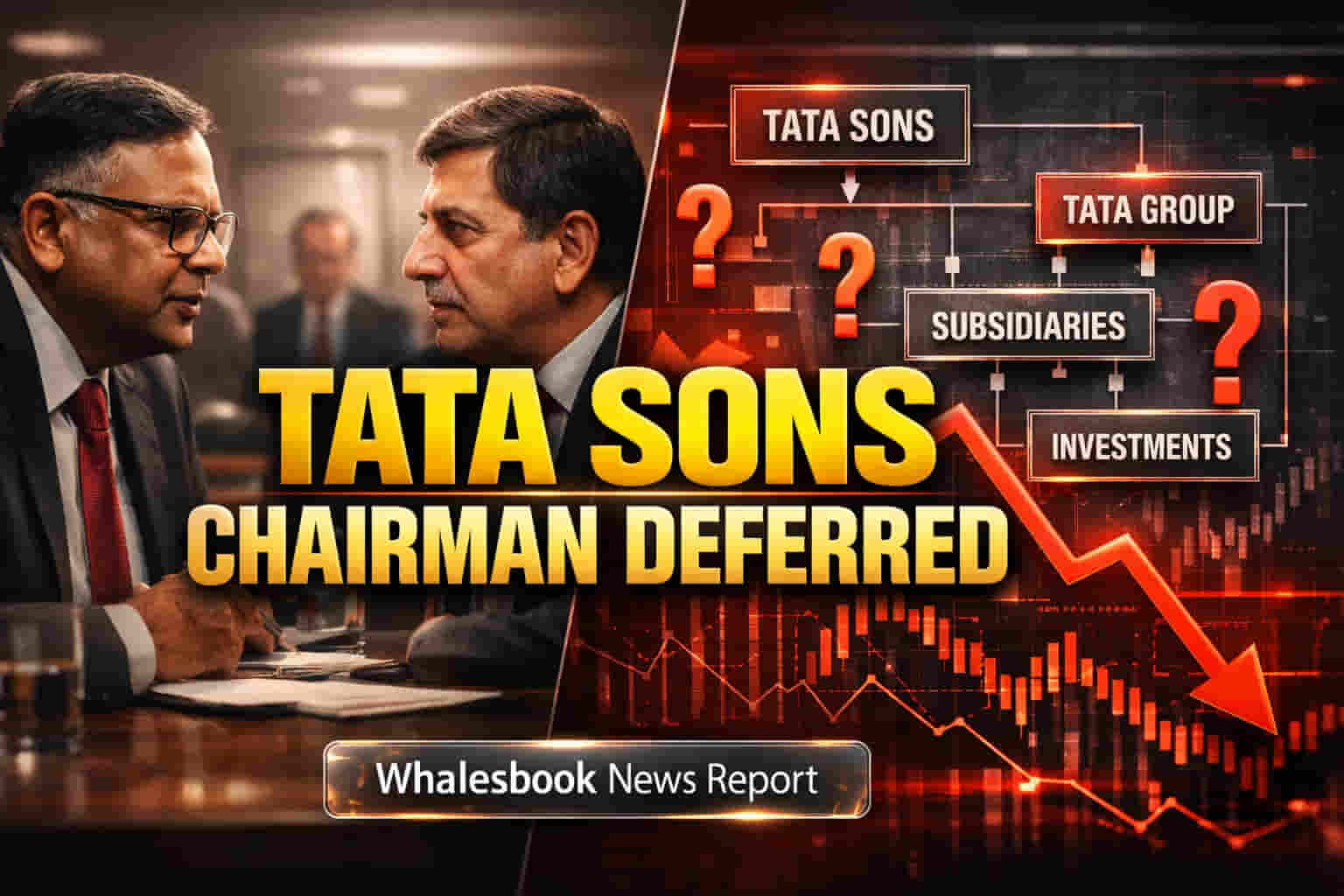
The Boardroom Stalemate
The Tata Sons board has deferred a decision regarding the reappointment of Chairman N Chandrasekaran for a third term, a move that signals a significant power play and potential strategic divergence within the $180-billion conglomerate. The postponement, occurring during a board meeting on February 24, 2026, arose directly from conditions stipulated by Noel Tata, Chairman of Tata Trusts, which collectively holds a 66% stake in Tata Sons. Chandrasekaran's current term extends until February 2027, and while the board had previously seemed poised to grant an extension, including relaxing retirement age norms, Noel Tata's intervention has introduced considerable uncertainty. This development echoes past governance challenges, including trustee disputes and the controversial removal of board members.
Financial Fault Lines and Strategic Divergences
Noel Tata's conditions for Chandrasekaran's reappointment are rooted in pressing financial performance issues and strategic disagreements. Key among these are mounting losses at group companies, notably Air India, and substantial capital expenditure risks associated with the group's ambitious semiconductor and battery ventures. Furthermore, Noel Tata reportedly sought firm assurances that Tata Sons would not pursue a public listing, a move complicated by the Reserve Bank of India's (RBI) mandate for upper-layer non-banking financial companies to list by September 30, 2025. Tata Sons has applied to surrender its Core Investment Company (CIC) status to remain private, but the RBI's decision remains pending, creating a regulatory overhang. These concerns highlight a strategic crossroads, where aggressive diversification plans meet the imperative of fiscal prudence and regulatory compliance. The Shapoorji Pallonji Group, holding an 18.4% stake in Tata Sons, also awaits clarity on its exit, with a potential listing being a key factor for its liquidity.
The Analytical Deep Dive
This leadership juncture occurs against a backdrop of recent financial pressures across the Tata Group. In 2025, the combined market value of the group's listed entities plummeted by over ₹4.56 lakh crore (approximately $55-60 billion), with flagship companies like Tata Motors and TCS experiencing significant declines. Tata Motors, for instance, saw its shares drop by about 42% from their peak, impacted by Jaguar Land Rover's (JLR) ongoing challenges, including a severe cyberattack. TCS, despite a strong order book and revenue growth to $30.18 billion in FY25, faced headwinds from a changing tech landscape and competition in AI, with its stock declining 22%. Analysts maintain a generally positive outlook on TCS, with a consensus 'Buy' rating and target prices up to ₹4,400, though Jefferies downgraded the stock to 'Sell' in February 2026. In contrast, Tata Motors' P/E ratio stood at 63.96 in February 2026, significantly higher than competitors like Toyota (10.4) and Ford (14.8). The group's push into semiconductor manufacturing, with an investment of Rs 270 billion for an assembly plant in Assam and a Rs 910 billion wafer fabrication unit in Gujarat, signals long-term ambition but also substantial capital commitment. Similarly, the EV battery venture, Agratas, requires significant investment, estimated at $1.5 billion for a gigafactory. These capital-intensive projects, alongside Air India's persistent losses, contribute to the financial strain Noel Tata is keen to address.
The Forensic Bear Case
The deferred reappointment raises several critical risks for Tata Sons and the wider group. Foremost is the potential for prolonged governance instability, reminiscent of the 2016 Cyrus Mistry dispute, which could erode investor confidence. The central issue of Tata Sons' listing status remains a significant regulatory and strategic uncertainty; failure to resolve this could trigger adverse actions from the RBI. The financial health of key subsidiaries, particularly Air India, poses a continuous drain, with projected losses expected to persist in the aviation sector. The high capital expenditure planned for semiconductor and battery ventures, while aligned with future growth, carries execution risks and could strain cash flows, especially with RBI-mandated debt-raising limitations for Tata Sons. Furthermore, competitive pressures in the IT sector, as evidenced by TCS's stock performance and market shifts, alongside ongoing challenges in the automotive sector driven by JLR's issues and EV market dynamics, present sustained operational hurdles.
Future Outlook
The immediate future hinges on the resolution of the governance and strategic disagreements between the Tata Trusts and the Tata Sons board. While Chandrasekaran's term continues until February 2027, the unresolved issues suggest potential challenges in leadership continuity and strategic execution. The market will be closely watching for any clarity on Tata Sons' regulatory status regarding its listing and how the group intends to balance aggressive expansion in new technologies with the imperative of profitability and debt management across its diverse portfolio. Analyst sentiment, particularly for key entities like TCS, remains a key indicator, though broader concerns about group strategy and governance could overshadow individual company performance.