 Whalesbook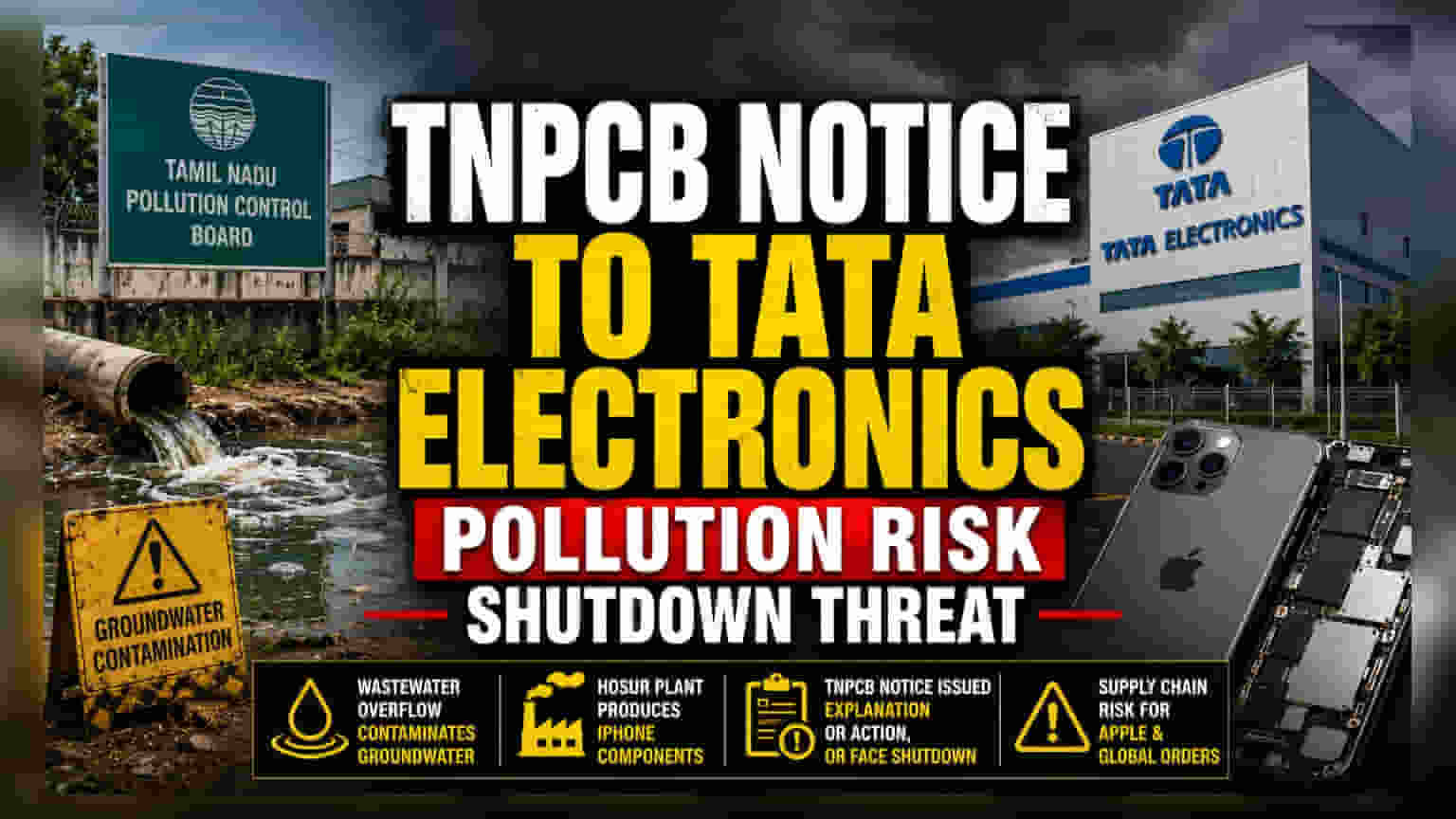


The Tamil Nadu Pollution Control Board has issued a warning to Tata Electronics regarding its iPhone component facility in Hosur. The regulator alleges that wastewater from the plant has contaminated local groundwater, threatening the facility with a possible shutdown if the company fails to address the issue. This creates an operational challenge for a critical supplier in Apple’s Indian manufacturing ecosystem, with stakeholders closely watching how the company manages these environmental compliance concerns.
What Happened
The Tamil Nadu Pollution Control Board (TNPCB) has issued a notice to Tata Electronics regarding its manufacturing plant in Hosur, Tamil Nadu. The regulator has alleged that the facility is responsible for groundwater contamination due to the overflow of wastewater from an on-site rainwater harvesting pond. The board has warned that if the company does not provide a satisfactory explanation or resolve the issue, the plant could face a forced shutdown. This facility is a significant hub for producing iPhone components, including back panels, which are essential for Apple’s global and domestic supply chain.
Why This Matters For Investors
For investors and market watchers, this situation highlights the operational risks inherent in large-scale electronics manufacturing. Tata Electronics is a private subsidiary of the Tata Group and is a central player in India’s push to become a global electronics manufacturing hub. Any disruption at a major facility like the one in Hosur can ripple through the supply chain. Global companies like Apple have strict environmental and social compliance standards for their suppliers. If a supplier fails to meet these norms, it can lead to production delays, reputational damage, or even the cancellation of contracts. Therefore, the ability of the company to swiftly resolve regulatory concerns is a key monitorable.
The Environmental Compliance Context
Manufacturing units, particularly those dealing with chemical processes for electronics, must follow strict regulations regarding wastewater discharge. Reports indicate that local farmers complained about water quality in their open wells, which triggered inspections by the TNPCB between December 2025 and May 2026. The regulator’s notice suggests that the company did not fully implement corrective actions that were previously requested. While Tata Electronics has stated that its own internal analysis shows compliance with norms, the ongoing dispute with the state regulator creates a period of uncertainty for the facility’s operations.
The Bigger Business Context
This event is part of a larger trend where India is actively trying to attract global electronics firms to set up base. As Apple and other tech giants shift more of their manufacturing to India, the scale of operations has increased significantly. With this growth comes greater scrutiny from both government regulators and local communities regarding the impact on land, water, and resources. Companies are expected to balance rapid expansion with sustainable practices. When this balance is challenged, it can lead to regulatory bottlenecks that impact the speed and cost of manufacturing.
What Could Go Wrong
The immediate risk for the company is the potential for a temporary suspension of operations if the TNPCB remains unsatisfied with the company’s explanation. A shutdown, even a short one, can lead to production backlogs and increased costs. Furthermore, such issues can affect the company's relationships with major customers, who often prioritize sustainable operations as part of their global ESG (Environmental, Social, and Governance) targets. If the issue is not resolved, it could invite stricter oversight or further regulatory penalties, which would complicate the company’s plans for scaling production in the region.
What Investors Should Track
The key monitorable will be the next formal communication from the TNPCB and the specific steps Tata Electronics takes to rectify the wastewater discharge process. Investors and industry observers will look for updates on whether the company has implemented the required infrastructure upgrades to prevent future leaks. Additionally, any public statement from the management regarding the continuity of production will be important to understand the potential impact on the company’s order fulfillment and business stability.