 Whalesbook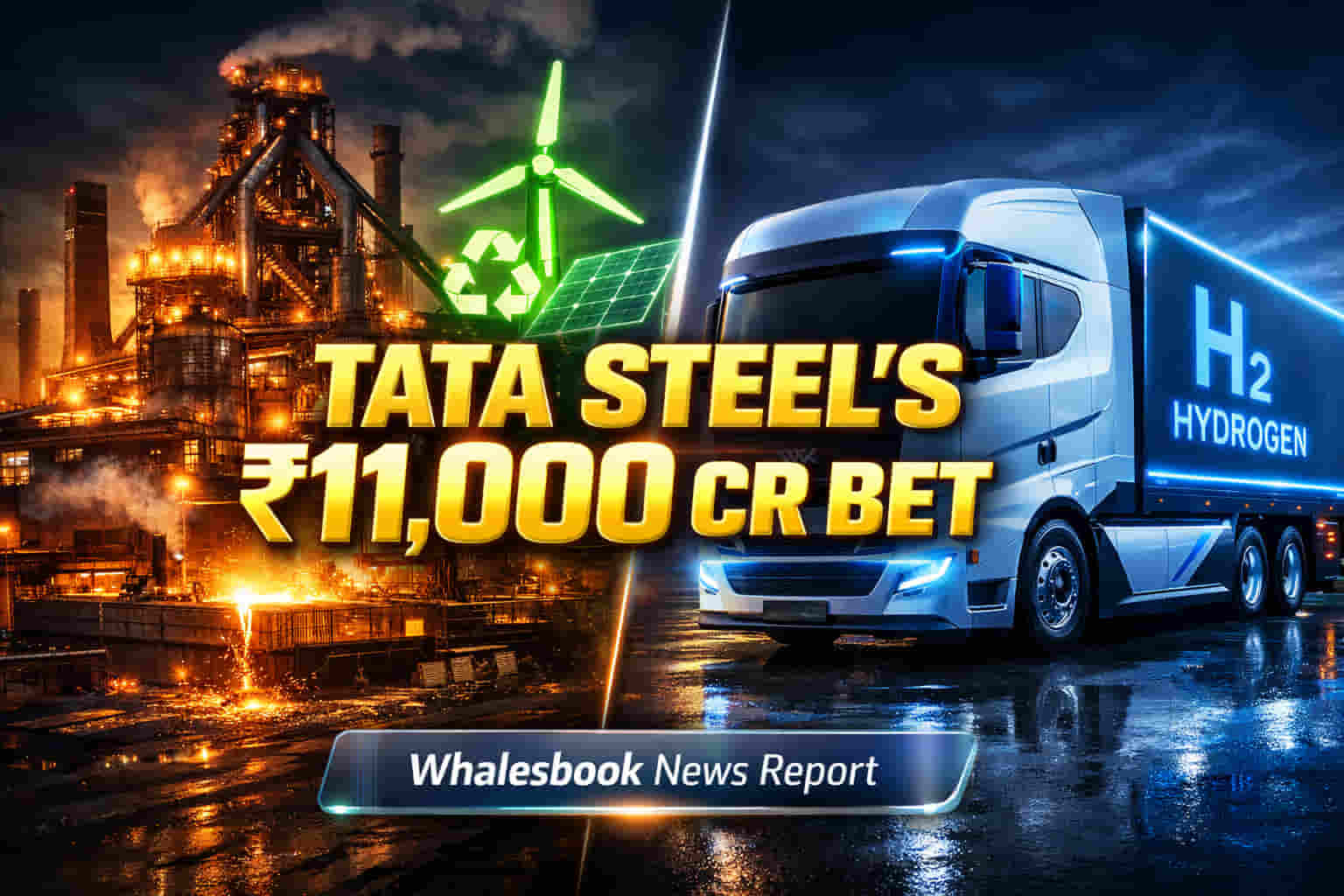


THE SEAMLESS LINK
The significant capital infusion announced by Tata Steel for pioneering green steel technology and Tata Motors' strategic focus on hydrogen trucks underscore a decisive shift towards sustainability, aiming to redefine the group's operational future and competitive positioning within rapidly evolving global industries.
THE CORE CATALYST
On March 2, 2026, Tata Steel confirmed an ₹11,000 crore investment into its Jamshedpur facility in Jharkhand, specifically targeting the development of advanced, low-carbon green steel production technologies [cite: News1]. This commitment signals a strategic intent to lead in environmental sustainability within the steel sector, a move that comes as the company's stock trades around ₹205-₹213.59, with a market capitalization nearing ₹2.65 lakh crore and a Price-to-Earnings ratio around 29. The announcement saw trading volumes of approximately 7.4 million shares on the day. This investment aligns with Tata Steel's broader sustainability agenda, including its significant investments in Electric Arc Furnace (EAF) technology in the UK and its ongoing decarbonization efforts in the Netherlands and India.
In parallel, Tata Motors is bolstering its Jamshedpur operations with investments in hydrogen trucks. This initiative, supported by government bodies, highlights the company's forward-looking strategy in the commercial vehicle segment, where it holds a substantial market share. The company's overall market capitalization stands at approximately ₹1.86 lakh crore, with a TTM P/E ratio of 78.4, although specific segments like its passenger vehicle division show different valuation metrics. The stock traded near ₹498 on March 2, 2026, with its passenger vehicle segment experiencing a price decline earlier in the day. This push into hydrogen reflects a broader industry trend, as Tata Motors develops multiple hydrogen-based powertrain alternatives, including ICE, blended fuels, and fuel cell technology.
THE ANALYTICAL DEEP DIVE
Tata Steel's ₹11,000 crore investment is more than a financial outlay; it is a strategic bet on the long-term viability of green steel, a critical component for future industrial competitiveness. India's steel industry, currently dominated by coal-intensive BF-BOF processes, faces increasing pressure to decarbonize due to global environmental objectives and potential trade barriers like the EU's Carbon Border Adjustment Mechanism. While competitors like JSW Steel and ArcelorMittal are also exploring green hydrogen solutions, Tata Steel's proactive stance, backed by a strong ESG score and recognized transparency in environmental reporting, positions it favorably. Analysts have noted upward revisions in price targets for Tata Steel, reflecting positive sentiment around its strategic direction and ESG credentials. Historically, Tata Steel has undertaken significant capital expenditures, averaging around ₹13,100 crore annually in recent years, indicating a capacity for large-scale project execution.
For Tata Motors, the investment in hydrogen trucks addresses the limitations of battery-electric vehicles in heavy-duty, long-haul applications, seeking a more viable path to zero-emission transport in this segment. The company is actively collaborating with entities like Indian Oil Corporation and has a joint venture with Cummins for hydrogen engine manufacturing in Jamshedpur, underscoring a concerted effort to develop this nascent technology. While Ashok Leyland is also venturing into hydrogen-powered vehicles, Tata Motors' leading position in India's commercial and electric vehicle markets provides a strong foundation. However, the broad adoption of hydrogen technology in commercial transport faces hurdles, including the total cost of ownership parity and the development of refuelling infrastructure.
THE FORENSIC BEAR CASE
Despite the strategic vision, significant risks shadow these ambitious plans. For Tata Steel, the ₹11,000 crore investment in advanced green steel technology carries substantial execution and technological risks. The transition from traditional, coal-based steelmaking to low-carbon alternatives requires massive capital expenditure and is subject to rapid technological evolution. India's steel sector, heavily reliant on the BF-BOF route, faces a long road to decarbonization, and the persistence of this method could lead to stranded assets if global standards shift dramatically. Furthermore, Tata Steel has faced limitations, including poor profit growth over the past three years and a revenue growth rate below industry averages in recent periods.
Tata Motors' foray into hydrogen trucks, while forward-looking, is fraught with uncertainty. Hydrogen technology is still in its nascent stages of commercial viability, and achieving cost-competitiveness with diesel engines remains a significant challenge, exacerbated by the high cost of green hydrogen production. The company has also shown concerning financial metrics, including a highly negative Return on Equity in the past. Its substantial market capitalization is juxtaposed against volatile P/E ratios and a market that is increasingly competitive, both in electric vehicles and emerging alternative fuels, with players like Ashok Leyland also advancing their hydrogen strategies. Over-reliance on government policy and subsidies for hydrogen adoption could also pose a risk should these support structures falter.
THE FUTURE OUTLOOK
Tata Steel's long-term outlook hinges on its ability to successfully scale and commercialize its green steel technologies, potentially setting new benchmarks for the industry and capitalizing on growing global demand for sustainable materials. Analysts generally hold a positive view, with some price targets being revised upwards, suggesting confidence in the company's strategic direction and ESG performance. For Tata Motors, the success of its hydrogen truck initiatives will be a key indicator of its future growth in the commercial vehicle sector. The company's strong position in the domestic EV market provides a robust platform, but its ability to navigate the complexities and costs associated with hydrogen technology will be critical for long-haul transport solutions. Analyst sentiment for Tata Motors PV has shown targets around ₹745 in past projections, but the overall trajectory will depend on the wider acceptance and integration of its hydrogen fuel strategy into the market.