

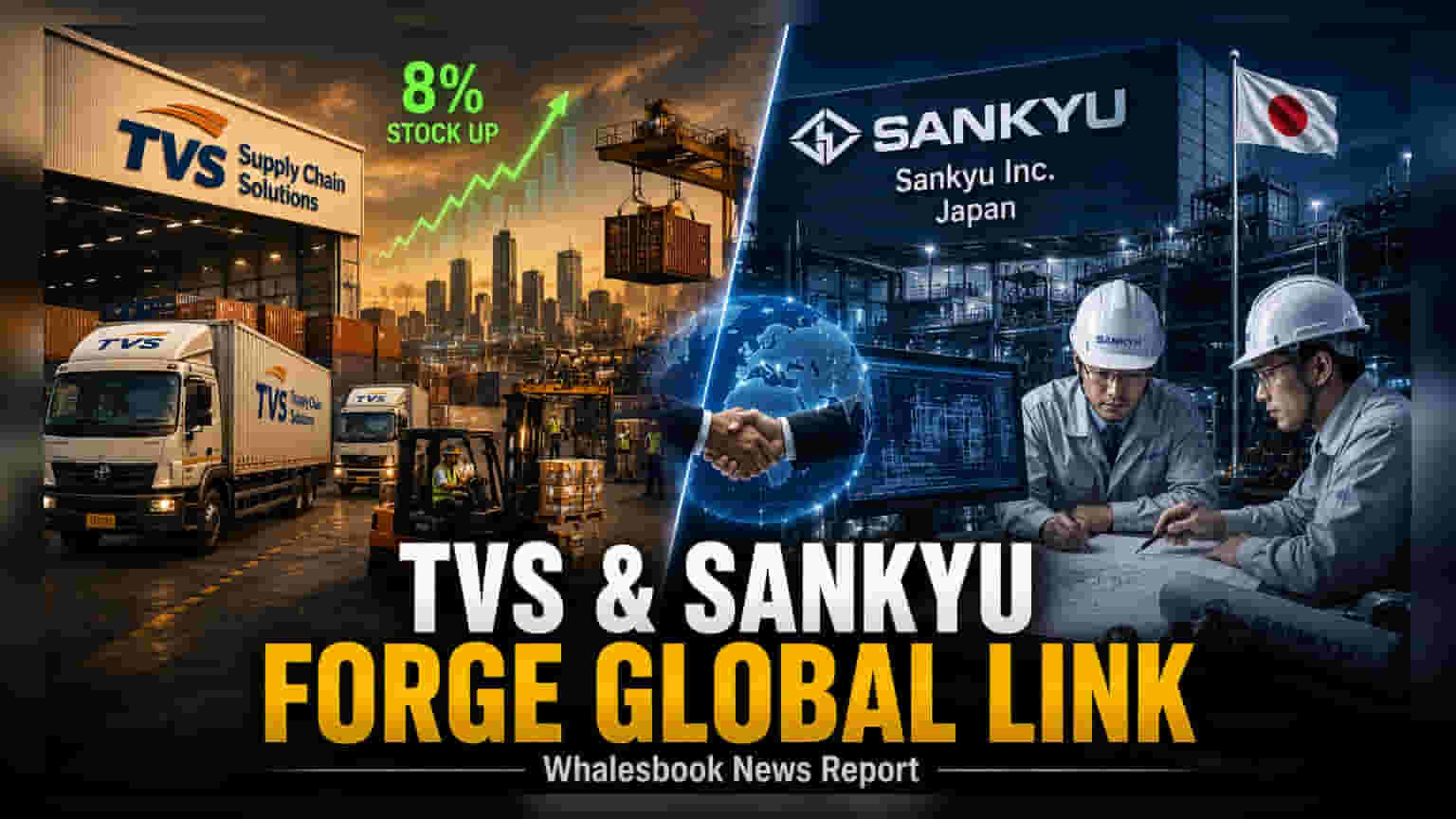
TVS Supply Chain Solutions shares climbed 8% following an agreement with Japan’s Sankyu Inc. to provide integrated supply chain and engineering services. The deal includes a 0.5% stake acquisition by the Japanese firm, pending regulatory approvals. While recent revenue saw growth, investors may monitor the company’s debt management given its tight interest coverage ratio.
TVS Supply Chain Solutions saw its stock price rise by approximately 8% on August 24, 2026, following the announcement of a strategic partnership with Japan-headquartered Sankyu Inc. The company signed a memorandum of understanding to combine their strengths in supply chain, logistics, and engineering services. As part of the agreement, Sankyu Inc. plans to acquire a 0.5% equity stake in TVS Supply Chain Solutions, which remains subject to customary regulatory approvals.
Targeting the Industrial Sector
The partnership aims to tap into the business needs of the over 1,400 Japanese companies currently operating within India's manufacturing and industrial sectors. By leveraging TVS Supply Chain Solutions’ extensive logistics network and market presence in India alongside Sankyu’s specialized engineering expertise, the companies intend to offer a combined suite of services. This includes warehousing, transportation, and on-site maintenance support. Both firms are also exploring opportunities to expand these services into other regions, including Asia, the Middle East, and Africa, where both entities have existing operations.
Financial Context and Debt Awareness
While the market reacted positively to the growth potential of this partnership, investors often look at the underlying financial health of the business. In its recent first-quarter results for the 2027 fiscal year, announced on August 11, 2026, TVS Supply Chain Solutions reported a 28.7% year-on-year increase in revenue, reaching ₹3,335.2 crore. However, net profit saw a decline compared to the same period in the previous year, which the company has previously noted was impacted by one-time gains recorded in that earlier period.
For investors evaluating the company's long-term stability, debt management remains a key area to watch. Analysts have noted that the company’s interest coverage ratio stands at approximately 1.9x. This metric is used to determine how easily a company can pay interest on its outstanding debt from its operating profits. A lower ratio can sometimes indicate pressure on cash flow, meaning investors may monitor whether the company can maintain healthy profitability while funding new expansion projects and managing its debt obligations.
Regulatory and Execution Risks
Beyond the financial metrics, the success of this collaboration will depend on smooth execution. The proposed 0.5% stake acquisition by Sankyu requires regulatory approval, which is a standard but necessary step for completion. Furthermore, integrating services between two large organizations across different geographies involves operational complexity. If the company faces delays in scaling these integrated services or if the competitive environment in the logistics sector tightens, it could influence future margins.
The next important updates for shareholders will be the receipt of formal regulatory clearances for the stake acquisition and management commentary on the pace of project implementation with Sankyu.