

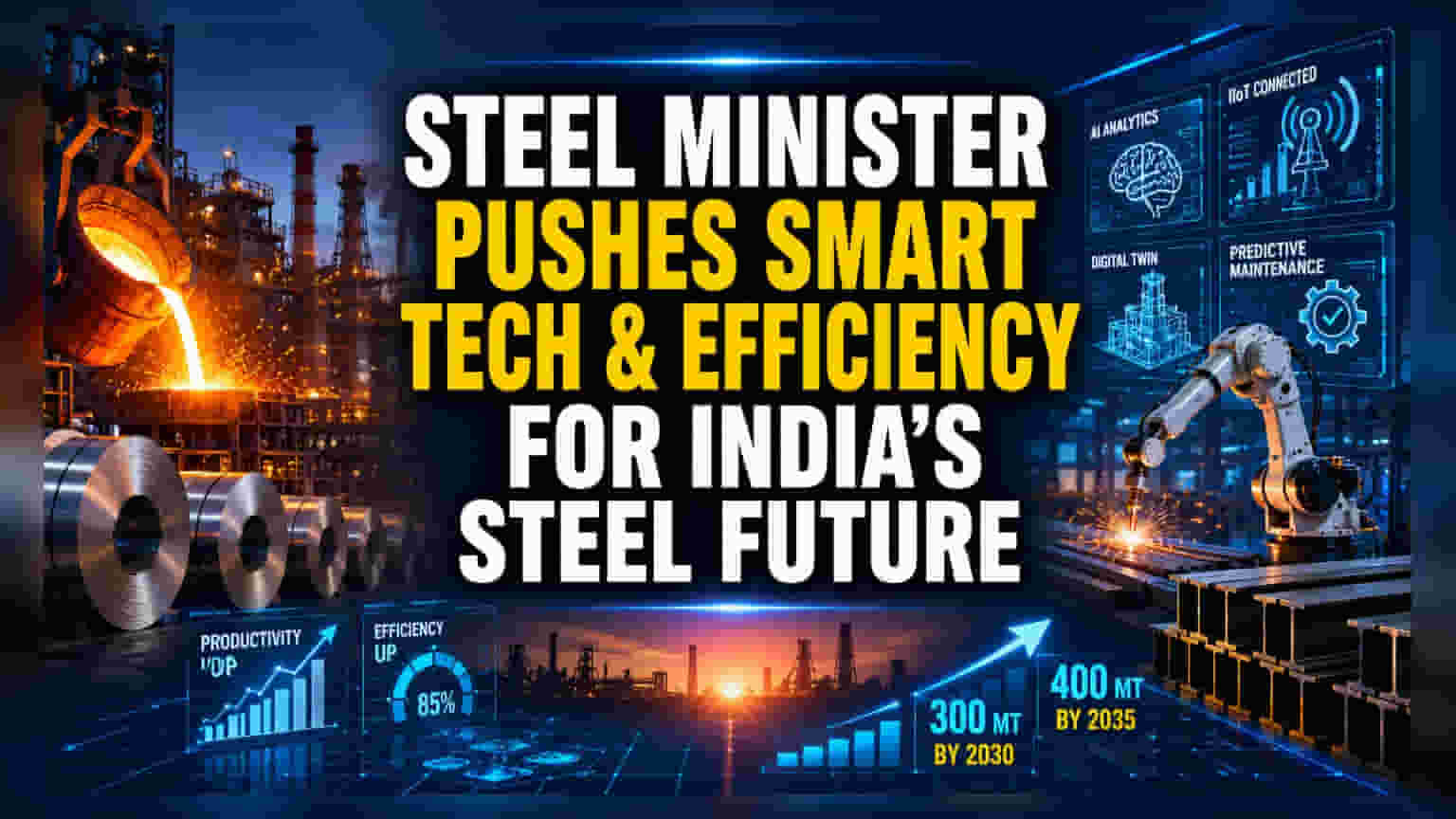
Union Steel Minister HD Kumaraswamy has urged Indian steel producers to adopt AI, IoT, and robotics to boost efficiency. As the industry eyes a 300 million-tonne capacity target by 2030, analysts suggest that integrating these technologies will be critical for managing costs and maintaining competitiveness in a volatile market.
What Happened
Union Steel Minister HD Kumaraswamy has called for a major shift in how the Indian steel industry operates. Speaking at the 'Chintan Shivir 2026' event, the minister emphasized that future growth must focus on productivity and efficiency rather than just increasing production volumes. He urged steel manufacturers to integrate advanced technologies such as Artificial Intelligence (AI), the Industrial Internet of Things (IIoT), digital twins, and robotics. The goal is to move the industry toward a smarter, more efficient manufacturing model to stay competitive globally.
Why Tech Adoption Matters for Investors
For investors, this shift toward digitalization is about more than just modern equipment; it is about protecting profit margins. Steel manufacturing is traditionally an asset-heavy, low-margin business where energy and raw material costs fluctuate significantly. By adopting technologies like predictive maintenance and automated analytics, companies can reduce downtime and optimize energy consumption. When a company can produce the same amount of steel with less electricity or fewer raw material errors, it directly impacts the bottom line. Investors should look for companies that are already investing in these digital upgrades, as they are likely to be better positioned to control costs during periods of weak global pricing.
The 300 Million Tonne Capacity Target
The Indian government has set an ambitious target to reach a steel production capacity of 300 million tonnes by 2030, and 400 million tonnes by 2035. Achieving this will require massive capital spending on new plants and modernizing older facilities. This creates a dual reality for investors: while massive expansion shows growth, it also requires high debt or significant internal cash flow. Companies that can scale their capacity while simultaneously improving operational efficiency through technology are generally viewed as lower-risk than those simply focused on raw volume expansion.
Operational Risks and Reality Check
While the push for technology is positive, the steel sector faces significant structural challenges that technology alone cannot solve. First, India remains heavily dependent on imported coking coal, a critical raw material. Price spikes in global coal markets can quickly erode the benefits of improved plant efficiency. Second, the industry is under pressure to decarbonize. Moving toward 'Green Steel' requires expensive new processes, which will put pressure on the balance sheets of even the largest players. Additionally, the risk of execution is always present; implementing new digital systems in massive, complex steel plants is difficult and often leads to initial cost overruns or operational delays.
What Investors Should Track
Going forward, shareholders should look beyond production numbers in company reports. Key monitorables include management commentary on capital allocation toward digital transformation and their progress in lowering 'cost-per-tonne' metrics. Investors may also track how companies manage their debt levels as they expand capacity to meet the 2030 targets. Ultimately, the winners will likely be the companies that can expand their footprint while keeping their operational costs low through smart technology integration.