

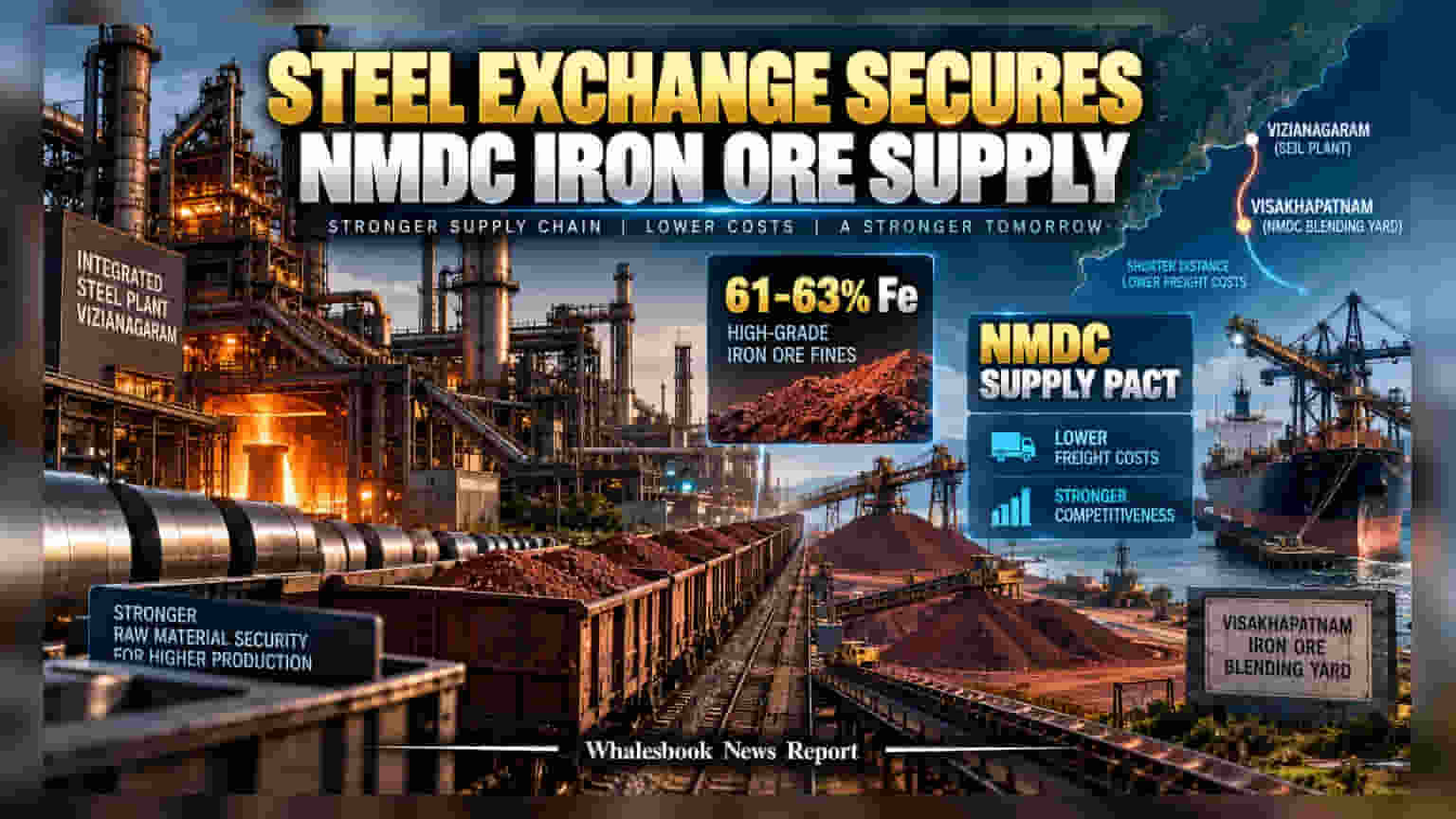
Steel Exchange India Limited (SEIL) has signed an agreement with NMDC for long-term iron ore supply from a new Visakhapatnam facility. The deal aims to lower logistics costs and support expansion for the Vizianagaram-based steelmaker. Following the announcement, SEIL shares rose as much as 7% during Wednesday's trading session.
Steel Exchange India Limited (SEIL) shares gained between 4% and 7% on Wednesday after the company announced it had signed a Memorandum of Understanding (MoU) with NMDC Limited. The agreement establishes a long-term framework for sourcing 61-63% iron ore fines from NMDC's upcoming buffer stockpile and blending yard in Visakhapatnam, Andhra Pradesh.
For investors, the immediate focus is on the operational shift this deal represents. SEIL operates an integrated steel plant in Vizianagaram. Proximity to NMDC's new blending yard in Visakhapatnam is expected to reduce transit times and freight expenses, which are significant cost factors in steel manufacturing. By securing a closer source for raw materials, the company aims to improve supply chain efficiency.
This development comes as the company continues to focus on improving its financial health. Recent records show that the steelmaker has reduced its total debt by approximately 30% since late 2025, suggesting a period of balance sheet consolidation. This new supply arrangement is viewed as a strategic step to support future capacity expansion plans by ensuring stable access to iron ore, which is essential for maintaining consistent production levels.
While the market responded positively to the announcement, the agreement is an MoU, which acts as a framework rather than a final contract for specific supply volumes or prices. Because the actual purchase quantities and financial terms have not been disclosed, the exact impact on the company's future profit margins will depend on the final pricing and the speed at which the Visakhapatnam hub becomes operational.
Investors and market observers should track the progress of the NMDC facility's commissioning. Additionally, the broader steel sector remains sensitive to several risks, including the volatility of commodity prices and intense competition from larger integrated steel players. Global supply dynamics, such as production levels in China and import trends, also influence the domestic industry. The success of this initiative will ultimately depend on the company’s ability to turn these logistics improvements into consistent production and sustained cost savings in a competitive market environment.