

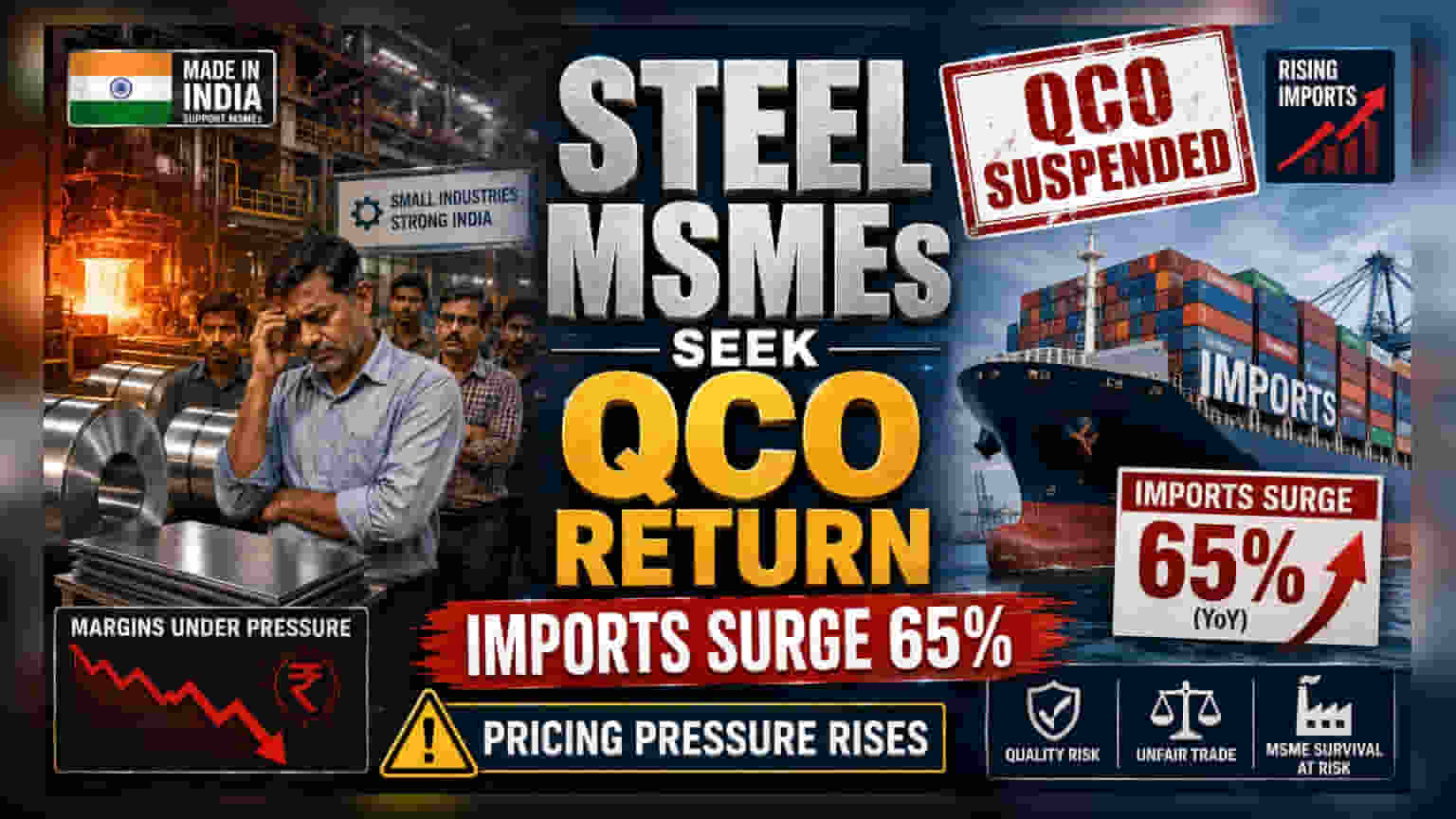
Small and medium enterprises in India's stainless steel sector are calling for the reinstatement of a Quality Control Order. Imports surged 65% year-on-year in April 2026 following the order's suspension, raising concerns about predatory pricing and profit margins for domestic manufacturers.
What Happened
Over 100 small and medium-sized enterprises (MSMEs) in India’s stainless steel sector have formally urged the government to bring back a suspended Quality Control Order (QCO). The industry is raising alarms after a sharp rise in stainless steel imports following the order's suspension on April 27, 2026. Data shows that imports reached 101,252 metric tonnes in April 2026, marking a 65% increase compared to 61,143 metric tonnes in April 2025. On a monthly basis, imports rose 69% compared to the 59,917 metric tonnes recorded in March 2026.
Why Investors Are Watching
The primary concern for investors in the steel and industrial goods sector is the impact on pricing power. When imported steel enters the market at lower costs, often referred to as 'predatory pricing,' domestic manufacturers face a difficult choice. They must either lower their selling prices to remain competitive—which can hurt their profit margins—or risk losing market share to foreign suppliers.
This is particularly relevant because many domestic companies have invested heavily in expanding their production capacity and upgrading technology. An environment where cheaper imports flood the market can disrupt these business plans, making it harder for companies to maintain the profit margins they achieved during periods of lower import competition.
Why The Quality Control Order Matters
A Quality Control Order acts as a regulatory barrier. It mandates that steel products sold in India must meet specific quality standards defined by the Bureau of Indian Standards (BIS). When this order is active, foreign suppliers must certify that their products meet these Indian standards before they can be imported.
Suspending this order effectively removes this barrier, making it easier for foreign steel to enter the Indian market without needing the same level of certification. For domestic MSMEs, which must follow local environmental, labor, and quality regulations, competing against foreign products that do not face the same compliance costs is challenging. This creates a cost disadvantage for local producers who operate under stricter oversight.
The Margin Pressure Risk
The broader concern for the sector is potential margin erosion. If imports continue to rise at this pace, it could force domestic steel producers to adjust their pricing downward across the board. For listed companies in the metal and steel sector, profitability is often sensitive to raw material costs and final selling prices. Any sustained pricing pressure from imports can lead to inventory build-up or lower realizations, which are the prices companies actually receive when selling their goods. Investors usually track these trends as they directly influence quarterly financial results.
What Investors Should Track Next
The most important monitorable is whether the Ministry of Steel decides to reinstate the QCO or implement other trade measures, such as anti-dumping duties, to curb the influx of foreign steel. Investors should also pay close attention to monthly import data releases to see if the April trend continues into the following months. Additionally, management commentary from major listed stainless steel players regarding pricing competition and demand conditions in the coming earnings calls will provide insight into how the industry is navigating this surge in imported competition.