

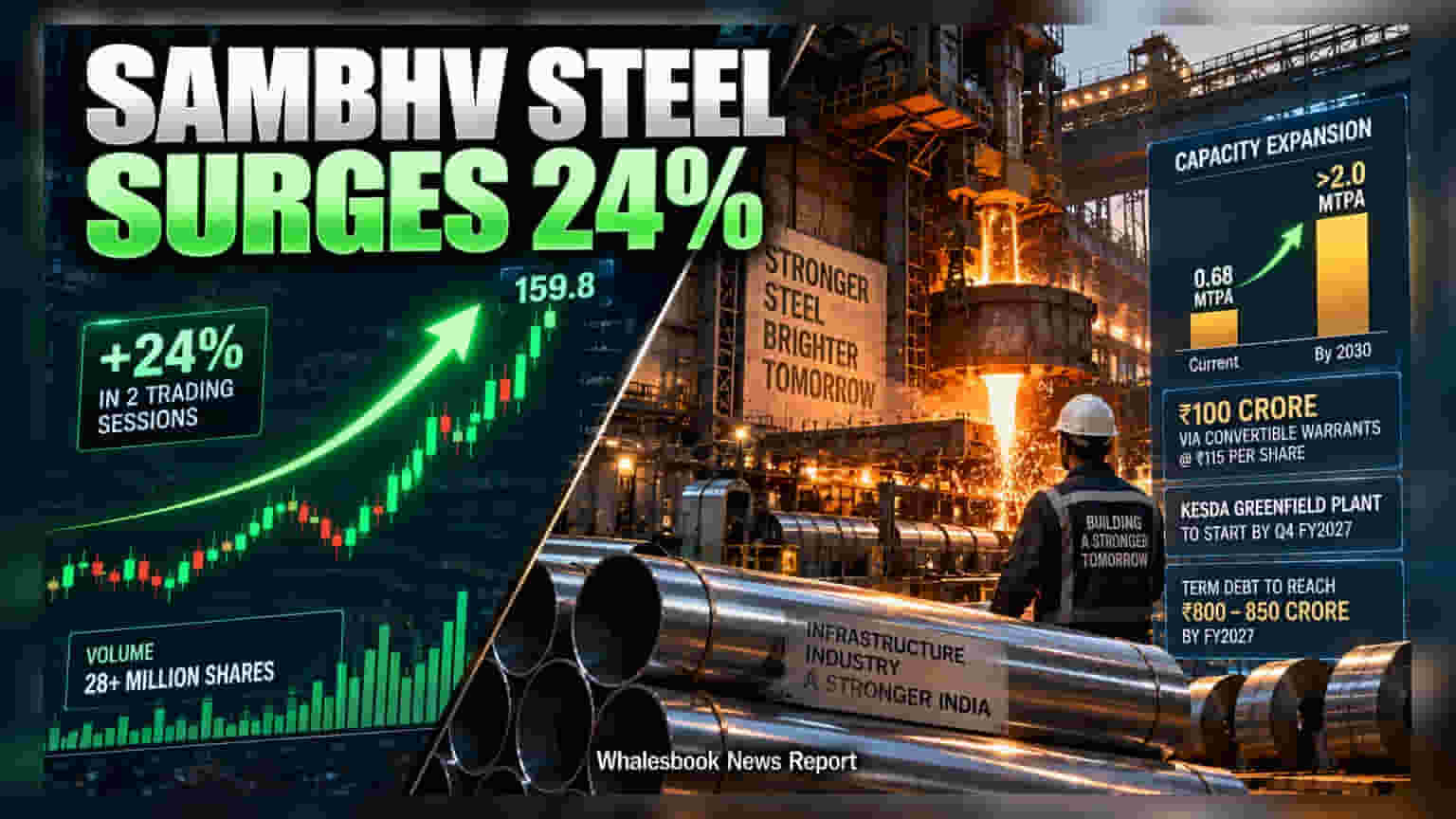
Sambhv Steel Tubes shares have climbed 24% over the last two trading days, supported by the company’s plans to triple production capacity to 2 million tonnes by 2030. The company also announced a Rs 100 crore capital raise through equity warrants. While recent results show strong growth, investors are closely monitoring the company's rising debt levels and potential margin pressure from import competition.
Shares of Sambhv Steel Tubes have witnessed strong market interest, rising 24% over the past two trading sessions to reach Rs 159.8. This upward trend follows the company’s announcement of a major capacity expansion strategy designed to triple its finished-product capacity from 0.68 million tonnes per annum to over 2 million tonnes by 2030.
To fund these growth initiatives, the company has proposed raising Rs 100 crore through the issuance of 86.95 million fully convertible equity warrants at Rs 115 per share. This capital injection is intended to support working capital and finance projects such as the Kesda greenfield plant, which is currently scheduled to begin operations by the fourth quarter of the 2027 fiscal year.
While the company reported record revenue and profit levels in the first quarter, the aggressive expansion path requires significant financial commitment. Management estimates that total term debt will climb to between Rs 800 crore and Rs 850 crore by the end of fiscal year 2027. Additionally, the company expects to carry between Rs 200 crore and Rs 300 crore in working-capital debt to support its growing operations.
Investors are currently balancing the growth story against emerging operational hurdles. The company has cautioned that it may face headwinds in the second quarter, specifically noting that softer product pricing and increased competition from imports could exert pressure on stainless-steel profit margins.
Trading volume on Monday was significant, with over 28 million shares changing hands on the National Stock Exchange, which is notably higher than the stock’s typical 20-day average. As the company progresses with its expansion and debt-funded growth, investors will likely monitor how management balances this capacity build-out with the potential for margin pressure and rising interest costs in a competitive market environment.