

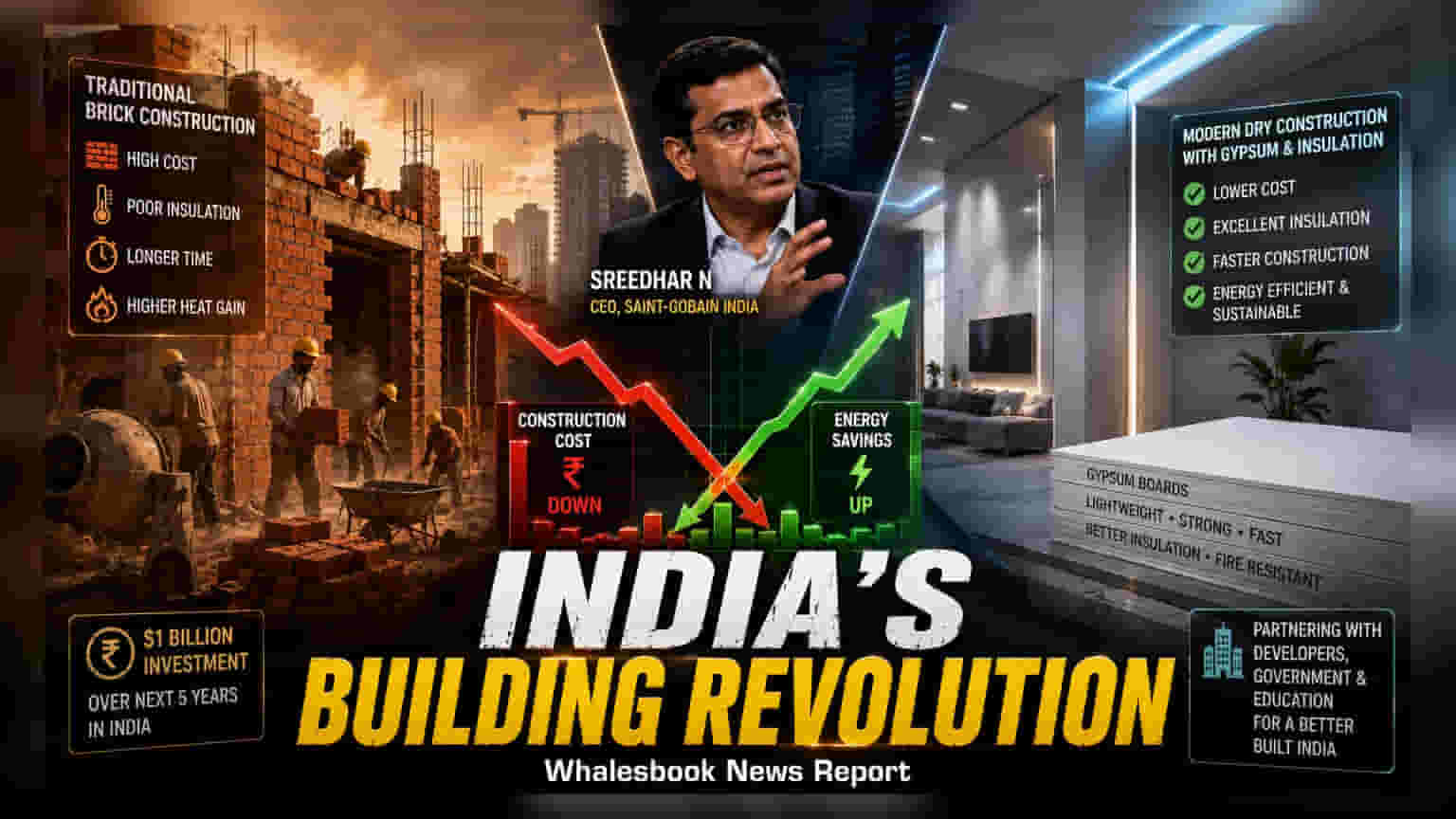
CEO Sreedhar N is driving a strategy to shift India's construction sector toward gypsum boards and insulation materials. This long-term transition aims to improve energy efficiency but faces hurdles in changing consumer habits. Investors should note that the listed entity, Saint-Gobain Sekurit India, operates in the automotive glass segment and is separate from this gypsum-focused construction business.
Saint-Gobain's India CEO, Sreedhar N, is leading a significant strategic push to change how homes and offices are built in India. The company is actively working to transition the construction sector away from traditional brick-and-mortar methods toward modern alternatives like gypsum boards and advanced insulation materials. This effort is a central part of the company's long-term growth strategy for the region.
The Shift to Dry Construction
The company is promoting the use of gypsum boards and insulation products, such as glass wool and stone wool, to replace traditional heavy brick walls. These materials are commonly used in Western markets for dry construction. The company argues that these solutions offer several benefits, including being lighter in weight, which can reduce structural costs, and providing superior thermal and sound insulation. By improving insulation, the company aims to help building owners lower their energy consumption for cooling, which is a major long-term cost.
To drive this change, Saint-Gobain is engaging with architects, real estate developers, and government bodies. The strategy involves influencing building codes to prioritize energy efficiency and material performance. The company is also investing in training programs to help construction workers learn how to install these new materials correctly. Partnerships with major developers are already in place, and the company is working with educational institutions like CEPT University in Ahmedabad to educate future architects on these construction methods.
Important Distinction for Investors
It is important for market participants to understand the structure of the business. While Saint-Gobain is a global giant in construction materials, the entity listed on Indian stock exchanges, Saint-Gobain Sekurit India, operates primarily in the automotive glass segment. This listed company does not house the gypsum board or the construction-focused materials business discussed in this strategy. Investors often confuse the two, but the gypsum and home construction business remains part of the group's private operations in India, not the listed automotive glass subsidiary.
Risks and Market Hurdles
Transitioning the Indian construction sector is a complex, long-term task. The primary challenge is consumer and industry inertia. Traditional brick construction is deeply embedded in Indian building culture, and shifting preferences toward dry walls requires significant effort in education and proof of reliability. Additionally, the adoption of new construction techniques depends heavily on evolving government building codes and the willingness of developers to move away from established practices.
While the parent company is committing substantial capital—approximately $1 billion over the next five years—to expand its footprint in India, the success of this shift will depend on how quickly the market adopts these modern materials. For investors monitoring the listed automotive glass business, performance remains tied to the broader auto industry's production volumes and cost pressures, rather than the construction sector's transition. The next important update for this initiative will be the rate of adoption among major real estate projects and any subsequent changes in national building codes.