

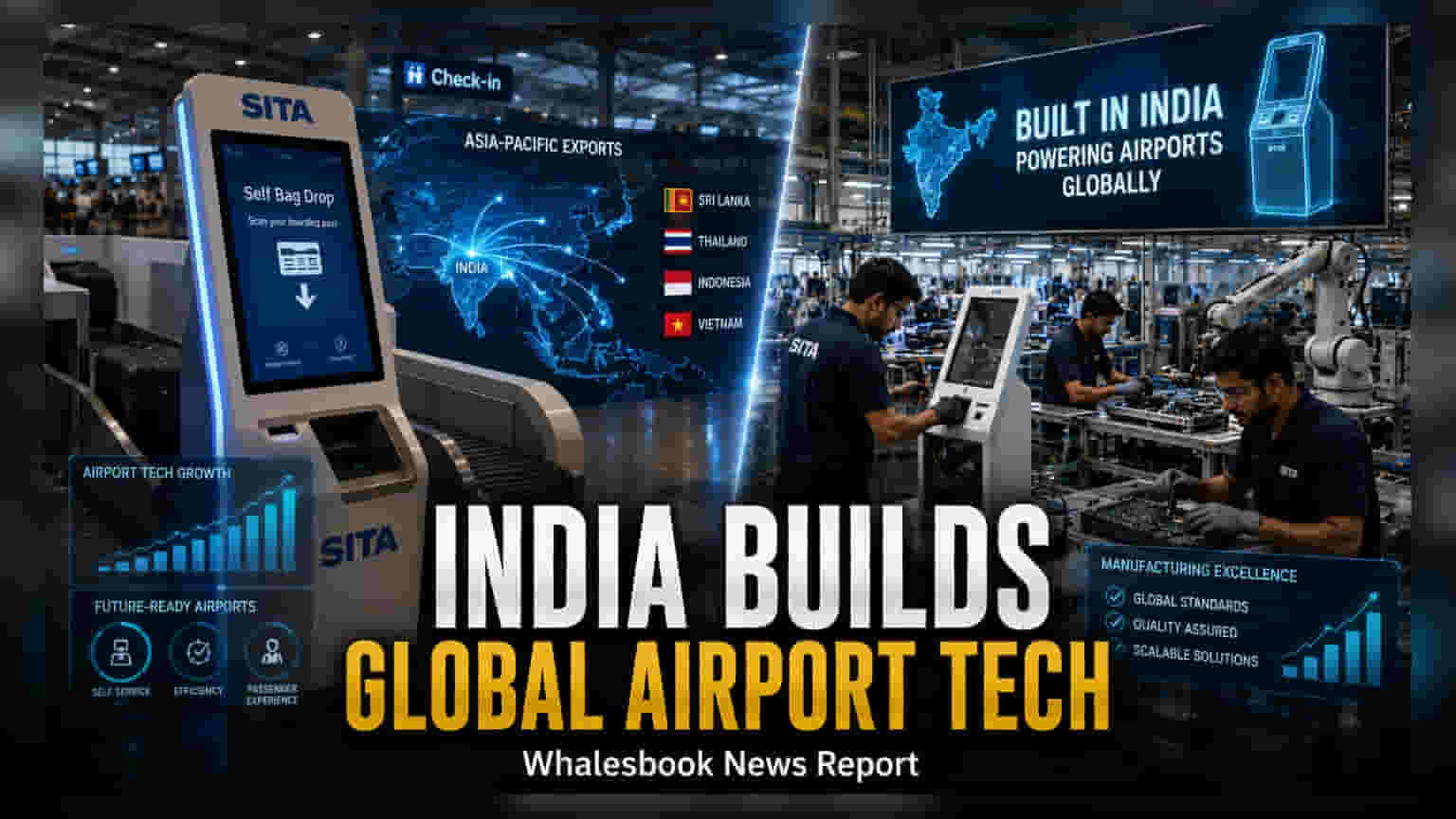
Global aviation technology provider SITA is scaling up exports of its Indian-manufactured airport kiosks and self-bag drop systems to the Asia-Pacific region. This move positions India as a key manufacturing hub for aviation infrastructure. Investors should note that SITA is an industry-owned, private entity and is not a publicly traded company on Indian stock exchanges.
Aviation technology provider SITA is significantly scaling up its operations in India, shifting the country from a local service center to a key export hub for airport infrastructure hardware. The company is now exporting its India-manufactured self-bag drop systems and check-in kiosks to markets across the Asia-Pacific, including Sri Lanka, Thailand, Indonesia, and Vietnam.
This initiative marks a strategic shift for SITA, which has long been a technology partner for Indian aviation, notably supporting major projects like the Airports Authority of India's airport modernization and the national 'Digi Yatra' initiative. By leveraging local manufacturing partnerships, the company aims to reduce the lead time and logistics costs involved in deploying technology at rapidly growing airports in emerging markets.
Why This Matters for the Aviation Sector
The Asia-Pacific region is currently a focal point for global aviation growth, with many countries investing heavily in new and expanded airport infrastructure. SITA’s decision to manufacture these systems in India and export them regionally suggests that India's manufacturing ecosystem is becoming cost-competitive and capable of meeting international standards for aviation hardware. For the broader sector, this indicates a trend where India is being integrated into the global supply chains of specialized aviation IT firms rather than just serving as an IT services outsourcing hub.
However, the aviation technology space remains highly competitive. SITA faces rivalry from large global technology firms such as Amadeus, Thales, and Honeywell, which also provide comprehensive digital and hardware solutions for airports. Success in this export drive will depend on the company's ability to navigate different regulatory environments across Asia-Pacific nations and the continued demand for capital-intensive airport upgrades.
Important Clarification for Investors
While SITA is a prominent name in the aviation industry, it is important for investors to understand that it is a multinational, industry-owned organization headquartered in Geneva, Switzerland. It is not a publicly listed company on the National Stock Exchange (NSE) or the Bombay Stock Exchange (BSE).
Investors researching this news should be aware that 'Sita Enterprises Limited,' which is listed on the BSE, is an unrelated Non-Banking Financial Company (NBFC) and has no connection to the aviation technology provider mentioned here. There is no direct way for individual investors to buy shares in the SITA group that produces these airport technologies.
Risks and Monitorables
Beyond market competition, the aviation technology sector faces specific operational risks. Airport IT projects are often complex, requiring deep integration with the legacy systems of various airlines and airport operators. Any failure or delay in integrating these new kiosks or bag drop systems into existing airport software can lead to operational bottlenecks, potentially impacting the company's reputation and future order inflows.
Furthermore, the company's business model is inherently tied to global travel demand and the willingness of airports to spend on capital-intensive technology upgrades. As the industry moves forward, the primary monitorables will include the pace of adoption of these 'Made-in-India' systems in competitive international markets and the ability of SITA to maintain the quality and support standards required by global aviation regulators.