

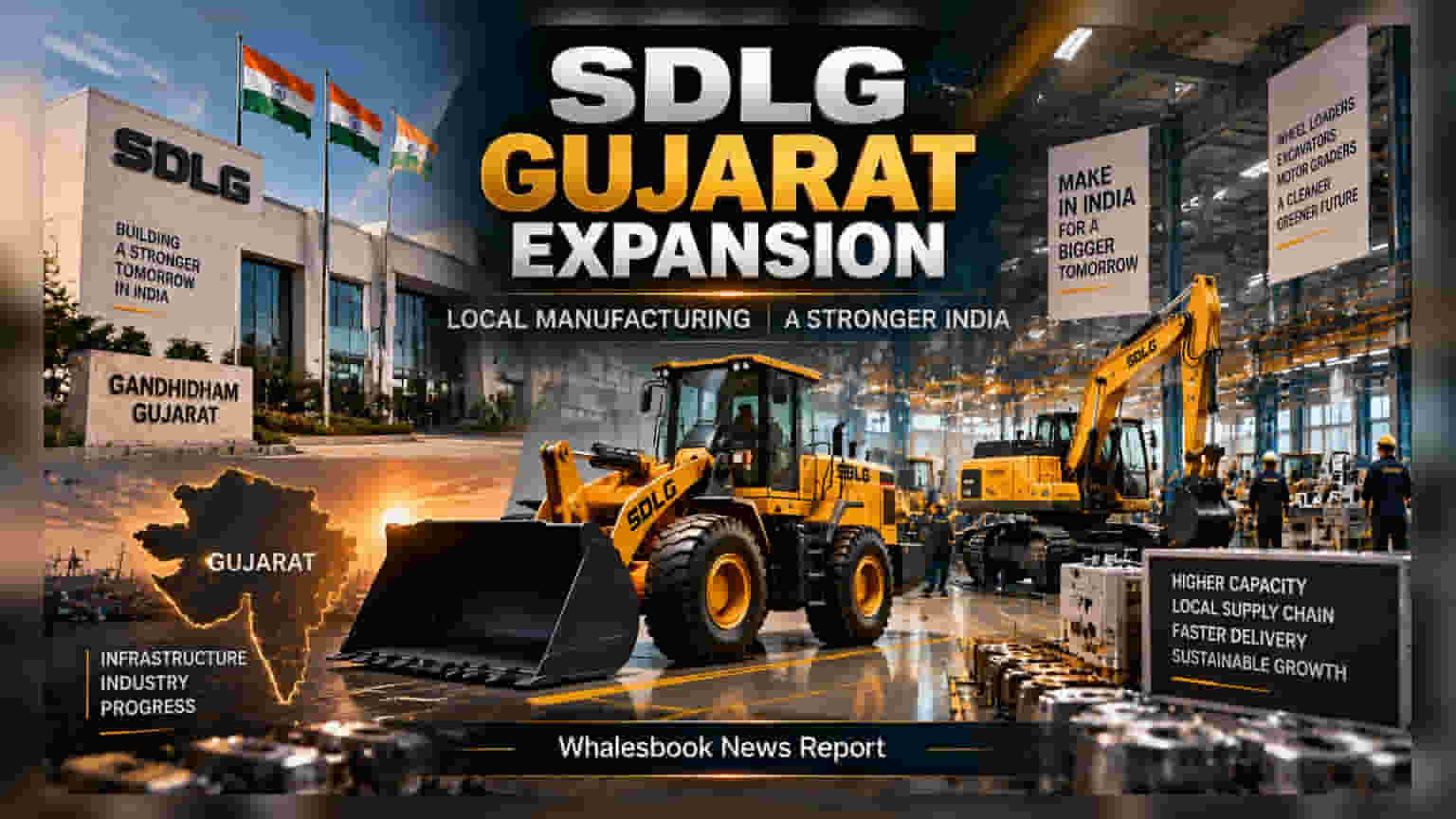
Shandong Lingong Construction Machinery (SDLG) has launched a new ₹300 crore manufacturing unit in Gandhidham, Gujarat. The facility, which has a capacity to produce 3,000 units annually, aims to reduce the company's reliance on imports and improve its competitive position in the Indian construction equipment market.
Shandong Lingong Construction Machinery (SDLG) has officially started operations at its new manufacturing plant in Gandhidham, Gujarat. This facility follows an investment of ₹300 crore and represents a move by the company to shift from importing machinery to local manufacturing. By producing equipment within India, the company intends to shorten delivery times and build a stronger local supply chain.
The new plant is set up to reach a maximum annual production capacity of 3,000 units. The assembly lines will focus on key construction assets, including wheel loaders, excavators, and motor graders. This capacity is expected to be reached through a phased rollout, allowing the company to manage its operations efficiently as it ramps up output.
Along with the new plant, the company has introduced 10 new product models. These include updated diesel-powered excavators and new electric options. The move toward electric machinery is a response to the growing demand for lower-emission equipment, particularly in sectors like port handling, rail construction, and quarrying, where clients are increasingly looking to meet stricter environmental standards.
The Indian construction equipment market is a crowded space with well-entrenched players. Companies like JCB India, Tata Hitachi, and L&T Construction Equipment already hold significant market shares and have built extensive service networks over decades. For SDLG, the challenge will be to attract customers away from these established brands by proving the reliability of its locally manufactured products and providing strong after-sales support, which is critical for construction machinery owners.
This expansion comes at a time when the broader sector is expecting strong growth. The company referenced data from the Indian Construction Equipment Manufacturers’ Association, which suggests India could become the second-largest construction equipment market in the world by 2030. This growth is driven by the government's ongoing focus on infrastructure development, including roads, mining, and port expansion.
While the expansion is a positive step for the company's manufacturing capability, investors may monitor how quickly the firm can capture market share. Success will depend on its ability to maintain quality standards, the speed of its production ramp-up, and how well its new models perform compared to existing options from domestic and global competitors. The company's future performance will also be influenced by how effectively it can manage operational costs and navigate the competitive pricing environment in the Indian construction sector.