

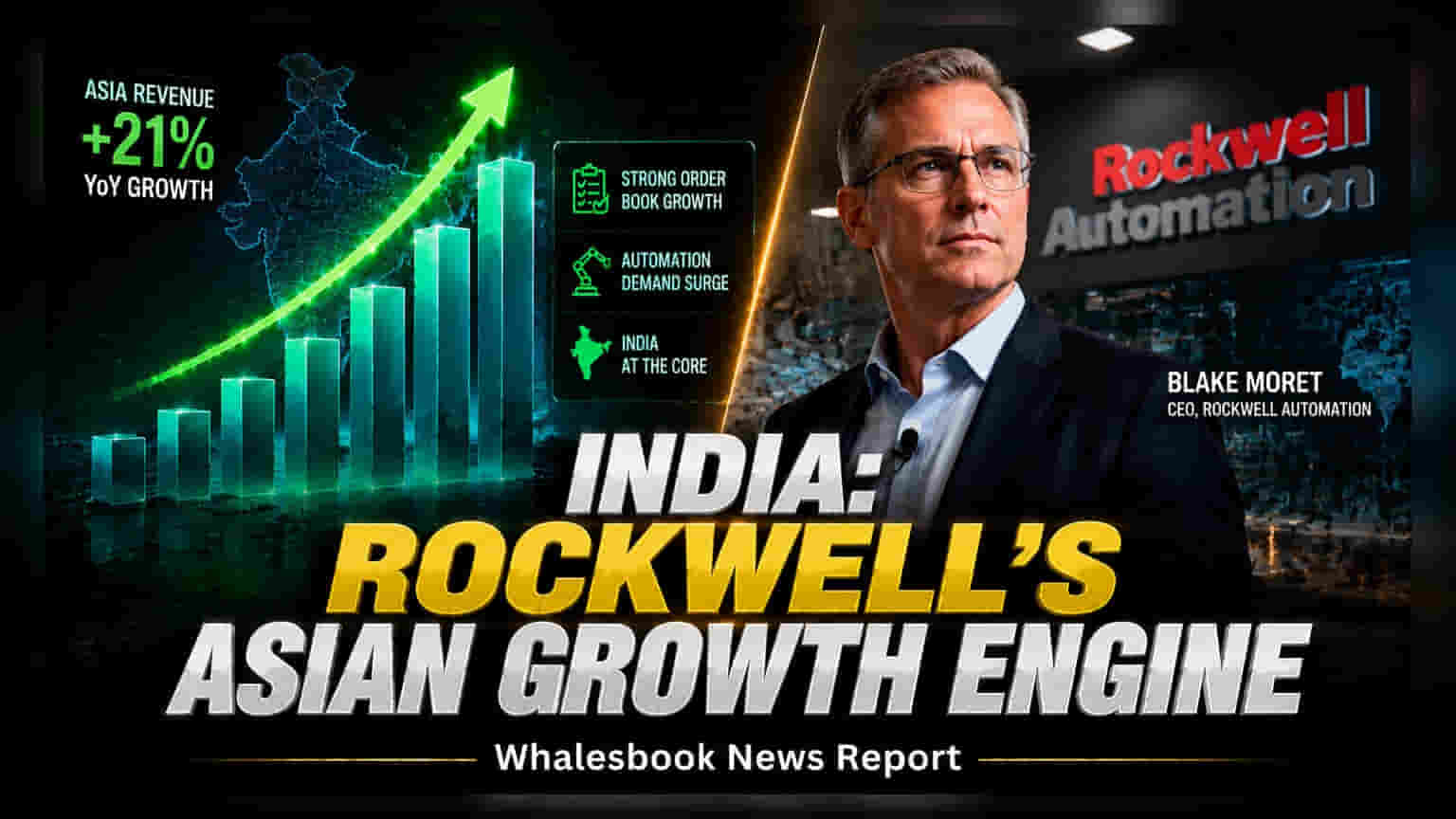
Industrial automation leader Rockwell Automation has named India as the cornerstone of its Asian growth strategy. The company has already doubled its Indian workforce since the pandemic to 5,000 employees. Investors should note the focus on pharmaceutical, automotive, and consumer goods sectors, as the company seeks to leverage AI to simplify manufacturing technology for local firms, including SMEs.
Rockwell Automation is doubling down on its presence in India, positioning the country as the central hub for its growth strategy across Asia. Chairman and CEO Blake Moret recently confirmed that the company has significantly scaled its Indian operations, with its workforce growing to 5,000 employees since the onset of the pandemic. This expansion reflects a long-term commitment to the market, where the firm has operated for over four decades across areas ranging from software development and engineering to manufacturing.
Targeting High-Growth Industrial Sectors
The company’s strategy in India is closely aligned with the government's 'Make in India' initiative. By focusing on domestic firms, Rockwell aims to capitalize on the country's push to increase the share of manufacturing in its national economy. The business sees significant demand for its automation and digital transformation solutions within the pharmaceutical and life sciences sectors, which are increasingly relying on high-tech integration. Furthermore, the automotive, food and beverage, and consumer goods sectors remain key pillars for the company's future growth in the region.
Leveraging AI and Supporting Smaller Firms
A critical component of Rockwell's forward-looking strategy involves the integration of artificial intelligence to simplify industrial processes. The company intends to use AI to make complex technology more accessible, covering everything from system design and commissioning to day-to-day operation and maintenance. By lowering these technical barriers, Rockwell aims to make its solutions more appealing to small and medium enterprises, or SMEs, which often find the initial cost of automation projects a major hurdle.
Beyond direct sales, Rockwell is broadening its local ecosystem by working closely with systems integrators, machine builders, and engineering partners. The company is also investing in academic partnerships to build a skilled pipeline of talent. For investors, the success of this strategy will depend on how effectively the company can balance the cost of these expansion efforts against its ability to capture market share from local and international competitors in the highly competitive industrial automation space. Monitoring the adoption rate of these AI-integrated solutions among Indian manufacturers will be an important indicator of the firm’s competitive strength in the coming years.