

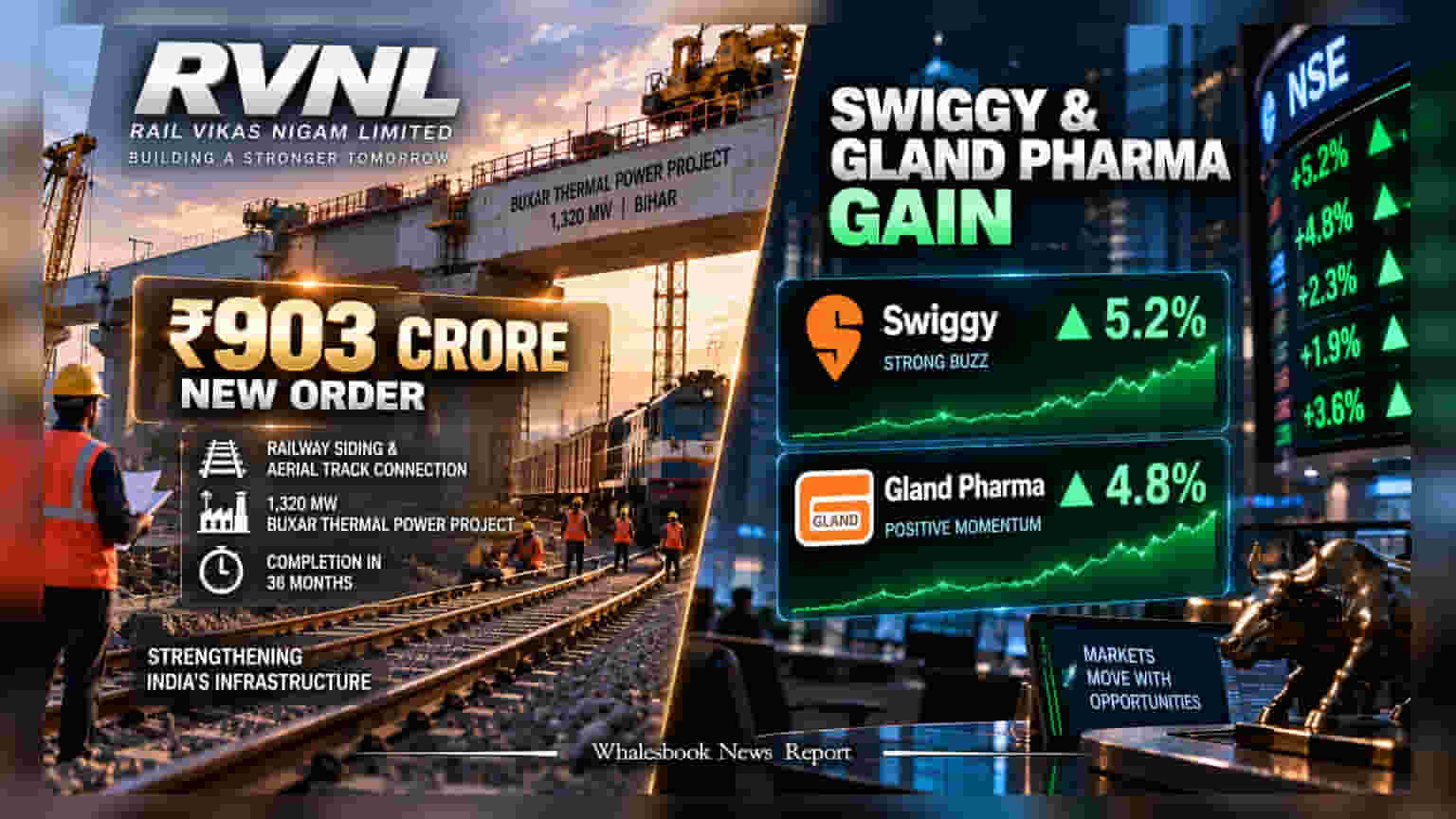
Rail Vikas Nigam Limited has won a Rs 903 crore order from SJVN Thermal for railway infrastructure at the Buxar Power Project. While this win boosts the company's order book, investors are also tracking margin sustainability and valuation concerns amid recent stock price volatility.
Rail Vikas Nigam Limited (RVNL) has secured a significant order worth Rs 903 crore from SJVN Thermal Private Limited. The contract involves the construction of a permanent railway siding and aerial track connection for the 1,320 MW Buxar Thermal Power Project in Bihar. This project is scheduled for completion within 36 months, providing the company with long-term revenue visibility.
This contract is part of a series of recent wins for the company. Just days prior, the state-run rail infrastructure firm emerged as the lowest bidder for a separate Rs 404.88 crore project with the East Coast Railway. These back-to-back developments highlight the company’s aggressive pursuit of new infrastructure business, which continues to keep its order book robust.
Financial Performance and Market Context
For investors, the recent order win comes against a backdrop of mixed financial results and market attention. In its latest quarterly update for Q1 of the financial year 2027, the company reported a consolidated net profit of Rs 159.36 crore. While this reflected an 18.5% increase compared to the same period last year, it also marked a sequential decline from the previous quarter, prompting some investors to look closer at operational performance.
Despite the steady inflow of new projects, the stock has recently faced selling pressure. Part of this sentiment stems from concerns regarding margin sustainability. As the company competes for large-scale infrastructure projects, the pressure to maintain profitability amid rising costs for raw materials like steel and cement remains a key challenge. If input costs rise faster than the project price, profit margins may come under pressure, a trend that market analysts have flagged in recent months.
Risks and Monitorables
Beyond margins, valuation remains a point of discussion. The stock has experienced volatility in recent trading sessions, and some market participants have raised concerns about its current price-to-earnings (P/E) valuation relative to historical levels. Additionally, execution risk is a standard factor for infrastructure companies. Any delays in the 36-month timeline for the Buxar project or potential billing disputes—which have been an area of concern for the company in the past—could impact cash flow and bottom-line growth.
Going forward, investors will likely track whether the company can successfully translate these order wins into improved profit margins. The primary monitorables include the pace of project execution, updates on cost management, and the management's commentary on potential order intake in the coming quarters. While the strong order book provides a base for revenue, the ability to protect profitability in a competitive bidding environment will be crucial for long-term value.