

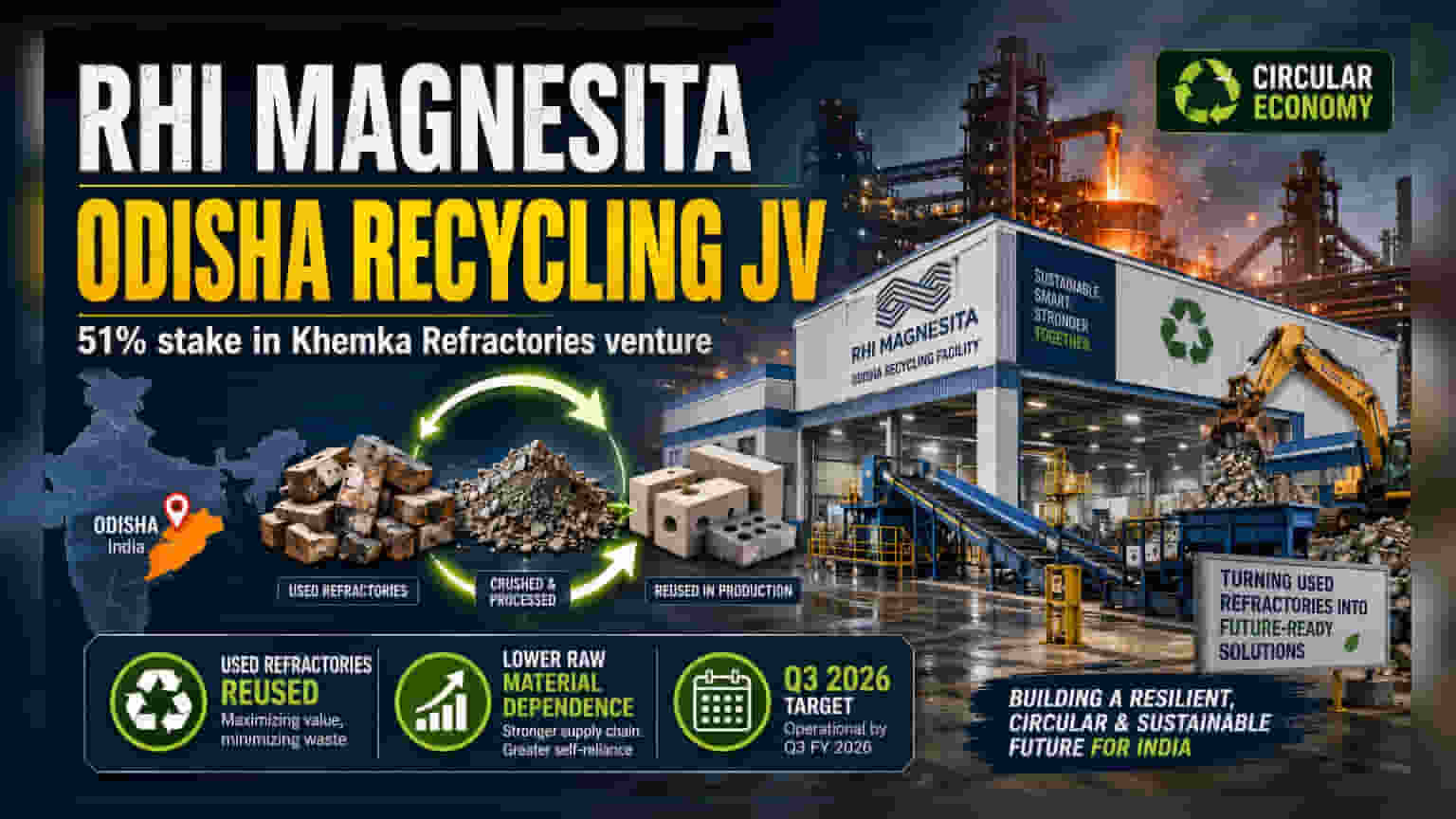
RHI Magnesita India has entered a 51:49 joint venture with Khemka Refractories to build a refractory recycling plant in Odisha. The facility will process spent furnace linings for steel, cement, and glass industries. This move aims to cut raw material costs, reduce waste, and streamline logistics for the company by tapping into the region's large steel manufacturing base.
What Happened
RHI Magnesita India has announced a joint venture with Khemka Refractories Pvt. Ltd. to construct a specialized recycling facility in Odisha. Under the agreement, RHI Magnesita India will hold a 51% majority stake in the venture. The plant is designed to collect and process used refractory materials—the heat-resistant linings essential for furnaces in industries like steel, cement, and glass—allowing them to be reused in production.
The Strategic Logic
The refractory industry is vital for high-temperature manufacturing, but it relies heavily on raw materials. By recycling spent linings, the company is attempting to establish a circular economy model. Instead of disposing of used materials as industrial waste, they can be processed and reintroduced into the production cycle. This helps reduce reliance on imported raw materials and minimizes landfill usage. For the company, this could lead to better control over input costs and supply chain stability.
Why Odisha Matters
Location is a critical factor for this project. Odisha is home to a high concentration of India’s steel manufacturing capacity. Transporting heavy, used refractory bricks is costly and logistically complex. By building the recycling plant directly in the state, the joint venture aims to minimize transportation expenses for both the collection of used bricks from steel plants and the delivery of recycled materials back to customers. This proximity to the primary user base is expected to improve the efficiency of the recycling process.
The Execution and Operational Timeline
The transaction is subject to standard closing conditions and is expected to be completed by the third quarter of 2026. As with any greenfield industrial project, the key monitorable for investors will be the timeline for setting up the plant and the subsequent capacity utilisation rate. Successful implementation will require efficient collection networks to ensure a steady flow of spent refractory material for the facility to process.
Potential Business Challenges
While the project aims to improve sustainability and cost-efficiency, it faces the standard risks associated with new infrastructure development. This includes the potential for construction delays or technical challenges in scaling the recycling technology to industrial levels. Furthermore, the company will need to ensure that the quality of the recycled material meets the stringent standards required by steel and cement furnaces. The long-term success of this venture will depend on the market acceptance of recycled products and the company's ability to integrate this new supply chain with its existing operations.