

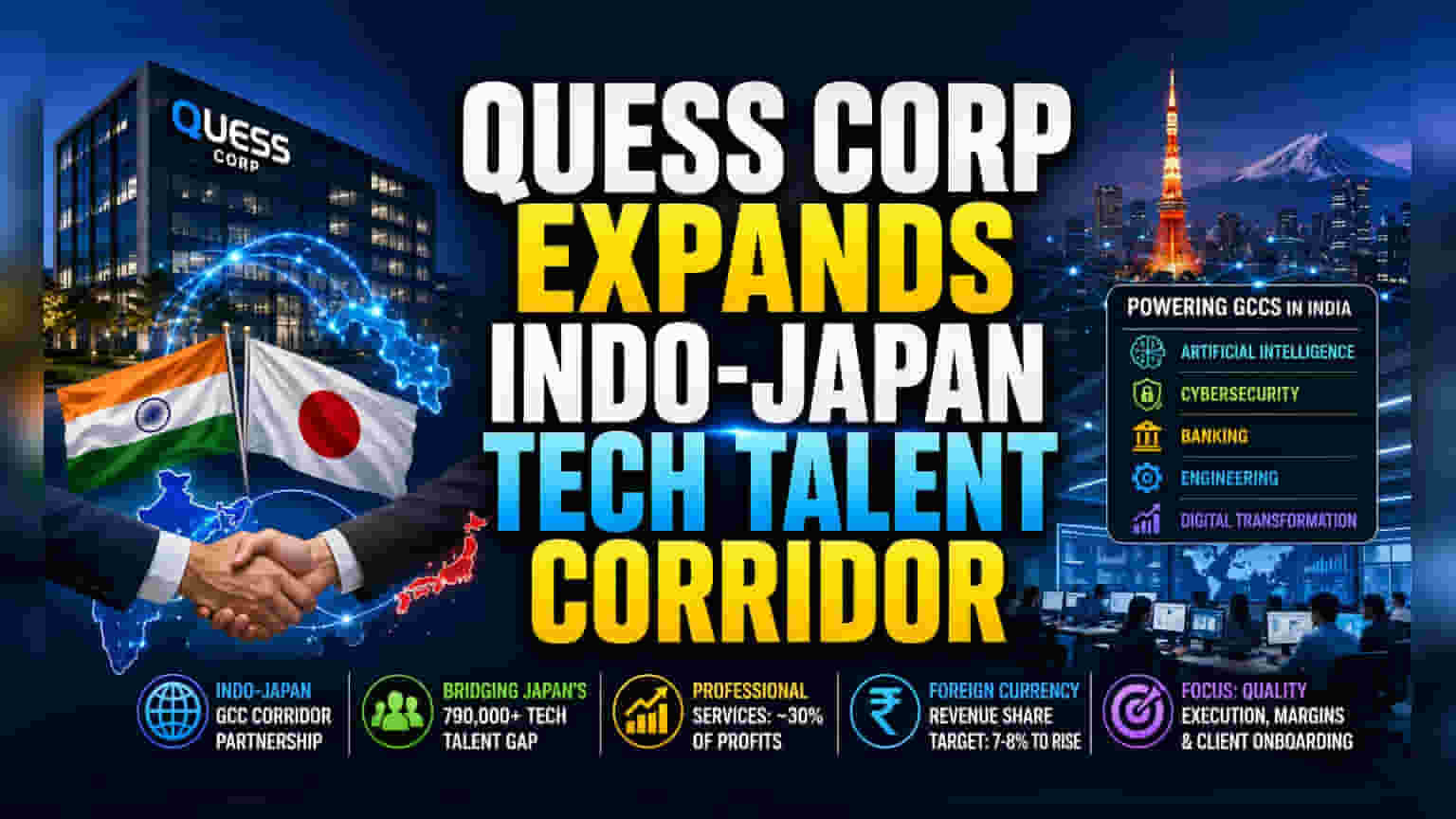
Quess Corp is partnering with Japanese firms to help companies establish Global Capability Centres in India, addressing Japan's significant tech talent shortage. This move is part of a plan to boost foreign currency revenue and diversify service offerings. Investors will be watching the pace of client acquisition and how this venture impacts the company's professional services margins.
What Happened
Quess Corp has announced a strategic expansion to address the technology talent deficit in Japan. The Bengaluru-based staffing and workforce solutions provider has formed a partnership with Japan’s Institution for a Global Society (IGS) and Indo-Pacific Advisory (IPA) to establish an Indo-Japan Global Capability Centre (GCC) corridor. This initiative aims to assist Japanese corporations in setting up and operating GCCs in India, focusing on high-demand fields such as artificial intelligence, cybersecurity, banking, engineering, and digital transformation.
The Strategic Shift To Global Corridors
This partnership marks the beginning of a broader strategy for Quess Corp, which plans to develop five international corridors to increase its share of foreign currency revenue. Currently, foreign currency income accounts for approximately 7-8% of the company's total revenue. The new Indo-Japan venture is expected to contribute to the company's revenue starting from the next financial year. This service will be integrated into the professional services division, which is a significant part of the business, currently contributing about 30% of profits with an EBITDA margin of approximately 12%.
Addressing The Talent Gap
Japan is facing a severe shortage of skilled technology workers, with projections indicating a deficit of nearly 790,000 tech professionals over the next four years. Quess Corp is leveraging India's established status as a hub for GCCs to bridge this gap. India currently hosts around 2,100 GCCs, and Quess aims to tap into this ecosystem by identifying 50 to 100 potential Japanese corporate clients in sectors like renewable energy, heavy engineering, and banking. The company is assessing the specific talent needs of these firms to determine how effectively India’s workforce can support their expansion requirements.
Execution Risks And Margin Considerations
For investors, the success of this expansion will depend on how effectively Quess can bridge cultural and operational differences between Japanese corporate practices and the Indian GCC model. Japanese companies are often conservative in their decision-making and operational integration, which could lead to a longer sales cycle compared to domestic or Western clients. Furthermore, maintaining the 12% EBITDA margin in the professional services division will be a key monitorable. If the cost of talent acquisition or initial setup expenses in this new corridor rises, it could pressure profit margins in the short term. Additionally, competition in the Indian staffing and outsourcing sector remains intense, and the ability to retain skilled talent for high-end roles like AI and cybersecurity will be crucial.
What Investors Should Track
Investors may want to monitor the pace at which Quess Corp onboards its first few Japanese clients. A clear timeline for the operational launch of the first batch of GCCs will provide insight into how quickly this revenue stream can start to make a material impact on the company's financials. Management commentary regarding the costs associated with establishing these international corridors will also be important to understand potential impacts on cash flow and overall profitability in the coming quarters.