

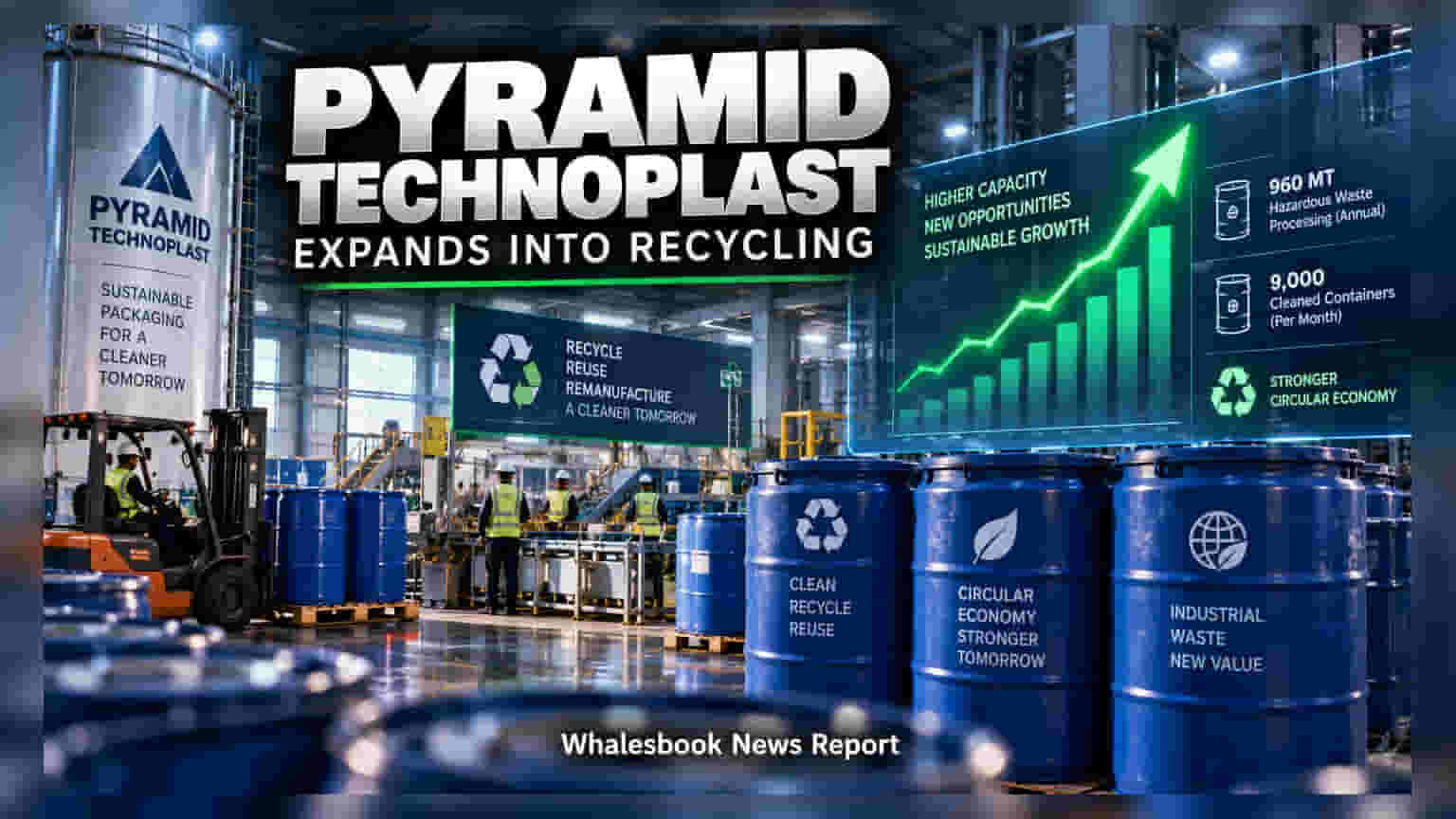
Pyramid Technoplast has received Gujarat Pollution Control Board approval to recycle 960 metric tons of hazardous industrial packaging waste annually. This regulatory clearance allows the company to clean and process used containers, creating a new service-based revenue stream. Investors may monitor how this integration impacts the company’s profit margins and raw material costs over time.
Pyramid Technoplast has received an amended authorization from the Gujarat Pollution Control Board (GPCB) that allows the company to handle and recycle third-party industrial packaging waste. The approval permits the firm to process up to 960 metric tons of hazardous-contaminated waste annually, including empty barrels, containers, and liners. This regulatory move marks a significant expansion of the company’s operations into the waste management and circular economy sector.
Traditionally, the company focuses on manufacturing industrial packaging. By adding the capacity to clean and recycle used containers—along with a new mandate to produce 9,000 cleaned containers monthly—the company is moving toward a vertical integration model. This could help the firm lower its production costs over time, as it can potentially reuse recycled plastic granules in its own manufacturing processes rather than relying solely on virgin raw materials, which are subject to global price swings.
With a market capitalization of roughly ₹586 crore, the company has been focused on scaling its recycling division, which already produces 1,000 metric tons of plastic granules monthly. The stock closed at ₹159.40, trading about 20% below its 52-week high of ₹198.70. While the new approval opens a revenue stream, success will depend on the volume of waste the company can collect from industrial clients and its efficiency in meeting strict environmental safety standards.
Handling hazardous materials involves significant regulatory and safety compliance. Investors should track whether the company can execute this expansion without incurring cost overruns or facing regulatory scrutiny. Furthermore, the overall demand for recycled packaging solutions from corporate clients will be a key factor in determining if this segment becomes a meaningful contributor to future revenue growth.