

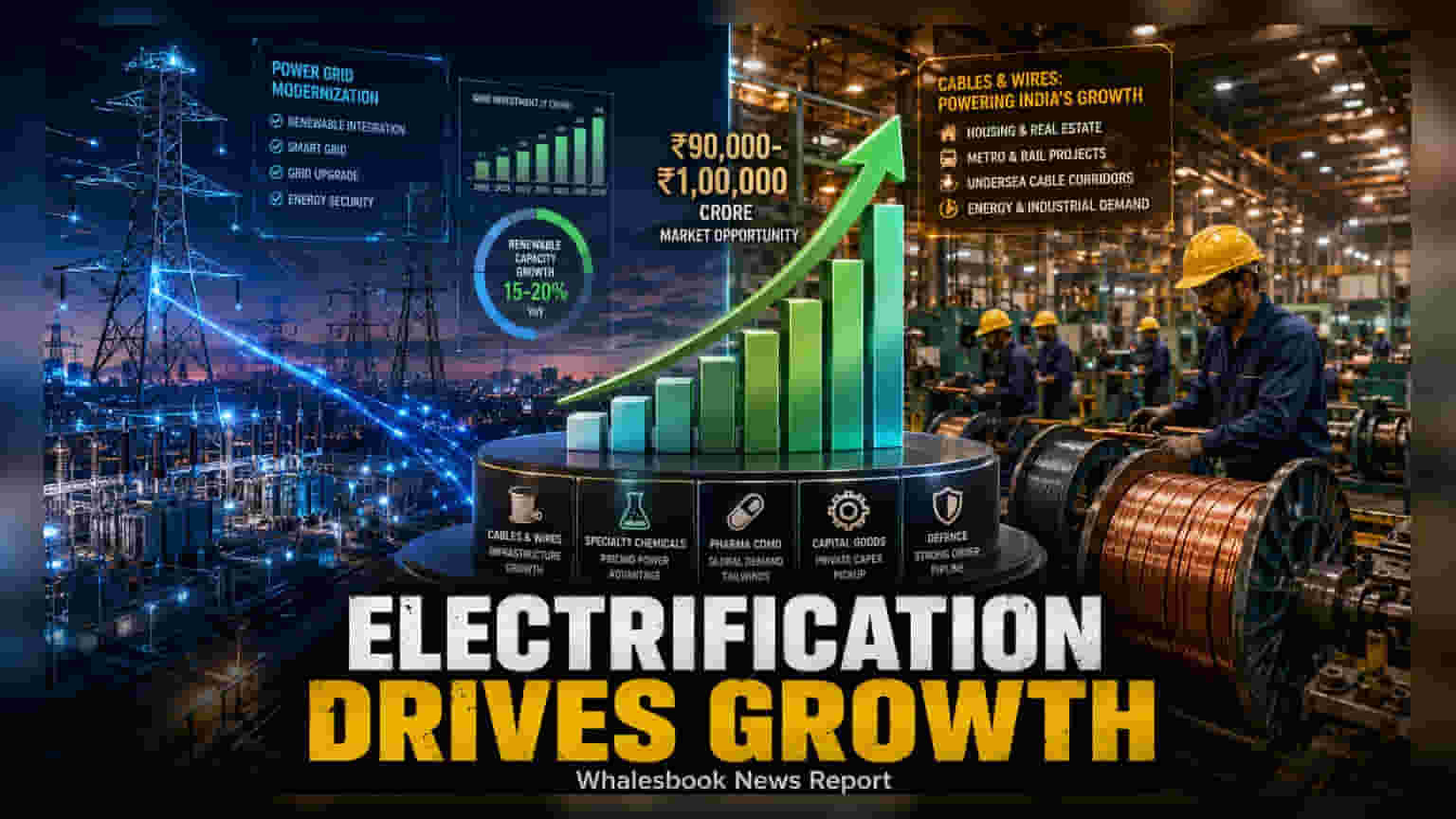
Arvind Kothari of Niveshaay Investment Advisors identifies India's power grid modernization as a key structural growth theme. The investment thesis favors cables, wires, and specialty chemicals like refrigerants and battery materials, while warning investors to remain cautious about execution and pricing risks in the broader commodity chemicals space.
The ongoing modernization of India's power grid is opening opportunities in the electrification value chain, according to Arvind Kothari, founder of Niveshaay Investment Advisors. As the country transitions to renewable energy, the grid requires significant upgrades to handle intermittent power loads, creating a sustained demand for infrastructure and specialized equipment.
Cables and Wires: Infrastructure Growth
Within this theme, the cables and wires industry stands out as a core beneficiary. Estimated to be a ₹90,000 crore to ₹1,00,000 crore sector, it is seeing steady growth driven by high-ticket activities like housing developments, metro rail expansions, and the development of complex undersea cable corridors. For investors, this sector acts as a proxy for both residential construction and government infrastructure spending. While the growth outlook is positive, the sector remains sensitive to raw material costs, particularly copper and aluminum, which can impact profit margins if companies are unable to pass on price hikes to customers.
Specialty Chemicals: Pricing Power vs. Commodity Risk
In the chemical domain, the focus is shifting toward niche segments such as battery chemicals and refrigerant gases. These areas are characterized by market concentration and higher barriers to entry, which often provide companies with stronger pricing power. This is an important distinction to make in the current market, as basic commodity chemicals continue to face pressure from global overcapacity, particularly from China, which leads to price volatility. Investors analyzing this space often look for companies that can maintain margins despite these broader sector headwinds.
Broader Market Interests
Beyond power and chemicals, the firm continues to track sectors such as pharmaceuticals, capital goods, and defence. In pharmaceuticals, the focus is on the growing demand for Indian contract development and manufacturing (CDMO) services, as global players look to diversify their supply chains away from China. The capital goods sector is also attracting attention due to a pickup in private sector capital spending, while the defence sector remains supported by government budget allocations and shifting geopolitical priorities.
Risks and Monitorables
While the growth outlook for these themes remains optimistic, with expectations of 15-20 percent earnings growth in areas like Battery Energy Storage Systems (BESS) and aerospace, success is not guaranteed. A primary risk factor for the power sector remains the execution speed of government projects. Any delay in grid modernization or issues with payments from state-run electricity distribution companies (discoms) can create cash flow pressure for suppliers. Furthermore, investors should monitor the execution capabilities of mid-sized manufacturing firms, as complex projects often require long cycles of product testing and quality approvals. The ultimate benefit to shareholders will depend on whether companies can manage these execution risks while maintaining competitive margins in an evolving regulatory environment.