

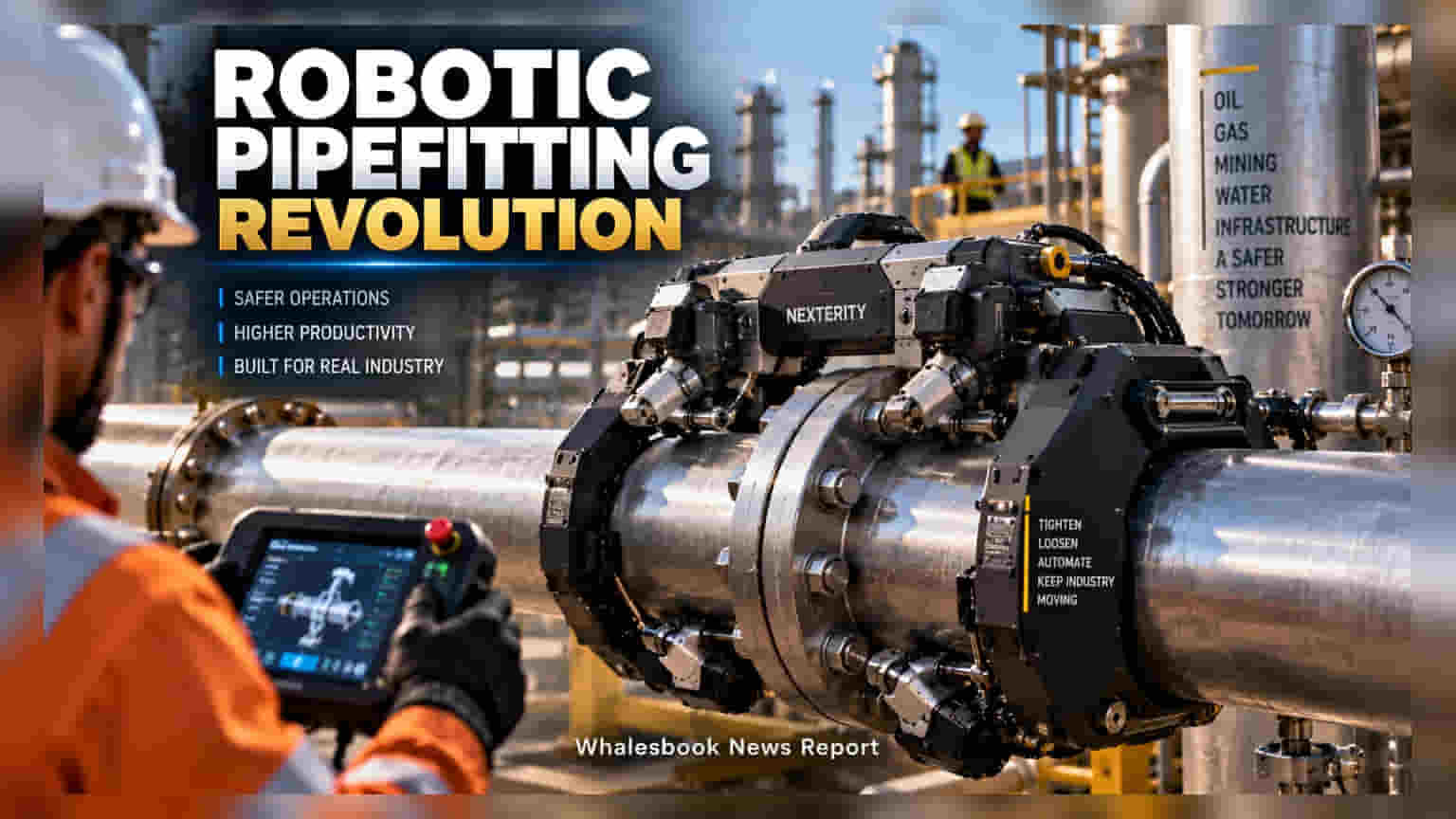
Nexterity has launched a portable robot designed to automate dangerous, high-risk pipe flange maintenance. By focusing on a rental-based model, the startup aims to address labor shortages in critical sectors like energy, mining, and water treatment, offering a potentially more efficient alternative to manual labor.
Nexterity, a robotics startup led by former ExxonMobil engineer Lindsey Elliott, has introduced a remote-controlled system designed to automate pipe flange maintenance. The core innovation addresses a common but overlooked industrial bottleneck: the manual, dangerous, and repetitive process of tightening and loosening bolts on piping systems used in oil, gas, mining, and water treatment facilities.
Traditionally, this work relies heavily on skilled manual labor, which has become increasingly scarce. By using a two-piece, battery-powered robotic system that clamps around pipes, Nexterity aims to improve safety and consistency. The device is designed to handle pipes ranging from two to eight inches in diameter, a size range that covers a vast portion of existing North American piping infrastructure. The robots process four bolts simultaneously, significantly reducing the time and physical risk involved in maintenance.
For investors, the most notable aspect of this launch is the business model. Nexterity is opting for a rental-based approach, where the equipment is designed to be portable and fits into standard protective gear cases. This model allows maintenance crews to rent the technology as needed rather than purchasing expensive assets. This could facilitate faster adoption across mobile construction and maintenance teams, potentially creating a recurring revenue stream for the company rather than relying on one-time hardware sales.
While the company is currently focused on North American infrastructure, the global industrial sector is facing a similar need for automation to combat rising labor costs and workplace safety concerns. In markets like India, where industrial and infrastructure projects are expanding, the move toward safer, automated maintenance tools is a growing trend. However, investors should monitor the scalability of this solution. As with any hardware-focused startup, the key challenge will be proving the durability of these units in harsh, high-pressure environments. The success of the business will depend on the robot's ability to operate reliably over long periods without significant downtime or expensive repairs. Scaling this technology will require not just proof of concept, but consistent field performance that satisfies strict safety standards in critical sectors like nuclear power and chemical manufacturing.