

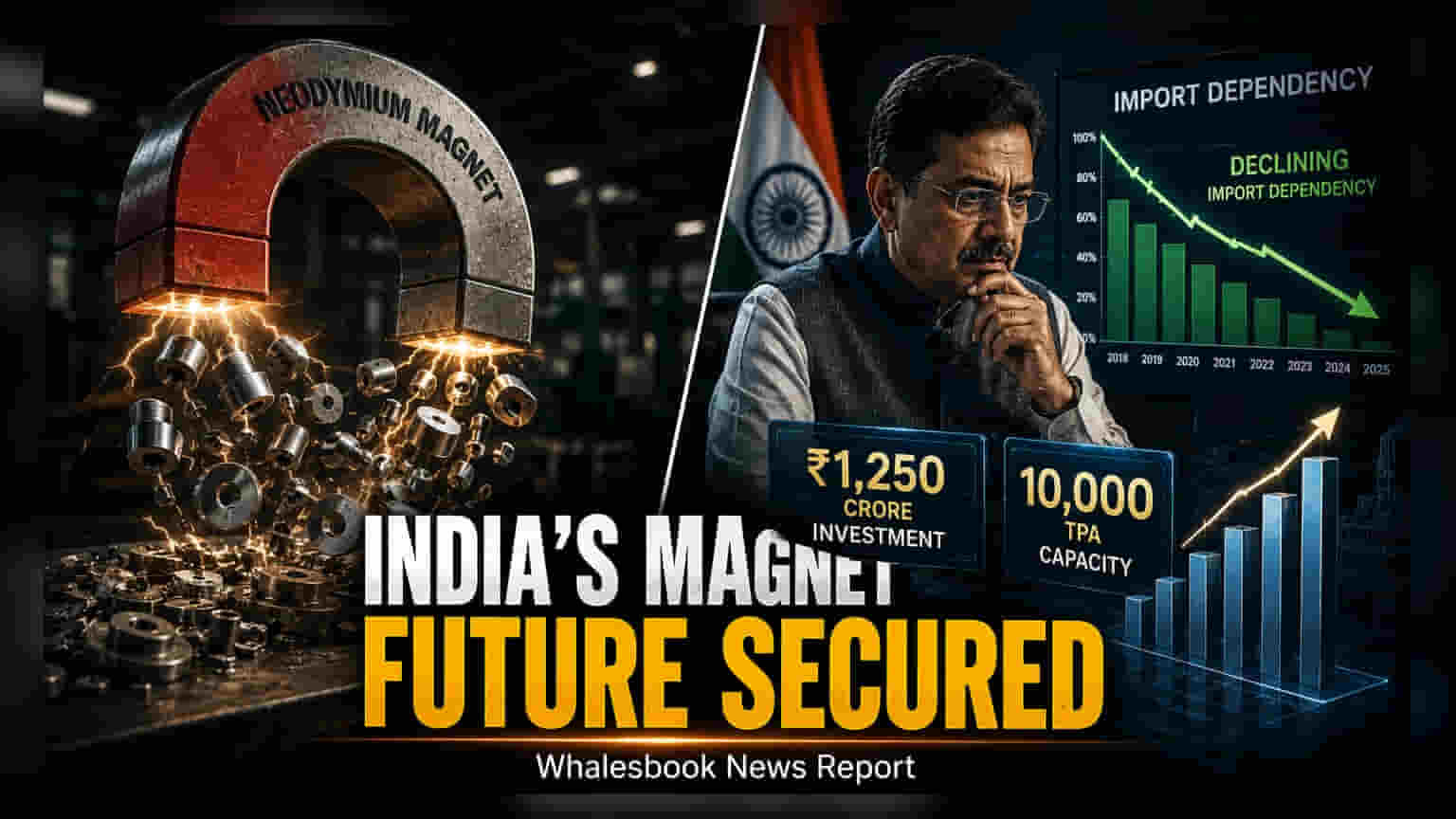
NAN MagneTech, founded by Vedanta’s Navin Agarwal, is investing ₹1,250 crore in Andhra Pradesh to open India’s first integrated rare earth magnet facility by early 2028. This move aims to reduce India's heavy reliance on imported magnets for electric vehicles and defense, which currently stands at nearly 95%. Investors should track the execution timeline and raw material security as the company targets annual revenues of up to ₹1,500 crore.
Detailed Coverage
NAN MagneTech Pvt. Ltd., a new venture led by Vedanta Vice Chairman Navin Agarwal, has announced a ₹1,250 crore investment to establish India’s first fully integrated rare earth magnet manufacturing plant. Located at the Naidupeta Industrial Park in Andhra Pradesh, the facility plans to produce 1,200 tonnes of Neodymium-Iron-Boron magnets annually in its initial phase, with potential expansion to 10,000 tonnes.
Targeting Strategic Import Substitution
Currently, India relies on imports for nearly 95% of its rare earth magnet requirements, with the vast majority coming from China. These magnets are vital components in modern technology, used extensively in electric vehicle traction motors, wind turbine generators, defense equipment, and robotics. By creating an integrated facility that handles everything from raw material processing to finished production and recycling, NAN MagneTech intends to build a domestic supply chain to replace these imports. The company expects the plant to be operational by the first quarter of 2028 and estimates annual revenues between ₹1,200 crore and ₹1,500 crore once full production is achieved.
Technology and Supply Security
To manage the technical complexity of magnet manufacturing, the company has partnered with Japanese technology providers and Dr. Masato Sagawa, the inventor of the NdFeB magnet. A significant challenge in this sector is securing consistent access to rare earth oxides, which are often subject to volatile pricing and geopolitical supply risks. To mitigate this, the company states it has finalized long-term supply agreements with an Australian producer for raw materials. Additionally, the venture has signed off-take agreements with major domestic automobile manufacturers and Tier-1 automotive suppliers, which may provide a degree of revenue visibility for the plant's output.
While the project aims to tap into growing demand from the electric vehicle and green energy sectors, the success of the venture will depend on the timely execution of the Naidupeta facility and its ability to maintain profit margins despite high initial capital spending. Investors may monitor the project's construction progress, the stability of raw material costs, and any updates on the commissioning date as the 2028 deadline approaches. The integration of the entire production cycle in one location is a key strategy for the company, but it also means the project carries risks related to cost overruns and the technical challenges of ramping up a specialized manufacturing process.