

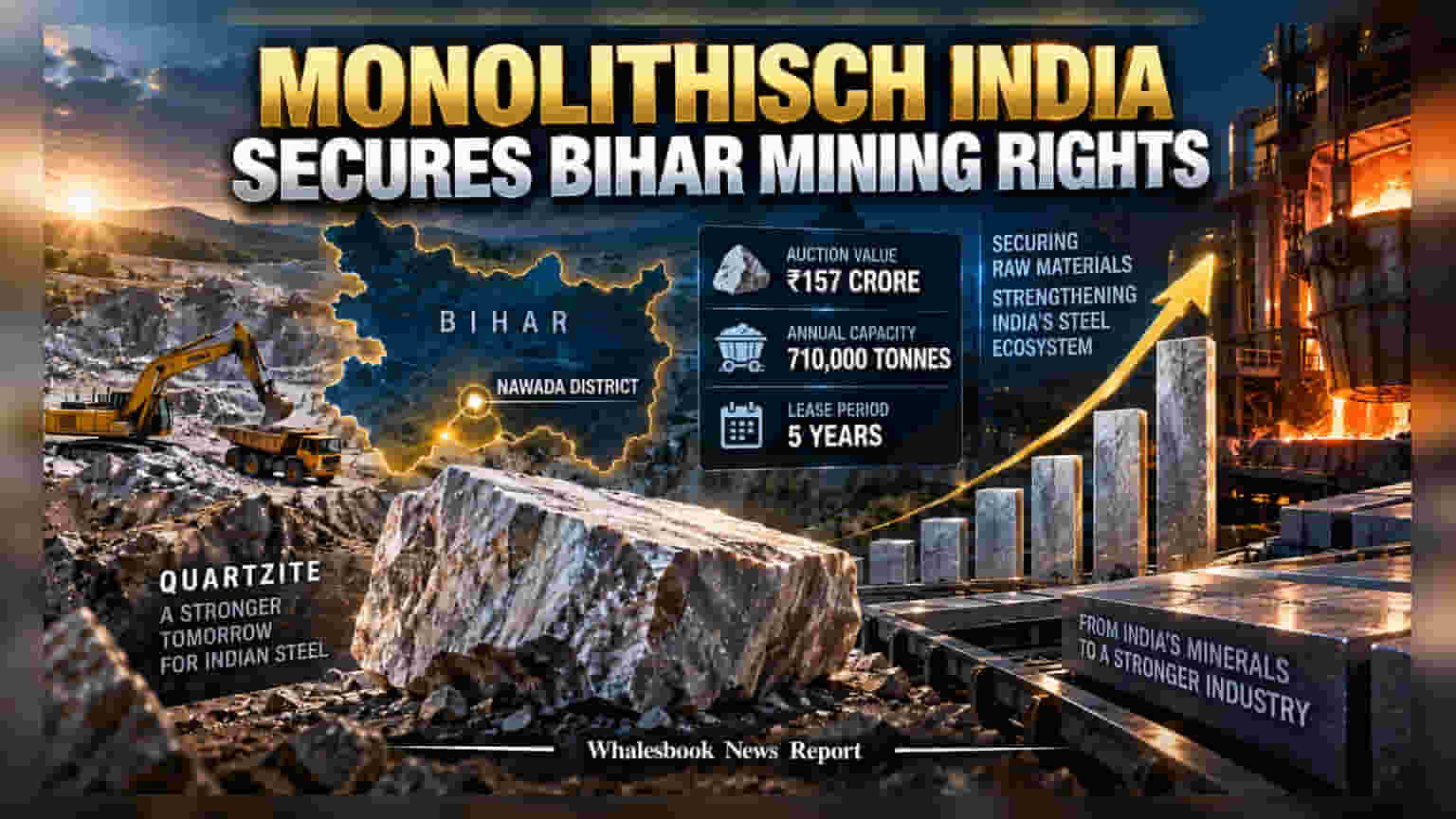
Monolithisch India has secured a five-year mining lease for a quartzite block in Bihar's Nawada district for Rs 157 crore. This strategic move aims to ensure a stable supply of raw materials for its silica ramming mass business, supporting its growth in the secondary steel sector. The company's stock recently touched a 52-week high of Rs 1,505 following the news.
Monolithisch India has won a government e-auction for a quartzite mineral block located in the Nawada district of Bihar. The deal, valued at Rs 157 crore, grants the company a mining lease for five years. This development is a significant step for the company’s supply chain, as it shifts from buying raw materials to controlling its own source of quartzite, a key mineral used in manufacturing silica ramming mass—a lining material essential for steel furnace operations.
Operational Plans and Timeline
The lease allows for an annual mining capacity of 710,000 metric tonnes, totaling 3.55 million metric tonnes over the five-year period. The company plans to integrate this output into its current production framework, which is targeted at 576,000 metric tonnes per annum. Before mining can start, the firm must secure various statutory approvals. Management expects these clearances to be processed within the next three to four months, with a goal to commence commercial mining operations by early 2027.
Financial and Market Context
The company’s recent financial results reflect growth, with Q1 FY27 revenue reported at Rs 47.18 crore and a profit after tax of Rs 10.07 crore. Following the auction win, Monolithisch India’s stock price showed momentum, reaching a 52-week high of Rs 1,505 on September 11, 2026. This price movement suggests investor interest in the company's efforts to secure its long-term cost structure and reduce dependency on market price fluctuations for raw materials.
Investor Monitorables and Risks
While the backward integration is a strategic positive, investors may consider certain risks. The company will need to successfully manage the transition from a manufacturer to a mine operator, which involves operational execution challenges and potential project delays if approvals take longer than expected. Additionally, as the company supplies the secondary steel industry, its performance remains linked to the cyclical demand of that sector, where industrial slowdowns can impact product uptake. Furthermore, as an SME-listed stock, price volatility can be higher compared to larger companies.
The primary monitorables for shareholders moving forward will be the status of statutory approvals, the actual timeline for starting commercial extraction, and whether this new captive mining capability successfully improves profit margins over the coming quarters.