

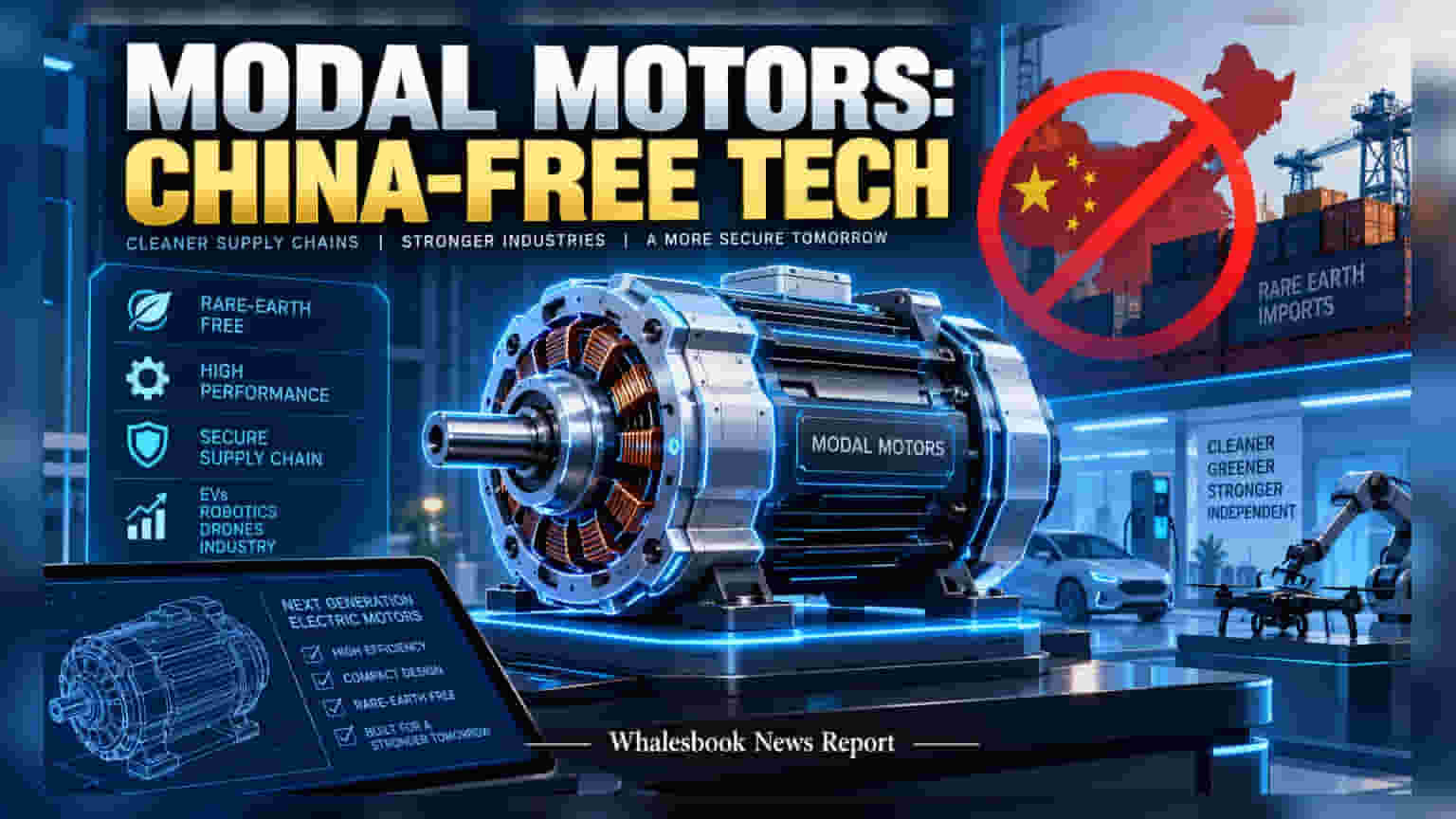
Startup Modal Motors is developing electric motor designs that do not use rare-earth magnets to reduce reliance on foreign supply chains. For investors, this highlights a significant push in the EV and industrial sector to solve critical component supply risks amid global geopolitical tension.
Modal Motors, a startup led by automotive industry veteran Michael Van Steenburg, is working on a new technology for electric motors that removes the need for rare-earth magnets. These magnets, typically made using minerals like neodymium, are essential components in most high-performance electric motors used in everything from electric vehicles to industrial robotics. However, the global supply of these minerals is heavily concentrated, creating risks for manufacturers who rely on steady imports.
The company’s approach is a direct response to the supply chain bottlenecks that have plagued the electric motor and EV industry. Currently, many domestic manufacturers attempt to replicate existing motor designs that depend on these specialized magnets. Van Steenburg argues that this is a fragile strategy, as the supply chain for these minerals remains limited and largely controlled by foreign markets. By redesigning the hardware to function without these magnets, Modal Motors hopes to create a more secure and independent supply chain for industries that require high-performance motors.
The startup is currently focusing on two specific product lines. The first is a compact motor designed for the drone and industrial actuator markets. The second, called the Hybrid Enigma Drive, is a flat, low-profile motor intended to fit into tighter spaces, which could be useful in consumer and industrial robotics. The goal is to provide a viable alternative for companies that are increasingly concerned about geopolitical supply risks and the price volatility associated with rare-earth materials.
For investors and market observers, the challenge lies in the trade-off between performance and supply chain security. Traditional motors using rare-earth magnets are known for their high torque density and efficiency. The key monitorable for the industry is whether Modal Motors can successfully produce hardware that matches or exceeds the performance of traditional motors without these materials. Engineering an electric motor that offers similar power and efficiency while being cheaper or easier to produce is a difficult technical hurdle.
This development reflects a broader trend in the industrial and automotive sectors, where companies are actively seeking to 'de-risk' their supply chains. As global friction over mineral rights continues, the demand for technological solutions that bypass critical bottlenecks is likely to rise. Investors should track how the startup manages to scale its production, whether it can demonstrate performance parity with existing market solutions, and if its designs can be adopted by major industrial players who are currently tied to traditional supply chains.