 Whalesbook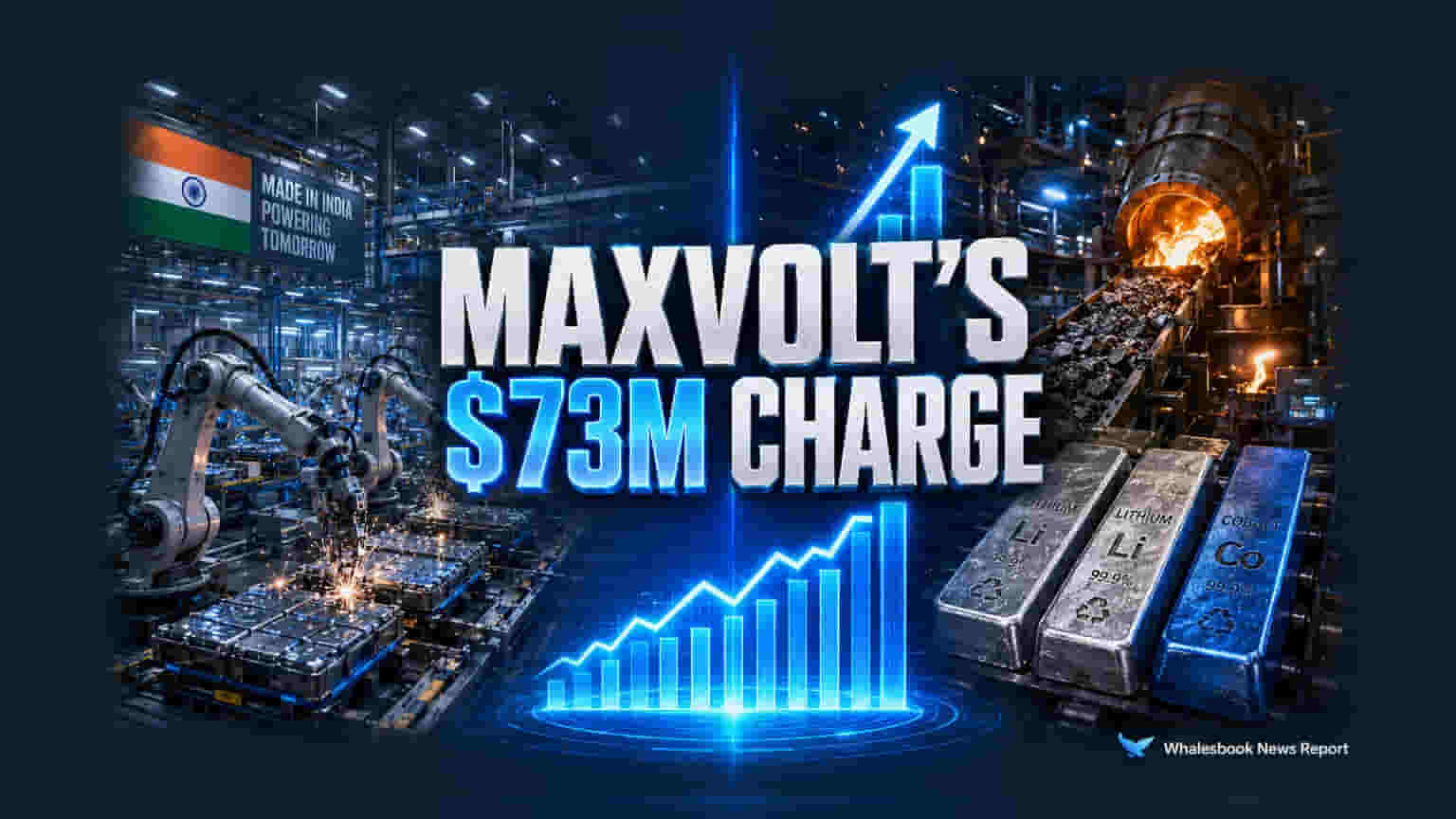


The Capital Allocation Gamble
The strategic shift toward Battery Energy Storage Systems (BESS) and industrial-grade lithium recycling marks a necessary evolution for a firm previously tethered to the saturated electric two-wheeler segment. While the company achieved a robust 141% surge in net profit to ₹24.38 crore during the last fiscal year, the decision to commit $73 million suggests a rapid burn-rate environment ahead. By shifting 60% of manufacturing capacity toward electric three-wheelers and stationary storage, management is effectively abandoning a high-volume, low-margin legacy business in favor of complex, infrastructure-heavy contracts that often carry longer payment cycles and more stringent performance guarantees.
Competitive Benchmarking and Market Dynamics
Unlike established battery giants that benefit from vertical integration with captive raw material sources, Maxvolt remains vulnerable to supply chain fluctuations. The move into critical-mineral extraction—targeting lithium, cobalt, and nickel—places the company in direct competition with emerging specialized recyclers and domestic chemical conglomerates. While the 15,000-tonne-per-annum shredding plant capacity is ambitious, the viability of these recycling units frequently depends on scale and consistent feedstock. Historically, smaller battery players have struggled to maintain profitability in recycling when commodity prices for black mass remain volatile or when regulatory compliance costs exceed initial projections.
The Forensic Bear Case
The reliance on debt-led project financing to fund the Aligarh campus introduces significant balance sheet risk. Although cash equivalents increased to ₹25.86 crore, this remains a thin cushion against a $73 million capital outlay. The aggressive entry into southern India—specifically Telangana, Karnataka, and Tamil Nadu—by fiscal 2027 forces the company into direct territorial competition with well-capitalized EV incumbents and regional energy storage providers. Furthermore, the commitment to robotic automation by October 2026 implies a high fixed-cost base; should demand for lithium-ion e-rickshaw batteries fail to cannibalize the entrenched lead-acid market as quickly as anticipated, the company faces substantial idle capacity charges and potential margin erosion.
Strategic Trajectory
Management is banking on a dual-pronged recovery: leveraging EPR compliance mandates to secure battery waste for recycling while simultaneously capturing the solar-linked storage market. The upcoming commissioning of the 2.2 GWh capacity line provides a tangible milestone for investors to monitor. If the firm can achieve industrial-scale mineral recovery before significant competition arrives, it may successfully decouple its valuation from the volatile consumer EV battery market. However, with heavy dependence on external funding and rapid geographical expansion, the next eighteen months will serve as a liquidity stress test for the firm's ambitious infrastructure roadmap.