 Whalesbook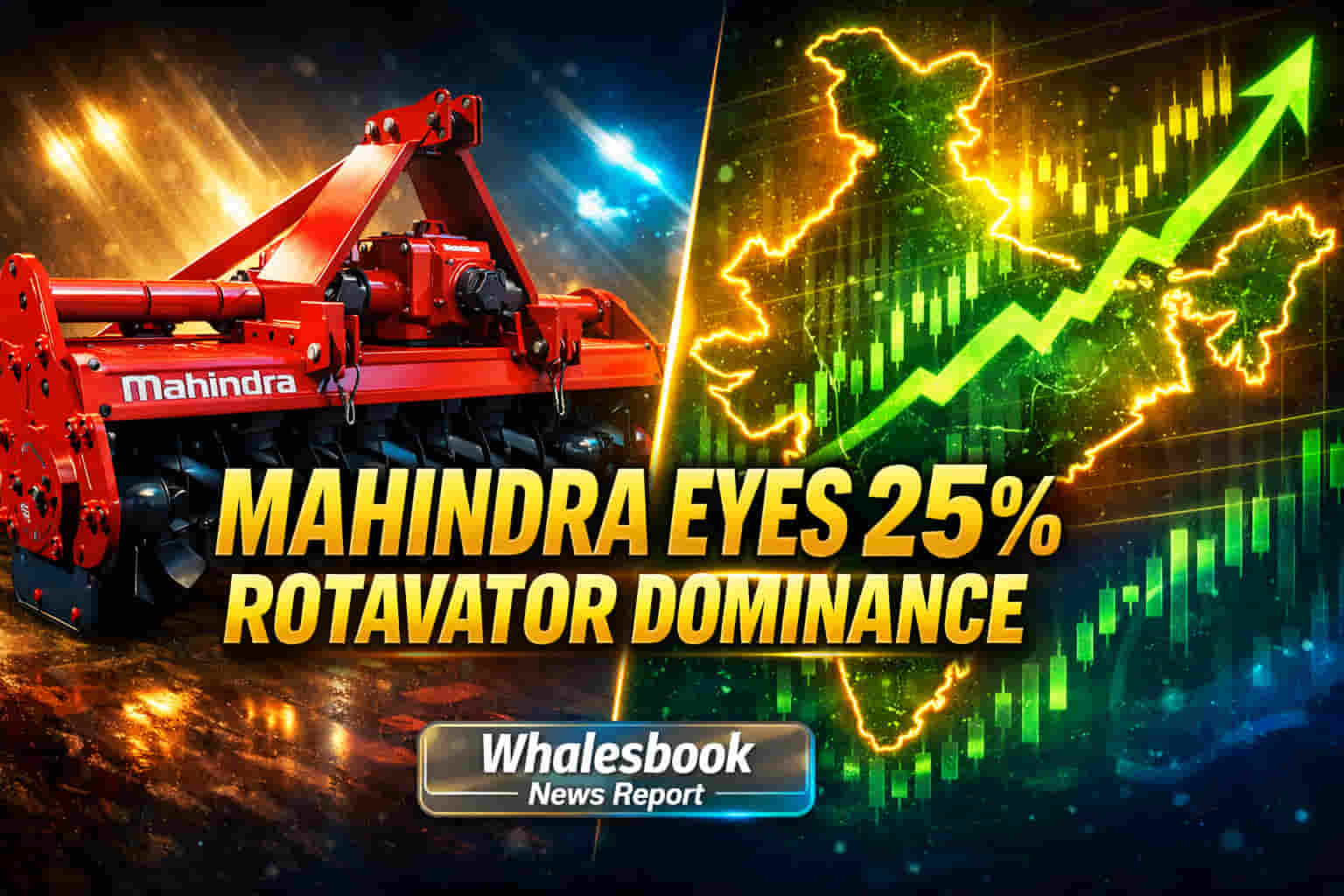
Mahindra's Rotavator Ambition: A Calculated Leap in Indian Agriculture
Mahindra & Mahindra Ltd. (M&M) is setting its sights on a significant expansion within the Indian agricultural machinery sector, specifically targeting a 25% market share in the rotavator segment. This strategic objective is fueled by the accelerating pace of farm mechanization across India, supported by robust government policies and evolving farmer needs. The company's Farm Equipment Business, already a global leader in tractor volumes, is bolstering its offerings with the introduction of a new line of heavy-duty rotavators, the Mahavator and Mahavator HD series, spanning four to nine feet. This move aims to solidify M&M's presence in a market where it currently holds approximately 20% share, projecting sales of around 50,000 units against an estimated total market size of 2.60 to 2.70 lakh units for the current fiscal year. The vast majority, 95%, of these sales originate domestically, underscoring India's critical importance to this segment.
Market Share Offensive in a Growing Sector
The Indian agricultural machinery market is poised for substantial growth, projected to reach $25.15 billion by 2029 from $16.73 billion in 2024. This expansion is underpinned by significant government backing through programs like the Sub-Mission on Agricultural Mechanization (SMAM) and the promotion of Custom Hiring Centers (CHCs). These initiatives aim to bridge the mechanization gap, which currently stands at around 47% nationally, well below global benchmarks like China (59.5%) and Brazil (75%), with a national target of 75% mechanization by 2047. Mahindra's ambition to increase its rotavator market share from 20% to 25% places it in direct competition with established players such as Shaktiman, Fieldking, and Sonalika, who are recognized for their product reliability and performance in Indian soil conditions. The company's existing manufacturing facilities, currently utilizing two-thirds of their capacity, are being positioned to scale production modularly to meet projected demand surges.
Competitive Benchmarking and Macro Tailwinds
Mahindra's push into the rotavator segment leverages its overarching strength as the world's largest tractor manufacturer by volume. The company's farm equipment business has demonstrated robust recent performance, with domestic tractor sales showing year-on-year growth of 35% in February 2026. Key drivers for this sector-wide growth include rising rural incomes, a persistent farm labor shortage due to urbanization, and improved credit accessibility for farmers. Government policies are actively supporting mechanization through subsidies and the establishment of CHCs, enabling smaller landholders access to equipment they might not otherwise afford. The introduction of the Mahavator and Mahavator HD series, designed for heavy-duty applications, suggests a focus on addressing demanding agricultural tasks and potentially differentiating from competitors who historically dominated with specific tillage expertise.
The Forensic Bear Case
Despite the favorable macro environment and M&M's strong brand equity, potential headwinds exist. The company's rotavator sales are overwhelmingly domestic (95%), making the segment highly susceptible to the inherent cyclicality of the agricultural sector, including weather patterns, crop yields, and government policy shifts. While Mahindra possesses modular capacity expansion capabilities, scaling production rapidly enough to meet aggressive market share targets, should demand accelerate beyond projections, could pose a challenge. The rotavator market, while growing, is also competitive, with established players like Shaktiman and Fieldking holding significant sway, and historically, niche manufacturers like Tirth Agro Technology have commanded substantial shares. Over-reliance on a single product category within the broader farm machinery spectrum, particularly one dependent on tractor power take-off, introduces a concentration risk. Furthermore, the fragmented nature of Indian landholdings, though being addressed by initiatives like CHCs, still presents challenges to widespread adoption of advanced machinery.
Future Outlook and Analyst Consensus
Mahindra & Mahindra’s farm equipment business is viewed positively by analysts, with a consensus recommendation of 'Buy' and price targets from firms like Jefferies, HSBC, and Nomura indicating potential upside. The company's diversified portfolio and market leadership in tractors provide a stable foundation. The ongoing government drive towards increasing farm mechanization levels to 75% by 2047, coupled with sustained positive rural sentiment supported by healthy crop cycles and reservoir levels, provides a long-term tailwind for the entire sector. The successful integration of the new Mahavator series and the company's ability to effectively scale production will be critical factors in achieving its ambitious 25% rotavator market share objective and sustaining growth in this vital segment of Indian agriculture. As of February 27, 2026, M&M's stock traded around ₹3,397.40, with analysts projecting a consensus EPS forecast of ₹127.71 for the next fiscal year.