 Whalesbook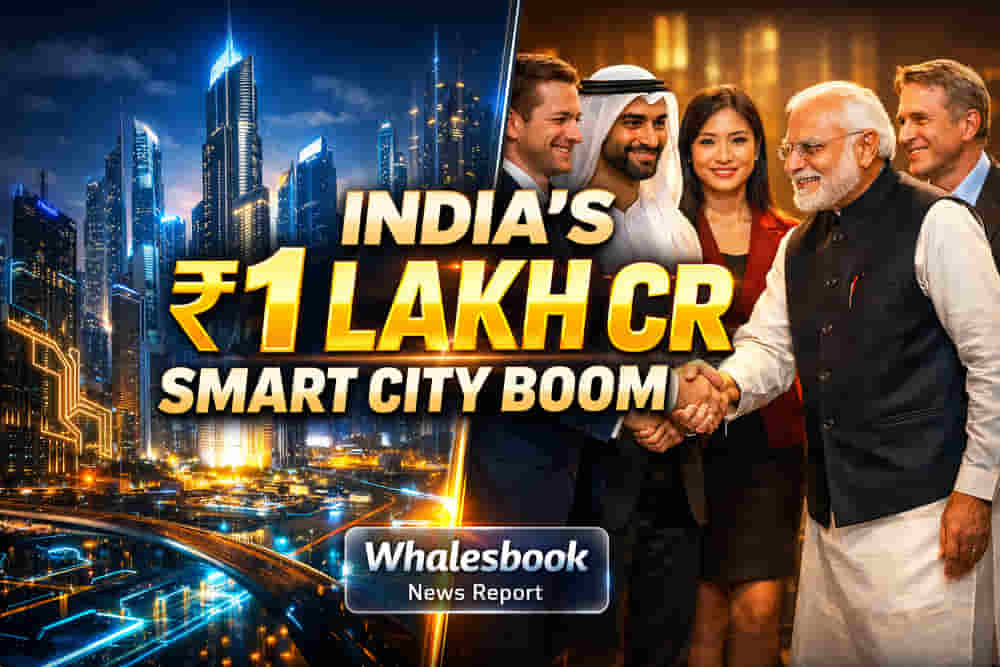
Maharashtra's Ambitious Development Agenda Unveiled at WEF Davos
Maharashtra Chief Minister Devendra Fadnavis announced significant infrastructure and development projects at the World Economic Forum (WEF) in Davos on Thursday, January 22, 2026. The state is poised to attract substantial global investment, focusing on the creation of a new smart city and a cutting-edge innovation hub.
Raigad Pen Smart City Attracts Over ₹1 Lakh Crore Investment
The Raigad Pen Smart City project has garnered investment commitments exceeding ₹1 lakh crore from international investors representing the USA, UAE, Singapore, Australia, and The Netherlands. This initiative aims to establish a new global business district, envisioned as part of "Mumbai 3.0," situated strategically near the upcoming Navi Mumbai International Airport. The project is planned as a 'plug-and-play' hub designed to host next-generation industries, including fintech and data centres, with land identified and necessary permissions secured. This project is also notable for its public-private partnership model, involving collaboration between the state government, MMRDA, and private partners.
Innovation City: A $11 Billion Hub for Global Innovators
Further bolstering Maharashtra's technological future, an 'Innovation City' is planned near the Navi Mumbai Airport. Tata Sons has committed $11 billion to this ambitious project, which aims to create a world-class innovation ecosystem. This city is designed to be a 'plug-and-play' environment attracting global innovators, startups, and AI and innovation hubs, focusing on advanced technologies, digital infrastructure, and emerging sectors like AI and semiconductors. The project is expected to position Mumbai as a leading destination for technological advancement and economic growth, contributing to Maharashtra's aspiration of becoming a trillion-dollar economy.
Mumbai's Circular Economy and Waste Management Initiatives
In parallel, Maharashtra is planning an overarching circular economy initiative for Mumbai. This program aims to convert waste into wealth, addressing critical environmental concerns such as air and water quality. The initiative will manage waste from various sectors, including electronics, construction, and medical waste. A significant part of this plan involves reclaiming land from legacy waste sites, such as the Deonar landfill, for future housing projects. The Deonar landfill bioremediation project, involving the treatment of approximately 185 lakh tonnes of legacy waste, is a substantial undertaking aimed at reclaiming land for development, including sections allocated for the Dharavi Redevelopment Project.
India's Appeal as a Global Investment Haven
Fadnavis highlighted India's attractiveness to global investors, describing the nation as a stable partner with strong governance and consistent policies. He noted that even investors from countries with trade challenges perceive India as a secure investment destination due to its robust leadership and collaborative global approach. These large-scale, generational projects are anticipated to show visible progress within a year, with full operationalization projected over seven to nine years.