

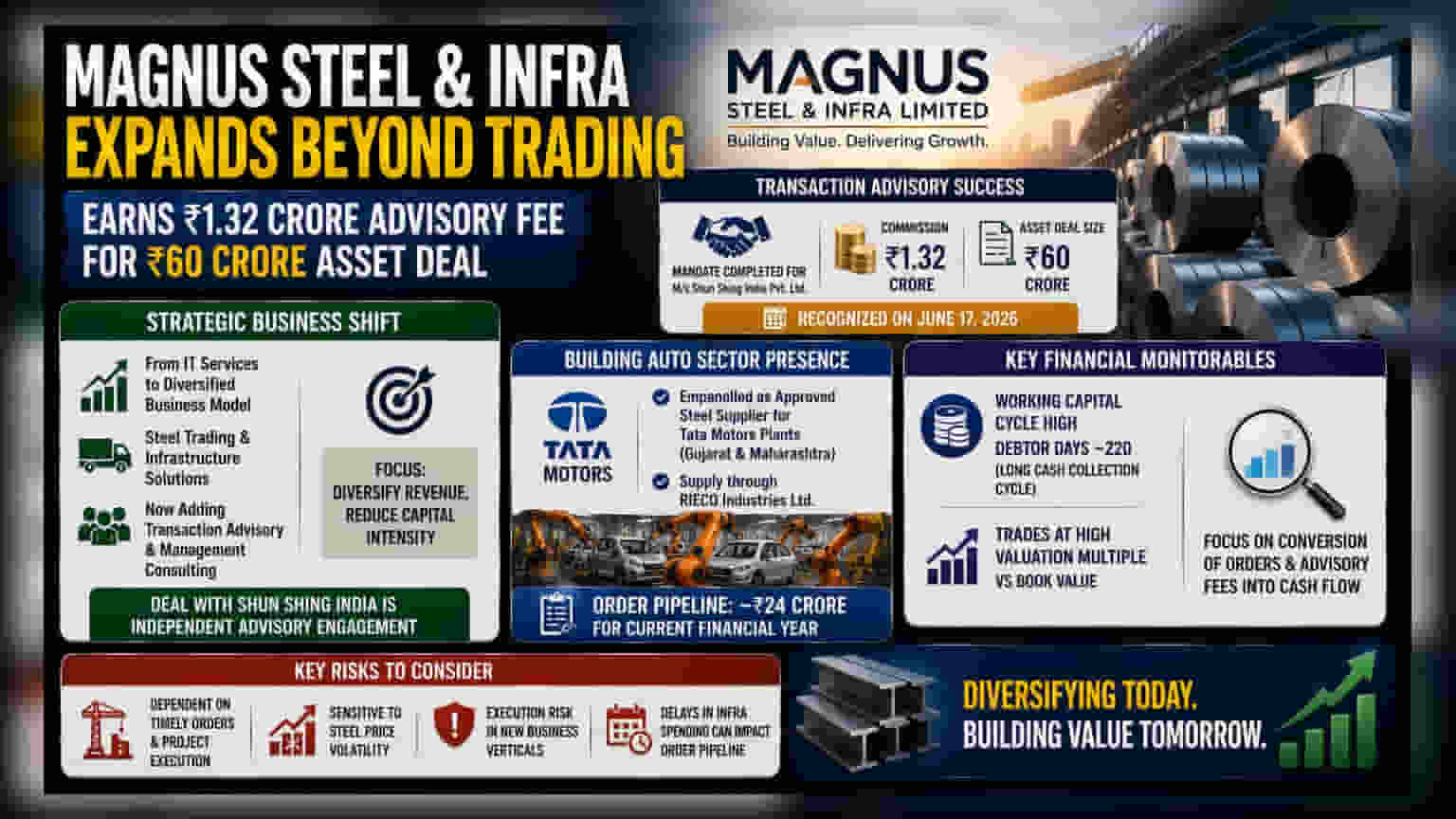
Magnus Steel & Infra has earned a ₹1.32 crore commission for facilitating a ₹60 crore asset transaction for Shun Shing India. This deal follows the company's recent entry into the automotive supply chain via projects for Tata Motors. Investors should track the company's ongoing transition from IT services to steel trading and consulting, while monitoring rising working capital needs.
What Happened
Magnus Steel & Infra Limited has successfully completed a transaction advisory mandate for M/s Shun Shing India Private Limited. The company confirmed it earned a commission of ₹1.32 crore for facilitating a ₹60 crore asset deal. This income, which was recognized by the company on June 17, 2026, reflects the firm's expanding business model, which now includes management consulting and transaction facilitation services alongside its core trading operations.
Strategic Business Shift
This development marks a continued transformation for the company. Originally known for its history in the IT services sector, Magnus Steel & Infra has pivoted toward steel trading, infrastructure solutions, and now, transaction advisory. The move is part of a broader strategy to diversify its revenue streams beyond its traditional trading business. The company has clarified that this specific transaction with Shun Shing India is an independent advisory engagement and does not involve related parties, providing a new source of fee-based revenue that requires less capital commitment than physical steel trading.
Building Auto Sector Presence
Beyond advisory services, Magnus Steel & Infra has been building its presence in the industrial supply chain. In May 2026, the company secured empanelment as an approved steel supplier for Tata Motors’ manufacturing facilities in Gujarat and Maharashtra. This supply arrangement is being executed through RIECO Industries Limited, a project contractor. The company previously disclosed an order pipeline valued at approximately ₹24 crore for the current financial year, which aims to provide revenue visibility. This entry into the automotive infrastructure segment is designed to lower the company's reliance on commodity-based trading.
Key Financial Monitorables
While the company is reporting new revenue streams, investors are monitoring several financial indicators. According to recent public disclosures, the company has seen an increase in its working capital cycle, with debtor days reaching approximately 220 days. High debtor days often mean that the company takes a long time to collect cash from its customers, which can strain liquidity. Furthermore, as the company trades at a high valuation multiple relative to its book value, market participants often keep a close eye on the actual conversion of these reported orders and advisory commissions into cash flow.
Risks To Consider
Investors may note that the company’s business model is shifting significantly, which introduces execution risks. The success of its steel supply business depends on the timely release of orders from large contractors and the construction progress of major projects like those at Tata Motors. Any delays in infrastructure spending or shifts in steel demand could affect the company’s ability to meet its projected pipeline. Additionally, as the company operates in the trading space, it remains sensitive to price volatility in steel and industrial products, which can impact profit margins. The shift toward advisory services is intended to be a lower-risk, higher-margin play, but its ability to generate recurring fees in a competitive market remains a key point to track.