

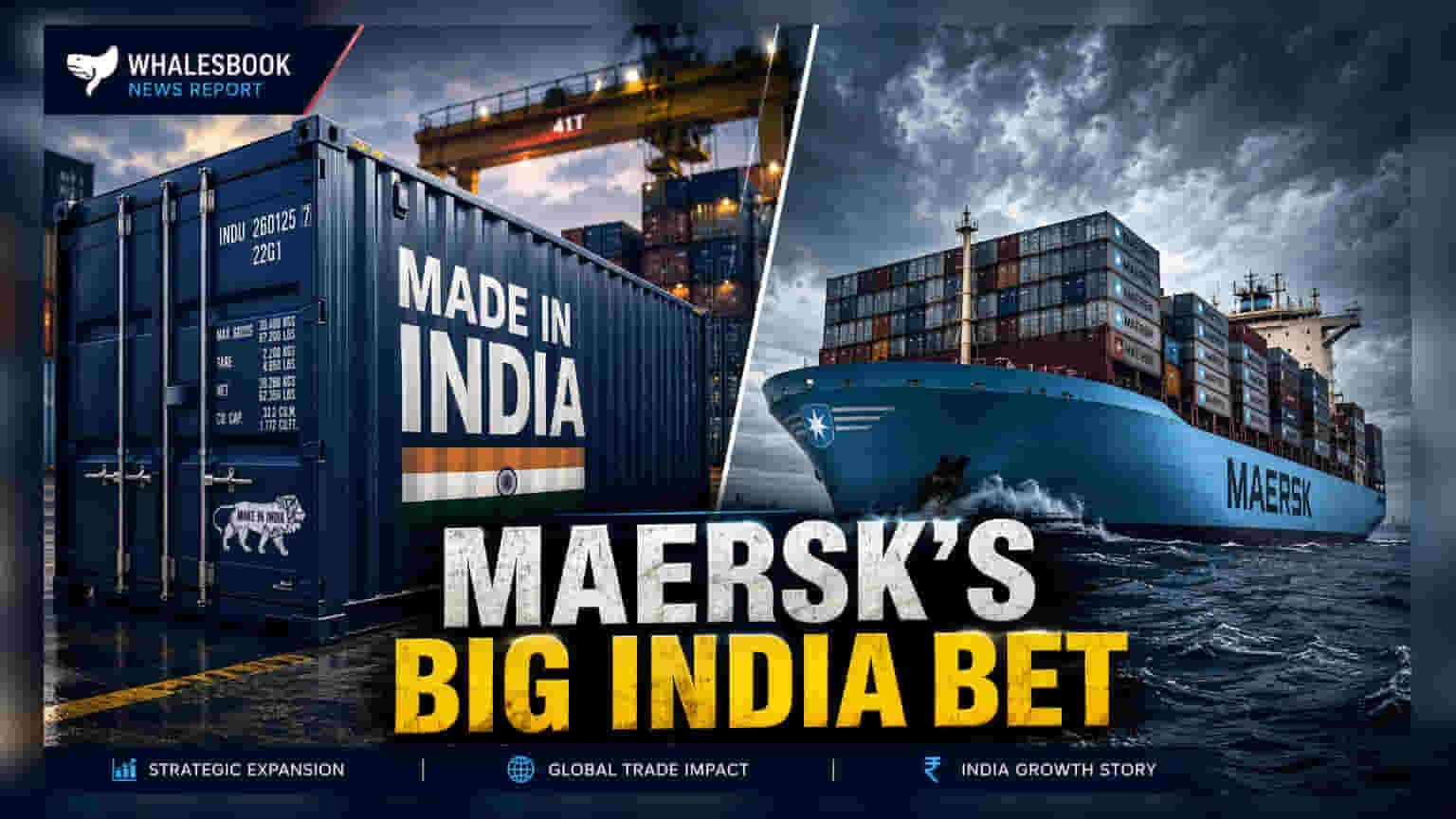
Global shipping leader A.P. Moller-Maersk has placed an order for 1,000 shipping containers to be manufactured by DCM Shriram Group in India. This move marks a shift toward local production for international maritime needs, following government efforts to bolster domestic manufacturing capabilities.
What Happened
A.P. Moller-Maersk, a major global shipping company, has officially placed an order for 1,000 shipping containers to be manufactured within India. The announcement coincided with the unveiling of the first domestically produced export-import (EXIM) container for the company at the Maersk-CONCOR Inland Container Depot in Dadri, Uttar Pradesh. Union Minister for Ports, Shipping and Waterways, Sarbananda Sonowal, attended the ceremony to mark the beginning of this manufacturing collaboration.
Why This Matters For Business
Shipping containers are essential for global trade, and the manufacturing of these units has historically been concentrated in East Asian markets. By sourcing these containers from DCM Shriram Group, Maersk is incorporating India into its supply chain for maritime equipment. For the manufacturing sector, this signals a transition from manual assembly to the production of internationally compliant, high-quality industrial goods. This development stems from discussions held in early 2025 between government leadership and Maersk’s supervisory board to incentivize the creation of a local container manufacturing ecosystem.
Impact On Local Manufacturing
The order represents a shift in how global shipping lines view Indian industrial infrastructure. Previously, most containers used in Indian ports were imported. By localizing production, companies like DCM Shriram Group can reduce logistics costs and lead times associated with importing empty containers. This may support the growth of specialized industrial manufacturing within the conglomerate’s business portfolio, which typically spans chemicals, sugar, and plastics.
The Business Reality Check
While this order is a milestone for local manufacturing, the long-term benefit for the involved companies depends on their ability to maintain cost competitiveness against established global manufacturers in China and Vietnam. Shipping container production is a high-volume, thin-margin business. Investors may watch whether this initial order leads to larger, recurring contracts that can justify the capital investment required for dedicated manufacturing lines. The scale of the order is modest compared to the millions of containers circulating globally, but it serves as a proof-of-concept for larger industrial manufacturing in India.
What Investors Should Track
For those observing the industrial sector, the key monitorable will be the manufacturing timeline and the consistency of these orders. Investors may look for updates in future investor presentations or quarterly reports from companies like DCM Shriram Group regarding new capital spending or specialized manufacturing capacity. Additionally, monitoring government policies related to logistics, shipping subsidies, and the development of local inland container depots will be important to understand if this trend of 'Made-in-India' shipping equipment gains further momentum.