

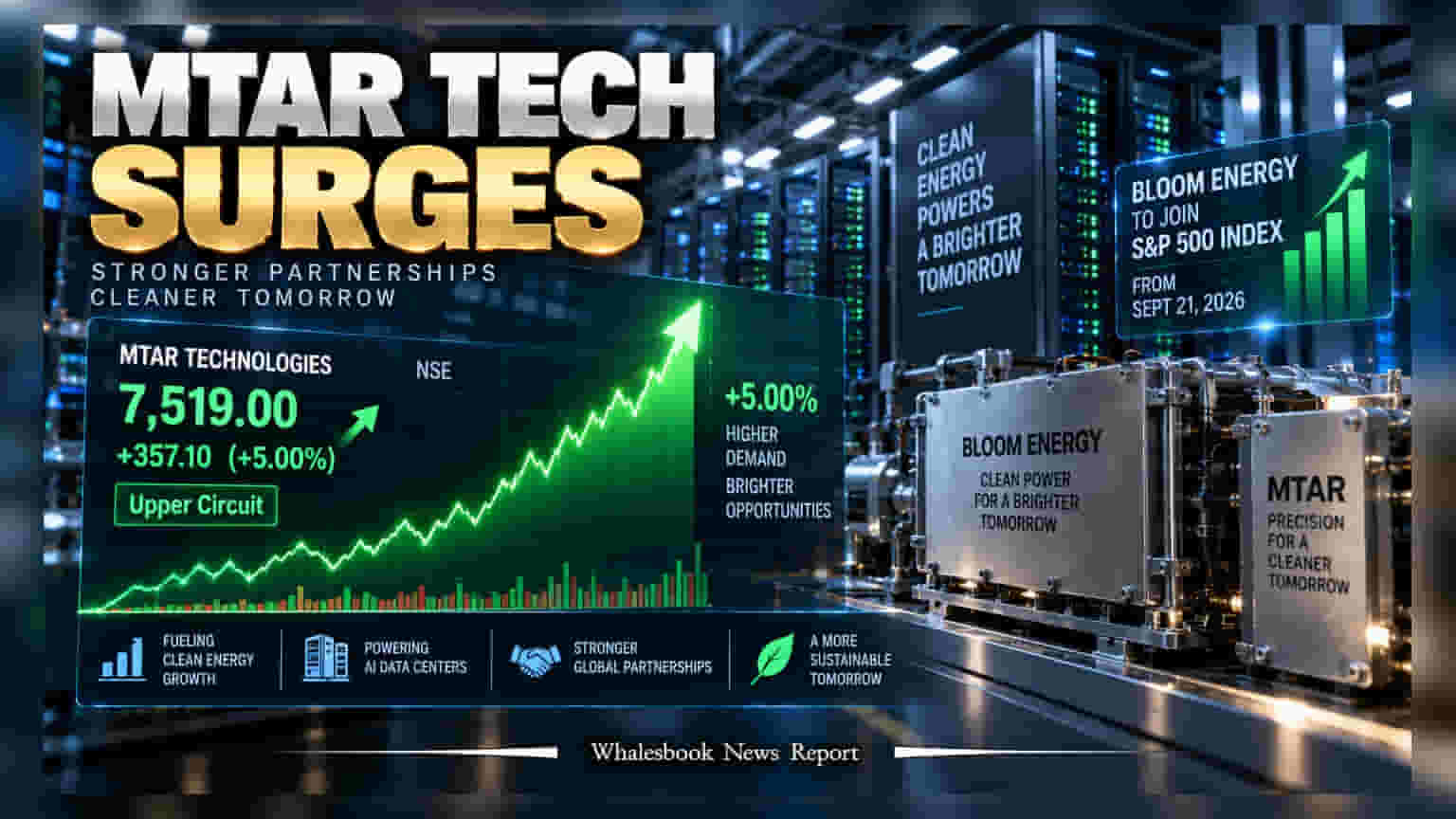
MTAR Technologies shares climbed to the 5 percent upper circuit at Rs 7,519 on Monday. The surge follows the announcement that its major customer, Bloom Energy, will join the S&P 500 index, signaling confidence in the demand for fuel cell systems used in AI data centers.
Shares of MTAR Technologies moved sharply on Monday, hitting the 5 percent upper circuit to reach Rs 7,519 on the National Stock Exchange. The stock reaction follows the recent announcement that US-based Bloom Energy, a primary client of the company, will be included in the S&P 500 index starting September 21, 2026.
This index inclusion is viewed by the market as a significant validation of Bloom Energy’s growth. Bloom Energy manufactures solid oxide fuel cell systems that are increasingly used to provide clean, stable power for energy-hungry artificial intelligence data centers. MTAR Technologies is a critical part of this supply chain, providing specialized components for these systems. Investors are interpreting the index move as a sign that demand for this infrastructure is set to grow.
Financial context remains an important factor for shareholders. In the first quarter of the 2027 fiscal year, MTAR Technologies reported a net profit of Rs 50.23 crore, reflecting year-on-year growth. The company’s ability to maintain these margins depends heavily on the production and order flow from key customers like Bloom Energy.
While the market is reacting to the growth prospects, investors should also consider the inherent risks of this business model. MTAR Technologies has a high level of reliance on Bloom Energy for its clean energy revenue. This high customer concentration means that any project delays or policy shifts affecting Bloom Energy could directly impact MTAR’s financial health and stock performance. Additionally, as the company takes on new manufacturing requirements, investors often watch for signs of rising debt levels or project delays that could affect cash flow.
Looking ahead, the next key monitorable will be the actual execution of data center projects, such as the one in Cheyenne, Wyoming, that utilize Bloom Energy’s technology. The market will likely look for updates on order book stability and whether the company can maintain its profit margins while scaling up production to meet potential demand from new data center infrastructure.