

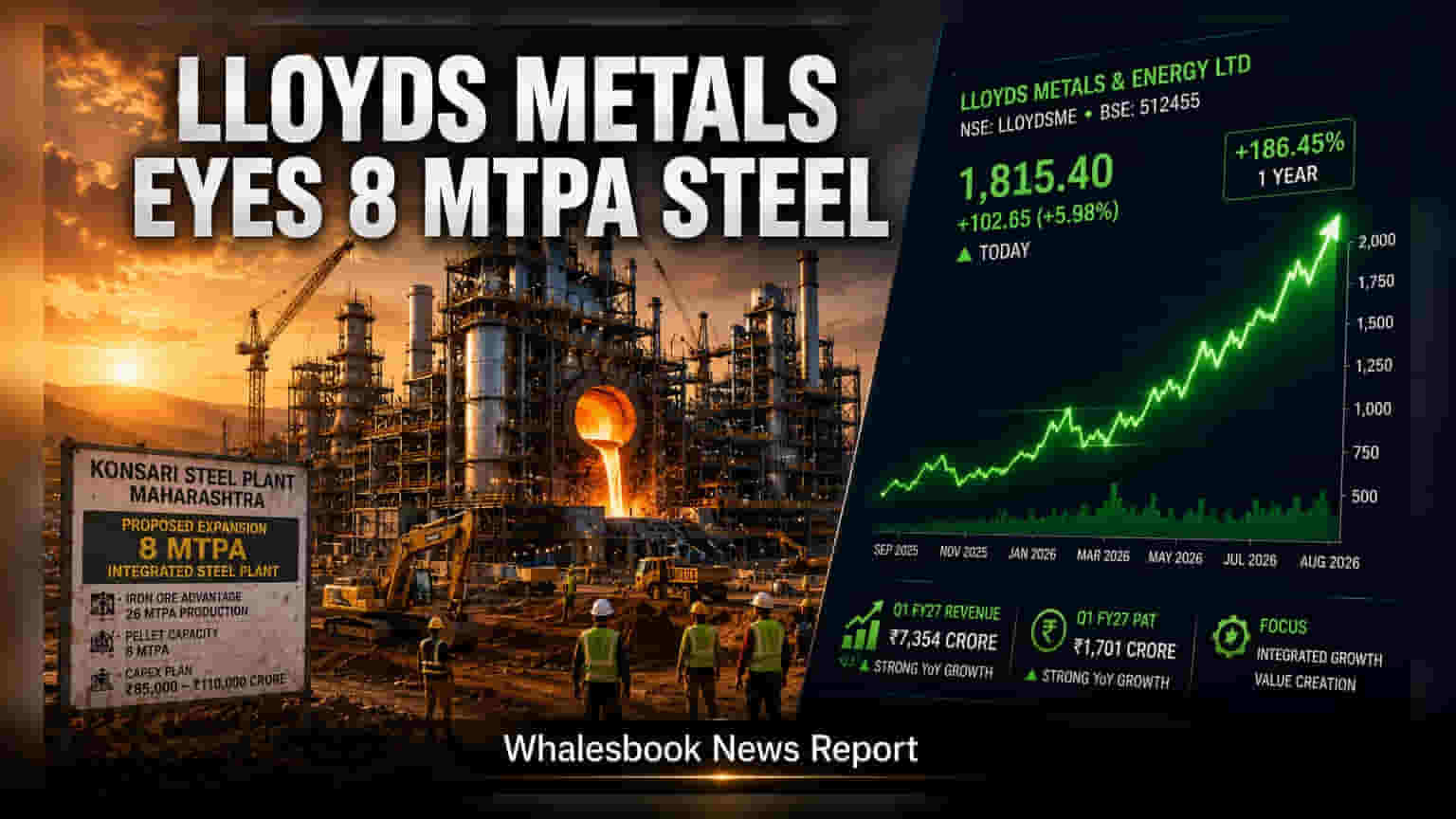
Lloyds Metals & Energy is evaluating a proposal to increase its Konsari steel plant capacity to 8 million tonnes per annum, exceeding its current 4.5 MTPA approval. The strategy aims to leverage the company's captive iron ore mining operations. The plan is in the early feasibility stage, and investors are watching the potential scale of capital expenditure and the timeline for board approval.
Lloyds Metals & Energy Ltd is exploring a major upgrade to its steelmaking operations at the Konsari facility in Maharashtra. While the company currently holds environmental clearance for a 4.5 MTPA steel plant, management is now assessing the feasibility of scaling this up to 8 MTPA. This potential shift signals a push to transition further into a large-scale integrated steel producer, moving beyond its current operational focus.
The logic behind this evaluation is rooted in the company's success at its Surjagarh iron ore mines. With iron ore production projected to reach 26 million tonnes in the current fiscal year, the company is looking for ways to capture more value from its own raw material base. By increasing its internal steel processing capacity, the firm aims to convert a larger portion of its extracted ore into finished steel rather than selling the raw material. This strategy recently saw a milestone in May 2026, when the company commissioned a second 4 MTPA iron ore pellet plant, bringing its total pellet production capacity to 8 MTPA.
Financially, the company has shown strong growth, reporting a consolidated revenue of ₹7,354 crore for the first quarter of fiscal year 2027, marking a significant year-on-year increase. Its profit after tax also grew to ₹1,701 crore during the same period. This operational momentum provides the backdrop for the company's current capital spending plans, which are estimated between ₹85 billion and ₹110 billion for upcoming projects.
However, the proposed expansion into an 8 MTPA integrated steel plant comes with significant execution challenges. Transitioning from smaller, staged projects to a much larger footprint involves complex technical and financial requirements. The company must balance its high capital expenditure plans with the need to maintain a healthy balance sheet. Additionally, the business model remains heavily tied to the performance and regulatory status of the Surjagarh mines; any operational, environmental, or regulatory disruption at this single mining site could impact the entire value chain.
The sector also faces inherent volatility. Steel and iron ore prices fluctuate based on global and domestic demand, which can directly influence profit margins. For investors, the company's ability to manage project costs and timelines while navigating these sector-wide price risks will be important.
The next steps for the company involve detailed technical and financial evaluations to determine if the site can support such a large expansion. Investors may look for updates on the formal board approval process and clarity on the funding strategy for this capital-intensive phase. The timeline for project commissioning and the management's commentary on maintaining operational efficiency amid this scale-up will be key monitorables in the coming quarters.