

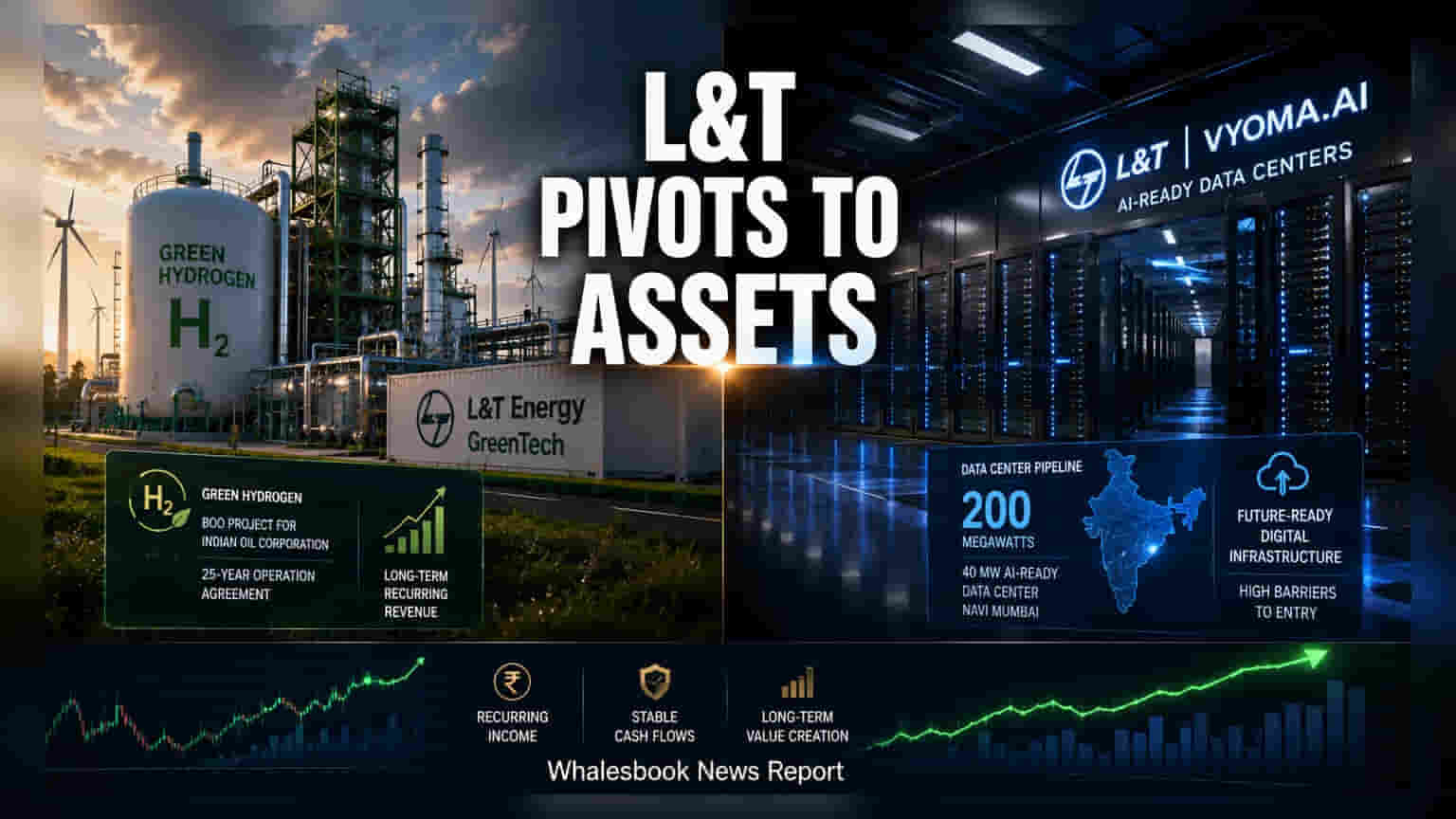
Engineering giant Larsen & Toubro is moving away from its asset-light model to own high-growth infrastructure. The company is investing in data centers via its subsidiary Vyoma.AI and green hydrogen projects on a long-term Build-Own-Operate basis, aiming to secure recurring revenue streams beyond traditional construction contracts.
Larsen & Toubro (L&T) is undergoing a notable change in how it approaches business growth. For the past decade, the company largely followed an asset-light strategy, focusing on building infrastructure projects for clients rather than owning them. Now, the engineering conglomerate is increasingly choosing to retain ownership of its new-age infrastructure assets, a shift that marks a departure from its historical role as a pure contractor.
This new approach is designed to generate recurring income—predictable, long-term revenue—rather than relying solely on one-time payments from construction projects. The company is concentrating its capital in sectors that offer high barriers to entry and long-term utility, specifically data centers and green energy.
One of the most significant steps in this transition is the push into digital infrastructure. L&T recently transferred its data center and cloud services business to its wholly-owned subsidiary, Vyoma.AI, in a deal valued at ₹1,400 crore. This subsidiary is currently building a 40-megawatt, AI-ready data center in Navi Mumbai, with a broader target to develop a total pipeline of 200 megawatts. By owning these facilities, L&T moves into the position of a service provider, allowing it to benefit from the growing demand for computing power and cloud infrastructure.
Parallel to its digital push, the company is applying a similar ownership model to its energy vertical. Through L&T Energy GreenTech, the company is executing a green hydrogen project for Indian Oil Corporation at its Panipat refinery. Under this Build-Own-Operate (BOO) agreement, L&T will own and operate the facility, securing a contract for a 25-year period. This ensures that L&T earns income from the hydrogen produced over the long term, rather than just building the plant and handing it over.
For investors, this transition to an asset-heavy business model comes with specific considerations. While the potential for stable, recurring revenue is a positive shift, it requires significant upfront capital. Building and operating data centers and hydrogen plants is much more expensive than traditional construction work. This means the company will need to balance its spending carefully to maintain healthy cash flows and manage debt levels effectively.
There are also operational risks to track. Because these projects are complex and involve long-term commitment, the company faces the risk of cost overruns or delays in project commissioning. Furthermore, as L&T enters these high-growth sectors, it will face competition from other large players, which could put pressure on profit margins if the supply of data centers or green energy exceeds demand. The market will likely monitor how well the company executes these projects and whether the return on the capital spent meets expectations over the coming years.